The country's first flex-fuel passenger vehicle is now on Indian roads
Maruti Suzuki has begun deliveries of the WagonR Bio-Flex, India's first flex-fuel passenger car, marking a major step towards ethanol-powered mobility and supporting the country's drive for cleaner, energy-secure transportation.
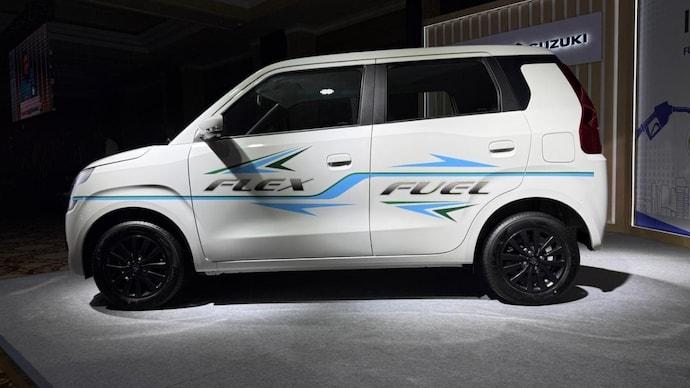
Maruti Suzuki has officially commenced deliveries of the WagonR Bio-Flex, India's first mass-produced flex-fuel passenger car, marking a significant milestone in the country's transition towards cleaner and more sustainable mobility solutions.
The automaker handed over the keys to the first 13 customers in Delhi, just days after announcing the launch price of Rs 7.24 lakh (ex-showroom). The deliveries represent the first real-world deployment of a passenger vehicle in India capable of operating on ethanol blends all the way up to E100, underlining the growing momentum behind the government's ethanol-based energy strategy.
The WagonR Bio-Flex arrives at a time when India is aggressively pushing to reduce its dependence on imported crude oil while supporting domestic ethanol production. The vehicle's rollout follows the recent notification of fuel standards for higher ethanol blends, including E22, E25, E27 and E30, paving the way for broader adoption of alternative fuels in the country.
First showcased in production-ready form earlier this month, the flex-fuel WagonR is based on the top-spec ZXi+ variant and is powered by a modified version of Maruti Suzuki's 1.2-litre K12N petrol engine. The powertrain has been engineered to operate on a wide range of ethanol-petrol blends, from E20 to E85, while also being compatible with E100 fuel.
Visually, the flex-fuel model remains nearly identical to the standard WagonR, with a discreet "Flex Fuel" badge at the rear serving as the only distinguishing feature. Inside, the hatchback retains its familiar equipment list, including a 7-inch touchscreen infotainment system, steering-mounted controls, a four-speaker audio setup and a spacious 355-litre boot.
Powering the WagonR Flex Fuel is Maruti Suzuki's 1.2-litre K12N four-cylinder petrol engine, which has been re-engineered to accommodate higher ethanol content. The hatchback can operate on a wide range of ethanol-petrol blends, from E20 up to E85, providing users with added fuel flexibility. Although Maruti Suzuki has confirmed E100 compatibility, the company is yet to announce official output figures, including power, torque and fuel-efficiency data for the flex-fuel variant.
The commencement of customer deliveries transforms the WagonR Bio-Flex from a technology showcase into a commercially available product, making India one of the few markets globally to offer a flex-fuel passenger vehicle capable of running on pure ethanol. As the country's ethanol ecosystem continues to expand, the WagonR Bio-Flex could serve as an important test case for the future adoption of flex-fuel mobility in the mass market.
Subscribe to Auto Today Magazine
Maruti Suzuki has officially commenced deliveries of the WagonR Bio-Flex, India's first mass-produced flex-fuel passenger car, marking a significant milestone in the country's transition towards cleaner and more sustainable mobility solutions.
The automaker handed over the keys to the first 13 customers in Delhi, just days after announcing the launch price of Rs 7.24 lakh (ex-showroom). The deliveries represent the first real-world deployment of a passenger vehicle in India capable of operating on ethanol blends all the way up to E100, underlining the growing momentum behind the government's ethanol-based energy strategy.
The WagonR Bio-Flex arrives at a time when India is aggressively pushing to reduce its dependence on imported crude oil while supporting domestic ethanol production. The vehicle's rollout follows the recent notification of fuel standards for higher ethanol blends, including E22, E25, E27 and E30, paving the way for broader adoption of alternative fuels in the country.
First showcased in production-ready form earlier this month, the flex-fuel WagonR is based on the top-spec ZXi+ variant and is powered by a modified version of Maruti Suzuki's 1.2-litre K12N petrol engine. The powertrain has been engineered to operate on a wide range of ethanol-petrol blends, from E20 to E85, while also being compatible with E100 fuel.
Visually, the flex-fuel model remains nearly identical to the standard WagonR, with a discreet "Flex Fuel" badge at the rear serving as the only distinguishing feature. Inside, the hatchback retains its familiar equipment list, including a 7-inch touchscreen infotainment system, steering-mounted controls, a four-speaker audio setup and a spacious 355-litre boot.
Powering the WagonR Flex Fuel is Maruti Suzuki's 1.2-litre K12N four-cylinder petrol engine, which has been re-engineered to accommodate higher ethanol content. The hatchback can operate on a wide range of ethanol-petrol blends, from E20 up to E85, providing users with added fuel flexibility. Although Maruti Suzuki has confirmed E100 compatibility, the company is yet to announce official output figures, including power, torque and fuel-efficiency data for the flex-fuel variant.
The commencement of customer deliveries transforms the WagonR Bio-Flex from a technology showcase into a commercially available product, making India one of the few markets globally to offer a flex-fuel passenger vehicle capable of running on pure ethanol. As the country's ethanol ecosystem continues to expand, the WagonR Bio-Flex could serve as an important test case for the future adoption of flex-fuel mobility in the mass market.
Subscribe to Auto Today Magazine

