Higher ethanol blend means lower mileage, so why do race cars use it for performance?
Lower energy density does not necessarily mean lower performance. Thanks to its high octane rating and cooling properties, ethanol can produce stronger acceleration when paired with the right engine.
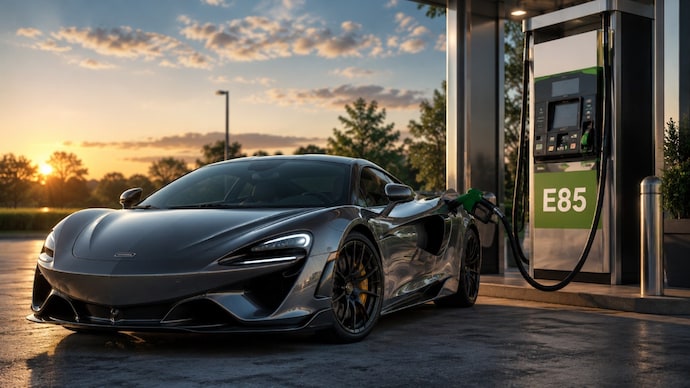
Union Oil Minister Hardeep Singh Puri recently defended the government's push towards ethanol blending, arguing that the biofuel is not only cleaner but is also capable of delivering impressive performance.
Addressing concerns over fuel efficiency while speaking about the government's ethanol programme, Puri pointed to one of motorsport's biggest examples.
"Somebody is saying that fuel mileage is going to drop. It is now well established that ethanol is even used in racing cars. Acceleration improves. Knocking also improves. Mileage? Yes, it may drop a little. But it may drop slightly due to various factors," Puri said.
Ethanol contains significantly less energy than petrol. E85, for instance, has around 21% lower energy content per litre than E20, which ordinarily translates into lower fuel economy. So how can a fuel with less energy deliver better acceleration?
The science behind ethanol's performance advantage
Speaking exclusively to Auto Today, Vikram Gulati said the answer lies not in ethanol's energy density but in the way an engine is engineered to use it.
"Formula One cars, which represent the best of performance, use ethanol, so you get much better torque and much better acceleration using ethanol than with petrol," Gulati said.
He, however, acknowledged that ethanol's lower energy density is a scientific reality.
"The issue really is the lower energy density of ethanol versus petrol. Therefore, your mileage does drop, but there is science behind it. If you look at the chemical formula of the two products and the energy content, you can easily figure out that the difference is going to be around 30 per cent if you're using E100. Some of that can be recovered by engineering the engine to some extent," he explained.
The engineering Gulati refers to revolves around ethanol's much higher octane rating. E85 typically has an octane rating of around 105-108 RON, compared to roughly 95 RON for E20. This allows engineers to run higher compression ratios, more aggressive ignition timing and, in turbocharged engines, higher boost pressure without causing engine knock, enabling greater power and torque.
Ethanol also absorbs significantly more heat as it evaporates, cooling the intake charge. The cooler, denser air entering the engine contains more oxygen, improving combustion efficiency while further reducing the risk of knocking. These characteristics make ethanol particularly attractive for high-performance engines.
Why most road cars won't feel faster on E85
Gulati emphasised that the performance benefits seen in racing applications cannot automatically be expected from everyday flex-fuel vehicles.
Dedicated E85 racing cars, Formula One power units and performance cars engineered specifically for ethanol are calibrated to exploit the fuel's unique properties. By contrast, production flex-fuel vehicles are designed to run on a wide range of ethanol blends from petrol and E20 to E85 and therefore use a compromise engine calibration.
"A flex-fuel vehicle is really peace of mind because it is future-proof. It can take any mix of ethanol. Even if tomorrow the blending percentage changes, the consumer doesn't have to worry because the vehicle is tuned to accept any ethanol mix," Gulati told Auto Today.
As a result, while flex-fuel vehicles offer greater flexibility and compatibility with future fuels, they may not fully unlock E85's performance potential. In some cases, drivers may notice similar or even slightly lower performance because of ethanol's lower energy density.
The Koenigsegg CCXR proved ethanol could be a performance fuel
One of the best real-world examples came nearly two decades ago. In 2007, Koenigsegg introduced the Koenigsegg CCXR, a hypercar engineered specifically to exploit E85 rather than merely tolerate it.
Instead of using ethanol to reduce emissions or lower running costs, Koenigsegg used the fuel's exceptionally high octane rating to extract extraordinary performance from its 4.7-litre twin-supercharged V8. Running on E85, the engine produced 1,018bhp and 1,060Nm of torque, enabling a claimed top speed of 402kmph and a 0-100kmph sprint in just 3.1 seconds.
With fewer than 50 examples ever built, the CCXR remains one of the clearest demonstrations that ethanol can be a genuine performance fuel when an engine is engineered specifically around its characteristics.
Lower mileage remains the trade-off
While ethanol can improve performance in the right engine, lower fuel economy remains an unavoidable trade-off because of its lower energy density.
Gulati believes, however, that the economic impact on consumers can be addressed through fuel pricing.
"World over, governments have ensured that the consumer does not have any adverse economic or financial impact by maintaining an adequate difference in the pricing of petrol versus ethanol. The consumer should not feel the pinch of losing fuel efficiency because the total cost of operation should still be better than that of petrol," he said.
Looking ahead, Gulati believes ethanol will be one part of India's future mobility strategy rather than a replacement for conventional fuels.
"The future is going to be multi-fuel. Petrol and diesel are not really going away anywhere soon. The future will look like a mix of electric, flex-fuel with ethanol, petrol, diesel and gas all combined," he said.
Subscribe to Auto Today Magazine
THE DEBATE GOES BEYOND PERFORMANCE
While Gulati's explanation addresses the science behind ethanol's performance characteristics, the broader debate around ethanol blending is not limited to acceleration, torque or fuel economy.
Critics argue that the more important question is whether consumers should have access to fuel that matches their vehicle's specifications.
India Today Digital News Director Kamlesh Kishore Singh made that distinction in a post on X, arguing that the issue is not ethanol itself but the compatibility of vehicles with different blends.
"The minister is right. Kerosene is used in aeroplanes. But selling kerosene-blended petrol is a punishable offence. Why? Because the cars aren't made for kerosene, even though they can run on that fuel.
This strawmanning by strawmen has no feet. Nobody is asking you to scrap the ethanol policy. They just want the appropriate fuel for their cars. E10 for E10 compliant. E20 for E20 compliant. And E0 for non-compliant."
The remarks highlight a separate strand of the ethanol debate that focuses on consumer choice and vehicle compatibility rather than the fuel's technical merits.
Looking ahead, Gulati believes ethanol will be one part of India's future mobility strategy rather than a replacement for conventional fuels.
"The future is going to be multi-fuel. Petrol and diesel are not really going away anywhere soon. The future will look like a mix of electric, flex-fuel with ethanol, petrol, diesel and gas all combined," he said.
Subscribe to Auto Today Magazine
Union Oil Minister Hardeep Singh Puri recently defended the government's push towards ethanol blending, arguing that the biofuel is not only cleaner but is also capable of delivering impressive performance.
Addressing concerns over fuel efficiency while speaking about the government's ethanol programme, Puri pointed to one of motorsport's biggest examples.
"Somebody is saying that fuel mileage is going to drop. It is now well established that ethanol is even used in racing cars. Acceleration improves. Knocking also improves. Mileage? Yes, it may drop a little. But it may drop slightly due to various factors," Puri said.
Ethanol contains significantly less energy than petrol. E85, for instance, has around 21% lower energy content per litre than E20, which ordinarily translates into lower fuel economy. So how can a fuel with less energy deliver better acceleration?
The science behind ethanol's performance advantage
Speaking exclusively to Auto Today, Vikram Gulati said the answer lies not in ethanol's energy density but in the way an engine is engineered to use it.
"Formula One cars, which represent the best of performance, use ethanol, so you get much better torque and much better acceleration using ethanol than with petrol," Gulati said.
He, however, acknowledged that ethanol's lower energy density is a scientific reality.
"The issue really is the lower energy density of ethanol versus petrol. Therefore, your mileage does drop, but there is science behind it. If you look at the chemical formula of the two products and the energy content, you can easily figure out that the difference is going to be around 30 per cent if you're using E100. Some of that can be recovered by engineering the engine to some extent," he explained.
The engineering Gulati refers to revolves around ethanol's much higher octane rating. E85 typically has an octane rating of around 105-108 RON, compared to roughly 95 RON for E20. This allows engineers to run higher compression ratios, more aggressive ignition timing and, in turbocharged engines, higher boost pressure without causing engine knock, enabling greater power and torque.
Ethanol also absorbs significantly more heat as it evaporates, cooling the intake charge. The cooler, denser air entering the engine contains more oxygen, improving combustion efficiency while further reducing the risk of knocking. These characteristics make ethanol particularly attractive for high-performance engines.
Why most road cars won't feel faster on E85
Gulati emphasised that the performance benefits seen in racing applications cannot automatically be expected from everyday flex-fuel vehicles.
Dedicated E85 racing cars, Formula One power units and performance cars engineered specifically for ethanol are calibrated to exploit the fuel's unique properties. By contrast, production flex-fuel vehicles are designed to run on a wide range of ethanol blends from petrol and E20 to E85 and therefore use a compromise engine calibration.
"A flex-fuel vehicle is really peace of mind because it is future-proof. It can take any mix of ethanol. Even if tomorrow the blending percentage changes, the consumer doesn't have to worry because the vehicle is tuned to accept any ethanol mix," Gulati told Auto Today.
As a result, while flex-fuel vehicles offer greater flexibility and compatibility with future fuels, they may not fully unlock E85's performance potential. In some cases, drivers may notice similar or even slightly lower performance because of ethanol's lower energy density.
The Koenigsegg CCXR proved ethanol could be a performance fuel
One of the best real-world examples came nearly two decades ago. In 2007, Koenigsegg introduced the Koenigsegg CCXR, a hypercar engineered specifically to exploit E85 rather than merely tolerate it.
Instead of using ethanol to reduce emissions or lower running costs, Koenigsegg used the fuel's exceptionally high octane rating to extract extraordinary performance from its 4.7-litre twin-supercharged V8. Running on E85, the engine produced 1,018bhp and 1,060Nm of torque, enabling a claimed top speed of 402kmph and a 0-100kmph sprint in just 3.1 seconds.
With fewer than 50 examples ever built, the CCXR remains one of the clearest demonstrations that ethanol can be a genuine performance fuel when an engine is engineered specifically around its characteristics.
Lower mileage remains the trade-off
While ethanol can improve performance in the right engine, lower fuel economy remains an unavoidable trade-off because of its lower energy density.
Gulati believes, however, that the economic impact on consumers can be addressed through fuel pricing.
"World over, governments have ensured that the consumer does not have any adverse economic or financial impact by maintaining an adequate difference in the pricing of petrol versus ethanol. The consumer should not feel the pinch of losing fuel efficiency because the total cost of operation should still be better than that of petrol," he said.
Looking ahead, Gulati believes ethanol will be one part of India's future mobility strategy rather than a replacement for conventional fuels.
"The future is going to be multi-fuel. Petrol and diesel are not really going away anywhere soon. The future will look like a mix of electric, flex-fuel with ethanol, petrol, diesel and gas all combined," he said.
Subscribe to Auto Today Magazine
THE DEBATE GOES BEYOND PERFORMANCE
While Gulati's explanation addresses the science behind ethanol's performance characteristics, the broader debate around ethanol blending is not limited to acceleration, torque or fuel economy.
Critics argue that the more important question is whether consumers should have access to fuel that matches their vehicle's specifications.
India Today Digital News Director Kamlesh Kishore Singh made that distinction in a post on X, arguing that the issue is not ethanol itself but the compatibility of vehicles with different blends.
"The minister is right. Kerosene is used in aeroplanes. But selling kerosene-blended petrol is a punishable offence. Why? Because the cars aren't made for kerosene, even though they can run on that fuel.
This strawmanning by strawmen has no feet. Nobody is asking you to scrap the ethanol policy. They just want the appropriate fuel for their cars. E10 for E10 compliant. E20 for E20 compliant. And E0 for non-compliant."
The remarks highlight a separate strand of the ethanol debate that focuses on consumer choice and vehicle compatibility rather than the fuel's technical merits.
Looking ahead, Gulati believes ethanol will be one part of India's future mobility strategy rather than a replacement for conventional fuels.
"The future is going to be multi-fuel. Petrol and diesel are not really going away anywhere soon. The future will look like a mix of electric, flex-fuel with ethanol, petrol, diesel and gas all combined," he said.
Subscribe to Auto Today Magazine

