Maruti Suzuki to introduce India's first E100 flex-fuel car on June 5, says Nitin Gadkari
Union Minister Nitin Gadkari has confirmed that Maruti Suzuki will launch India's first E100-compatible flex-fuel passenger car on June 5.
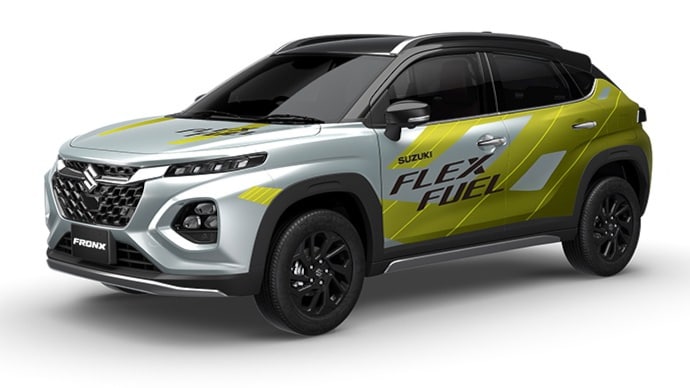
India could soon witness the introduction of its first mass-market passenger vehicle capable of running on 100 per cent ethanol fuel. Union Minister for Road Transport and Highways Nitin Gadkari has confirmed that Maruti Suzuki will unveil a flex-fuel passenger vehicle on June 5, coinciding with World Environment Day.
Speaking at an event in Nagpur, Gadkari said the upcoming model will support E100 fuel, pure ethanol with no petrol blend, marking a significant milestone in India’s alternative fuel push. While Maruti Suzuki has not officially revealed the model name, expect the flex-fuel version of the WagonR or the Fronx to be among the strongest contenders for launch.
The development comes shortly after the Ministry of Road Transport and Highways amended vehicle testing and certification norms to include E100-compatible vehicles, paving the way for automakers to commercially introduce pure ethanol-powered models in India.
During his address, Gadkari reiterated the government’s intention to reduce India’s dependence on imported fossil fuels. He highlighted that nearly 87 per cent of the country’s petrol, diesel and gas requirements are met through imports, increasing both pollution and foreign exchange outflow.
The minister also underlined the economic advantages of ethanol-based mobility, claiming that ethanol fuel costs around Rs 65 per litre and can substantially lower running expenses compared to conventional fuels. According to him, flex-fuel technology represents a cost-effective and cleaner alternative that also supports domestic agriculture by creating demand for ethanol production.
Gadkari further stated that multiple manufacturers, including Toyota, Tata Motors, Mahindra and Mahindra and Suzuki, are already developing flex-fuel-compatible products for the Indian market.
WagonR and Fronx among possible candidates
Although Maruti Suzuki has remained tight-lipped about the exact vehicle, the company has previously showcased flex-fuel prototypes of the Maruti Suzuki WagonR and Maruti Suzuki Fronx at various auto exhibitions.
The WagonR flex-fuel prototype was displayed at the Bharat Mobility Global Expo, while Suzuki also exhibited an ethanol-compatible Fronx overseas. Both models are understood to feature upgraded fuel system components and revised engine calibration to safely handle high ethanol concentrations.
Unlike standard petrol-powered cars, E100-compatible vehicles require specially engineered fuel lines, injectors, seals and internal components because ethanol is more corrosive and absorbs moisture more easily than petrol.
Flex-fuel adoption likely to remain gradual
Maruti Suzuki executives have previously acknowledged that while the company already possesses the required flex-fuel technology, large-scale adoption may take time due to limited fuel infrastructure.
Government evaluating higher ethanol blends
India currently follows the E20 petrol standard, which contains up to 20 per cent ethanol blending. However, the government is already evaluating the possibility of gradually increasing blending levels beyond E20, with discussions reportedly underway for E22, E25 and even E30 fuel standards.
The launch of an E100-compatible Maruti Suzuki vehicle would therefore serve as an important step in preparing the Indian automotive ecosystem for a broader transition towards alternative fuels and reduced crude oil dependency.
Subscribe to Auto Today Magazine
India could soon witness the introduction of its first mass-market passenger vehicle capable of running on 100 per cent ethanol fuel. Union Minister for Road Transport and Highways Nitin Gadkari has confirmed that Maruti Suzuki will unveil a flex-fuel passenger vehicle on June 5, coinciding with World Environment Day.
Speaking at an event in Nagpur, Gadkari said the upcoming model will support E100 fuel, pure ethanol with no petrol blend, marking a significant milestone in India’s alternative fuel push. While Maruti Suzuki has not officially revealed the model name, expect the flex-fuel version of the WagonR or the Fronx to be among the strongest contenders for launch.
The development comes shortly after the Ministry of Road Transport and Highways amended vehicle testing and certification norms to include E100-compatible vehicles, paving the way for automakers to commercially introduce pure ethanol-powered models in India.
During his address, Gadkari reiterated the government’s intention to reduce India’s dependence on imported fossil fuels. He highlighted that nearly 87 per cent of the country’s petrol, diesel and gas requirements are met through imports, increasing both pollution and foreign exchange outflow.
The minister also underlined the economic advantages of ethanol-based mobility, claiming that ethanol fuel costs around Rs 65 per litre and can substantially lower running expenses compared to conventional fuels. According to him, flex-fuel technology represents a cost-effective and cleaner alternative that also supports domestic agriculture by creating demand for ethanol production.
Gadkari further stated that multiple manufacturers, including Toyota, Tata Motors, Mahindra and Mahindra and Suzuki, are already developing flex-fuel-compatible products for the Indian market.
WagonR and Fronx among possible candidates
Although Maruti Suzuki has remained tight-lipped about the exact vehicle, the company has previously showcased flex-fuel prototypes of the Maruti Suzuki WagonR and Maruti Suzuki Fronx at various auto exhibitions.
The WagonR flex-fuel prototype was displayed at the Bharat Mobility Global Expo, while Suzuki also exhibited an ethanol-compatible Fronx overseas. Both models are understood to feature upgraded fuel system components and revised engine calibration to safely handle high ethanol concentrations.
Unlike standard petrol-powered cars, E100-compatible vehicles require specially engineered fuel lines, injectors, seals and internal components because ethanol is more corrosive and absorbs moisture more easily than petrol.
Flex-fuel adoption likely to remain gradual
Maruti Suzuki executives have previously acknowledged that while the company already possesses the required flex-fuel technology, large-scale adoption may take time due to limited fuel infrastructure.
Government evaluating higher ethanol blends
India currently follows the E20 petrol standard, which contains up to 20 per cent ethanol blending. However, the government is already evaluating the possibility of gradually increasing blending levels beyond E20, with discussions reportedly underway for E22, E25 and even E30 fuel standards.
The launch of an E100-compatible Maruti Suzuki vehicle would therefore serve as an important step in preparing the Indian automotive ecosystem for a broader transition towards alternative fuels and reduced crude oil dependency.
Subscribe to Auto Today Magazine

