At what price does E85 start making sense? The economics behind ethanol fuel
E85 fuel is cheaper at the pump, but its lower energy density increases consumption. So, at what price does it actually become cheaper to run than E20? We crunch the numbers.
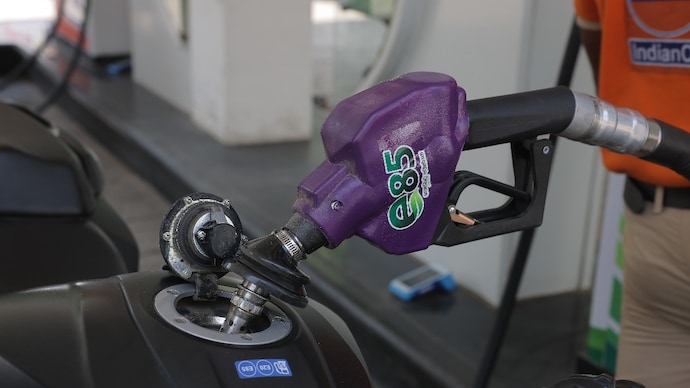
The commercial rollout of E85 fuel in India has reignited debate around the economics of high-ethanol blends. While E85 is currently priced at Rs 82 per litre in Delhi, nearly Rs 20 cheaper than E20 petrol at Rs 102.12 per litre, a recent fuel-efficiency test conducted by us suggests that the lower pump price alone may not be enough to deliver savings for motorists.
Using the Suzuki Gixxer SF flex fuel, a tank-to-tank comparison revealed a substantial difference in fuel consumption between the two fuels. The motorcycle returned 50.9kmpl on E20, but only 29.06kmpl on E85, representing a drop of nearly 43 per cent.
As a result, running costs actually increased despite the lower fuel price. The Gixxer recorded a fuel cost of approximately Rs 2 per kilometre on E20, compared to Rs 2.82 per kilometre on E85.
The Brazilian benchmark
Brazil, the world's largest and most mature flex-fuel market, offers a useful reference point. Brazilian motorists have long relied on the "70 per cent rule" when deciding whether to fill up with ethanol or petrol.
Because ethanol contains less energy per litre than petrol, it typically only becomes economically attractive when its price is no more than about 70 per cent of the petrol price. Beyond that threshold, the additional fuel consumption outweighs the lower pump price.
Applying the same rule to current Delhi prices, E85 would need to cost around Rs 71.5 per litre if E20 remains at Rs 102.12 per litre.
At its current price of Rs 82.12 per litre, E85 stands at roughly 80 per cent of the E20 price, well above the Brazilian benchmark.
What price would make E85 cost-neutral?
To match the running cost of E20, E85 would need to compensate for its lower fuel efficiency through a proportionately lower retail price.
Based on the Gixxer's observed efficiency of 29.06kmpl on E85 and 50.9kmpl on E20, E85 would need to be priced at roughly Rs 58 per litre to achieve the same cost-per-kilometre as E20 priced at Rs 102.12 per litre. At any price below Rs 58 per litre, E85 would begin to offer a cost advantage over E20 for the Suzuki Gixxer SF Flex Fuel.
In other words, E85 would need to be around 43 per cent cheaper than E20, rather than the current 19.6 per cent discount, to deliver cost parity.
When does E85 start making sense?
The answer depends on the actual efficiency penalty experienced by a vehicle.
Industry estimates and international experience suggest that E85 typically causes fuel economy to drop by around 20-30 per cent compared with petrol. Under those circumstances, E85 only becomes economically attractive if its price falls by a similar proportion.
At current E20 prices of Rs 102.12 per litre:
- If fuel efficiency drops by 20 per cent, E85 would need to be priced at roughly Rs 81.7 per litre to maintain the same running cost.
- If fuel efficiency drops by 30 per cent, E85 would need to cost around Rs 71.5 per litre, which aligns closely with Brazil's 70 per cent rule.
- If fuel efficiency drops by 43 per cent, as observed in our Suzuki Gixxer SF Flex Fuel test, E85 would need to be priced at approximately Rs 58 per litre.
This means that E85's current retail price of Rs 82.12 per litre only makes economic sense if a vehicle experiences an efficiency loss of around 20 per cent or less. For vehicles that see a larger drop in fuel economy, the fuel would need to be considerably cheaper to offset the increased consumption.
In simple terms, E85 starts becoming better value than E20 only when its price falls below the break-even level for the efficiency loss experienced by that vehicle. For the Gixxer SF Flex Fuel tested here, that threshold is around Rs 58 per litre.
More than just fuel costs
These calculations also exclude the higher upfront cost of flex-fuel vehicles. The Suzuki Gixxer SF Flex Fuel commands a premium of around Rs 8,000 over the standard model, while the Maruti Suzuki WagonR flex fuel is estimated to cost roughly Rs 86,000 more than its conventional counterpart.
Consequently, unless E85 is priced substantially lower than it is today, its strongest appeal is likely to remain its renewable fuel content, reduced dependence on fossil fuels and potential emissions benefits rather than outright running-cost savings.
For Indian motorists focused purely on fuel expenses, the numbers suggest that E85 begins to make economic sense at around Rs 82 per litre if efficiency losses are limited to 20 per cent, around Rs 71.5 per litre if losses are closer to 30 per cent, and near Rs 58 per litre if real-world results mirror the nearly 43 per cent efficiency drop recorded in our Suzuki Gixxer SF Flex Fuel test.
Subscribe to Auto Today Magazine
The commercial rollout of E85 fuel in India has reignited debate around the economics of high-ethanol blends. While E85 is currently priced at Rs 82 per litre in Delhi, nearly Rs 20 cheaper than E20 petrol at Rs 102.12 per litre, a recent fuel-efficiency test conducted by us suggests that the lower pump price alone may not be enough to deliver savings for motorists.
Using the Suzuki Gixxer SF flex fuel, a tank-to-tank comparison revealed a substantial difference in fuel consumption between the two fuels. The motorcycle returned 50.9kmpl on E20, but only 29.06kmpl on E85, representing a drop of nearly 43 per cent.
As a result, running costs actually increased despite the lower fuel price. The Gixxer recorded a fuel cost of approximately Rs 2 per kilometre on E20, compared to Rs 2.82 per kilometre on E85.
The Brazilian benchmark
Brazil, the world's largest and most mature flex-fuel market, offers a useful reference point. Brazilian motorists have long relied on the "70 per cent rule" when deciding whether to fill up with ethanol or petrol.
Because ethanol contains less energy per litre than petrol, it typically only becomes economically attractive when its price is no more than about 70 per cent of the petrol price. Beyond that threshold, the additional fuel consumption outweighs the lower pump price.
Applying the same rule to current Delhi prices, E85 would need to cost around Rs 71.5 per litre if E20 remains at Rs 102.12 per litre.
At its current price of Rs 82.12 per litre, E85 stands at roughly 80 per cent of the E20 price, well above the Brazilian benchmark.
What price would make E85 cost-neutral?
To match the running cost of E20, E85 would need to compensate for its lower fuel efficiency through a proportionately lower retail price.
Based on the Gixxer's observed efficiency of 29.06kmpl on E85 and 50.9kmpl on E20, E85 would need to be priced at roughly Rs 58 per litre to achieve the same cost-per-kilometre as E20 priced at Rs 102.12 per litre. At any price below Rs 58 per litre, E85 would begin to offer a cost advantage over E20 for the Suzuki Gixxer SF Flex Fuel.
In other words, E85 would need to be around 43 per cent cheaper than E20, rather than the current 19.6 per cent discount, to deliver cost parity.
When does E85 start making sense?
The answer depends on the actual efficiency penalty experienced by a vehicle.
Industry estimates and international experience suggest that E85 typically causes fuel economy to drop by around 20-30 per cent compared with petrol. Under those circumstances, E85 only becomes economically attractive if its price falls by a similar proportion.
At current E20 prices of Rs 102.12 per litre:
- If fuel efficiency drops by 20 per cent, E85 would need to be priced at roughly Rs 81.7 per litre to maintain the same running cost.
- If fuel efficiency drops by 30 per cent, E85 would need to cost around Rs 71.5 per litre, which aligns closely with Brazil's 70 per cent rule.
- If fuel efficiency drops by 43 per cent, as observed in our Suzuki Gixxer SF Flex Fuel test, E85 would need to be priced at approximately Rs 58 per litre.
This means that E85's current retail price of Rs 82.12 per litre only makes economic sense if a vehicle experiences an efficiency loss of around 20 per cent or less. For vehicles that see a larger drop in fuel economy, the fuel would need to be considerably cheaper to offset the increased consumption.
In simple terms, E85 starts becoming better value than E20 only when its price falls below the break-even level for the efficiency loss experienced by that vehicle. For the Gixxer SF Flex Fuel tested here, that threshold is around Rs 58 per litre.
More than just fuel costs
These calculations also exclude the higher upfront cost of flex-fuel vehicles. The Suzuki Gixxer SF Flex Fuel commands a premium of around Rs 8,000 over the standard model, while the Maruti Suzuki WagonR flex fuel is estimated to cost roughly Rs 86,000 more than its conventional counterpart.
Consequently, unless E85 is priced substantially lower than it is today, its strongest appeal is likely to remain its renewable fuel content, reduced dependence on fossil fuels and potential emissions benefits rather than outright running-cost savings.
For Indian motorists focused purely on fuel expenses, the numbers suggest that E85 begins to make economic sense at around Rs 82 per litre if efficiency losses are limited to 20 per cent, around Rs 71.5 per litre if losses are closer to 30 per cent, and near Rs 58 per litre if real-world results mirror the nearly 43 per cent efficiency drop recorded in our Suzuki Gixxer SF Flex Fuel test.
Subscribe to Auto Today Magazine

