E20 vs E85: Which is actually cheaper per kilometre?
E85 may be nearly Rs 20 per litre cheaper than petrol, but does that actually make it cheaper to run? The answer depends on one crucial factor: fuel efficiency.
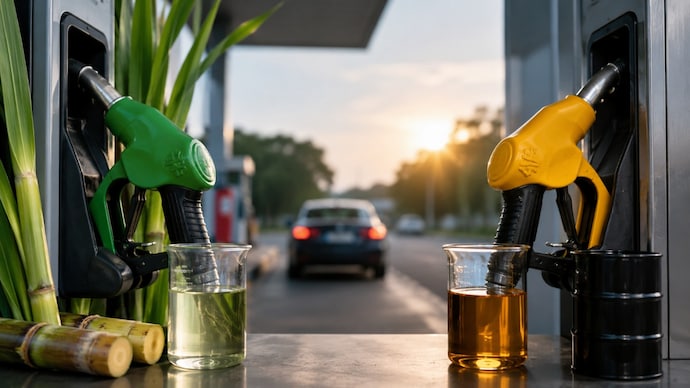
The launch of India's first E85 fuel station has ignited the debate around ethanol-based fuels. At first glance, E85 looks like a bargain. In Delhi, E85 is currently priced at Rs 82.12 per litre, almost Rs 20 cheaper than regular E20 petrol, which retails at around Rs 102 per litre.
But does that lower pump price actually translate into lower running costs? The answer is more complicated than it appears.
Understanding the fuel difference
E20 contains 20 per cent ethanol and 80 per cent petrol, making it the mainstream fuel grade in India today. E85, meanwhile, contains up to 85 per cent ethanol and can only be used in flex-fuel vehicles (FFVs) designed to run on high ethanol blends.
The biggest challenge for E85 is energy density. Ethanol contains around 30 per cent less energy per litre than petrol. As a result, vehicles running on high ethanol blends consume more fuel to travel the same distance.
This is a point even highlighted in KPMG's latest report, which notes that lower fuel efficiency remains one of the key hurdles for consumer acceptance of higher ethanol blends.
The numbers game
With E85, the efficiency drop is generally about 20-30% depending on the model. Let's assume a petrol car delivers 18kmpl on E20.
Because of ethanol's lower energy density, the same vehicle could see fuel economy fall to around 13-14kmpl on E85.
Running cost comparison
E20
- Fuel price: Rs 102 per litre
- Fuel efficiency: 18kmpl
- Cost per kilometre: Rs 5.67
E85
- Fuel price: Rs 82.12 per litre
- Fuel efficiency: 13.5 kmpl
- Cost per kilometre: Rs 6.08
In this example, despite being almost Rs 20 cheaper per litre, E85 actually ends up being slightly more expensive per kilometre.
So why does Brazil love E85?
Brazil, the world's largest flex-fuel market, follows a simple rule of thumb. Ethanol becomes financially attractive only when it costs less than 70 per cent of petrol's price.
In Delhi, E85 is priced at about 80 per cent of E20 petrol's price.
- E85: Rs 82.12/litre
- E20: Rs 102/litre
- Price ratio: 80 per cent
That means E85 currently falls short of the threshold where it starts making clear economic sense for most motorists.
For E85 to become truly competitive, its price may need to fall closer to Rs 70-72 per litre, assuming current petrol prices remain unchanged.
The equation could change
The economics of E85 are not fixed.
If global crude oil prices rise sharply, petrol prices could increase much faster than ethanol prices because ethanol is domestically produced. In such a scenario, the price gap between E20 and E85 could widen significantly, making E85 more attractive.
This is precisely why the KPMG report describes ethanol as a potential "crude shock buffer" that could protect India from global oil price volatility.
More than just economics
There are other benefits that support higher ethanol blends:
- Lower dependence on imported crude oil
- Additional income for farmers and ethanol producers
- Reduced carbon emissions
- Better energy security for India
However, consumers usually make fuel choices based on one simple question: which option is cheaper to drive?
At current prices, E85's lower pump price does not necessarily mean lower running costs. Unless ethanol becomes significantly cheaper relative to petrol or crude prices surge sharply, most motorists are unlikely to see meaningful savings from switching to E85.
Cheaper per litre? Yes.
Cheaper per kilometre? Not necessarily.
For now, E85 appears to be more of an energy security play than a money-saving proposition for Indian car buyers. But if petrol prices spike in the future, the equation could change quickly, potentially making ethanol the cheaper fuel to run.
Subscribe to Auto Today Magazine
The launch of India's first E85 fuel station has ignited the debate around ethanol-based fuels. At first glance, E85 looks like a bargain. In Delhi, E85 is currently priced at Rs 82.12 per litre, almost Rs 20 cheaper than regular E20 petrol, which retails at around Rs 102 per litre.
But does that lower pump price actually translate into lower running costs? The answer is more complicated than it appears.
Understanding the fuel difference
E20 contains 20 per cent ethanol and 80 per cent petrol, making it the mainstream fuel grade in India today. E85, meanwhile, contains up to 85 per cent ethanol and can only be used in flex-fuel vehicles (FFVs) designed to run on high ethanol blends.
The biggest challenge for E85 is energy density. Ethanol contains around 30 per cent less energy per litre than petrol. As a result, vehicles running on high ethanol blends consume more fuel to travel the same distance.
This is a point even highlighted in KPMG's latest report, which notes that lower fuel efficiency remains one of the key hurdles for consumer acceptance of higher ethanol blends.
The numbers game
With E85, the efficiency drop is generally about 20-30% depending on the model. Let's assume a petrol car delivers 18kmpl on E20.
Because of ethanol's lower energy density, the same vehicle could see fuel economy fall to around 13-14kmpl on E85.
Running cost comparison
E20
- Fuel price: Rs 102 per litre
- Fuel efficiency: 18kmpl
- Cost per kilometre: Rs 5.67
E85
- Fuel price: Rs 82.12 per litre
- Fuel efficiency: 13.5 kmpl
- Cost per kilometre: Rs 6.08
In this example, despite being almost Rs 20 cheaper per litre, E85 actually ends up being slightly more expensive per kilometre.
So why does Brazil love E85?
Brazil, the world's largest flex-fuel market, follows a simple rule of thumb. Ethanol becomes financially attractive only when it costs less than 70 per cent of petrol's price.
In Delhi, E85 is priced at about 80 per cent of E20 petrol's price.
- E85: Rs 82.12/litre
- E20: Rs 102/litre
- Price ratio: 80 per cent
That means E85 currently falls short of the threshold where it starts making clear economic sense for most motorists.
For E85 to become truly competitive, its price may need to fall closer to Rs 70-72 per litre, assuming current petrol prices remain unchanged.
The equation could change
The economics of E85 are not fixed.
If global crude oil prices rise sharply, petrol prices could increase much faster than ethanol prices because ethanol is domestically produced. In such a scenario, the price gap between E20 and E85 could widen significantly, making E85 more attractive.
This is precisely why the KPMG report describes ethanol as a potential "crude shock buffer" that could protect India from global oil price volatility.
More than just economics
There are other benefits that support higher ethanol blends:
- Lower dependence on imported crude oil
- Additional income for farmers and ethanol producers
- Reduced carbon emissions
- Better energy security for India
However, consumers usually make fuel choices based on one simple question: which option is cheaper to drive?
At current prices, E85's lower pump price does not necessarily mean lower running costs. Unless ethanol becomes significantly cheaper relative to petrol or crude prices surge sharply, most motorists are unlikely to see meaningful savings from switching to E85.
Cheaper per litre? Yes.
Cheaper per kilometre? Not necessarily.
For now, E85 appears to be more of an energy security play than a money-saving proposition for Indian car buyers. But if petrol prices spike in the future, the equation could change quickly, potentially making ethanol the cheaper fuel to run.
Subscribe to Auto Today Magazine

