I always recommend electric cars but I'd never buy one, the dichotomy of an enthusiast in 2026
I love loud, high-revving engines, so why do I keep recommending silent electric cars? Is it a compromise, or just the undeniable logic of efficiency quietly outweighing emotion in everyday driving? Let's find out.
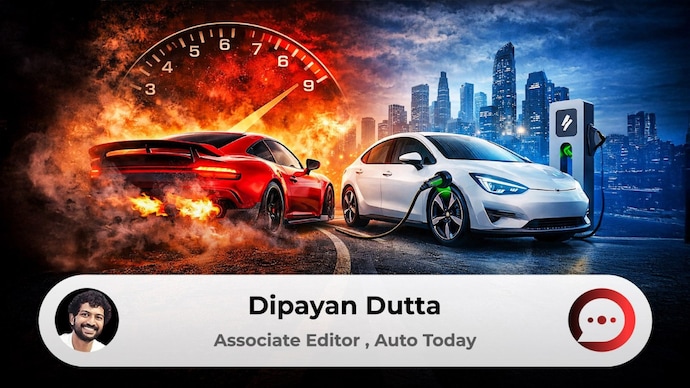
I worship loud exhausts and redlines—yet keep recommending electric cars. Betrayal? Not quite. Beneath the silence lies a ruthless logic that’s hard to ignore, and a future that might actually make enthusiast cars better, not extinct.
I am, was, and will almost certainly remain the sort of enthusiast who believes a proper car should be faintly obnoxious. Loud exhausts, the occasional whiff of overcooked brakes, and a personality that borders on anti-social—these are, to me, signs of good breeding. Which makes it deeply ironic that I’ve become the person friends, family, and occasionally strangers consult when they want to buy a car. Because more often than not, I find myself recommending an electric.
Not because I’ve gone soft, or worse, sensible—but because most people simply aren’t wired the way we are. They don’t wake up wanting a redline. They want reliability, low running costs, and something that slots neatly into their lives without demanding a mechanical relationship. And on those terms, electric cars are less a choice and more an inevitability.
Take running costs. A typical petrol car in the C-segment will sip away at seven to ten rupees per kilometre. An electric car, charged at home, manages the same journey for about a rupee. Which is by all means not a marginal gain; it is unjustifiable daylight robbery in reverse. Then there’s maintenance—or the lack of it. No engine oil, no filters, no spark plugs, no mysterious fluids that need periodic attention. You’re left with tyres, brake pads, and the faint suspicion that you’ve forgotten to service something important.
They’re also, rather annoyingly, better at the daily grind. Smooth in traffic, silent at speed, and spacious in a way that makes you question why we ever tolerated transmission tunnels and bulky drivetrains in the first place. Even the best internal combustion cars have their off days—jerky in traffic, grumbly when hot, and always carrying a hint of compromise in packaging. EVs, by contrast, just get on with it.
Of course, they’re not perfect. Charging infrastructure still requires a bit of planning, long-distance travel needs forethought, and there’s an emotional sterility to the experience that no amount of synthetic sound can fix. But for the vast majority of use cases—urban commutes, school runs, office hops—they’re almost clinically effective.
So yes, if your brief is simple—maximum comfort, minimum cost, and a dash of modern-day flex—buy an electric car. It will do everything you need, and do it better than most ICE alternatives.
Now, to the enthusiast currently drafting a strongly worded rebuttal: steady on. This isn’t treason; it’s context. You and I will still gravitate toward petrol cars. We’ll still tolerate their inefficiencies, complain about fuel prices, and romanticise their flaws with the kind of loyalty usually reserved for old Labradors. And the fear that EVs will wipe them out entirely? Unlikely.
If anything, the opposite may happen. As we edge toward a future where, say, 80–85 percent of cars are electric, the ones that vanish will be the forgettable middle—the beige crossovers, the uninspired seven-seaters, the automotive equivalent of office furniture. What survives will be the stuff worth caring about: sharp hot hatches, properly turbocharged sedans, mischievous coupes, and real, mud-plugging 4x4s with diff locks and intent.
In other words, the everyday car becomes an appliance—which, frankly, it always was for most people—while the enthusiast car becomes even more special. And that, rather wonderfully, means we all get what we want.
Subscribe to Auto Today Magazine
I worship loud exhausts and redlines—yet keep recommending electric cars. Betrayal? Not quite. Beneath the silence lies a ruthless logic that’s hard to ignore, and a future that might actually make enthusiast cars better, not extinct.
I am, was, and will almost certainly remain the sort of enthusiast who believes a proper car should be faintly obnoxious. Loud exhausts, the occasional whiff of overcooked brakes, and a personality that borders on anti-social—these are, to me, signs of good breeding. Which makes it deeply ironic that I’ve become the person friends, family, and occasionally strangers consult when they want to buy a car. Because more often than not, I find myself recommending an electric.
Not because I’ve gone soft, or worse, sensible—but because most people simply aren’t wired the way we are. They don’t wake up wanting a redline. They want reliability, low running costs, and something that slots neatly into their lives without demanding a mechanical relationship. And on those terms, electric cars are less a choice and more an inevitability.
Take running costs. A typical petrol car in the C-segment will sip away at seven to ten rupees per kilometre. An electric car, charged at home, manages the same journey for about a rupee. Which is by all means not a marginal gain; it is unjustifiable daylight robbery in reverse. Then there’s maintenance—or the lack of it. No engine oil, no filters, no spark plugs, no mysterious fluids that need periodic attention. You’re left with tyres, brake pads, and the faint suspicion that you’ve forgotten to service something important.
They’re also, rather annoyingly, better at the daily grind. Smooth in traffic, silent at speed, and spacious in a way that makes you question why we ever tolerated transmission tunnels and bulky drivetrains in the first place. Even the best internal combustion cars have their off days—jerky in traffic, grumbly when hot, and always carrying a hint of compromise in packaging. EVs, by contrast, just get on with it.
Of course, they’re not perfect. Charging infrastructure still requires a bit of planning, long-distance travel needs forethought, and there’s an emotional sterility to the experience that no amount of synthetic sound can fix. But for the vast majority of use cases—urban commutes, school runs, office hops—they’re almost clinically effective.
So yes, if your brief is simple—maximum comfort, minimum cost, and a dash of modern-day flex—buy an electric car. It will do everything you need, and do it better than most ICE alternatives.
Now, to the enthusiast currently drafting a strongly worded rebuttal: steady on. This isn’t treason; it’s context. You and I will still gravitate toward petrol cars. We’ll still tolerate their inefficiencies, complain about fuel prices, and romanticise their flaws with the kind of loyalty usually reserved for old Labradors. And the fear that EVs will wipe them out entirely? Unlikely.
If anything, the opposite may happen. As we edge toward a future where, say, 80–85 percent of cars are electric, the ones that vanish will be the forgettable middle—the beige crossovers, the uninspired seven-seaters, the automotive equivalent of office furniture. What survives will be the stuff worth caring about: sharp hot hatches, properly turbocharged sedans, mischievous coupes, and real, mud-plugging 4x4s with diff locks and intent.
In other words, the everyday car becomes an appliance—which, frankly, it always was for most people—while the enthusiast car becomes even more special. And that, rather wonderfully, means we all get what we want.
Subscribe to Auto Today Magazine

