Ethanol can cut imports and clean the air, says Toyota's Vikram Gulati
As India rolls out E85 fuel, Toyota's Vikram Gulati says higher ethanol blends can help curb pollution, reduce crude oil imports, support farmers and accelerate the country's transition to cleaner mobility.
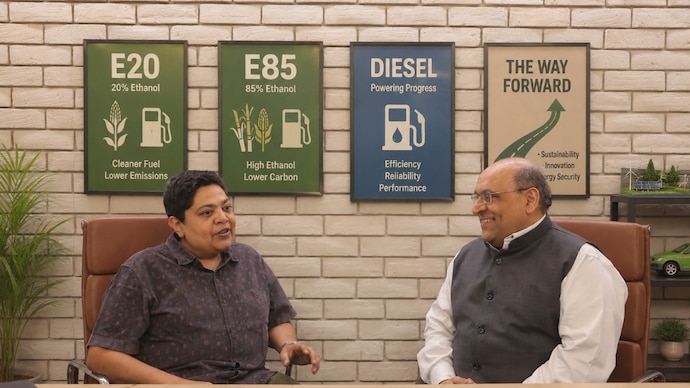
India's ethanol push is not just about reducing fuel imports; it could also become one of the country's most effective tools to tackle pollution and strengthen energy security. That was the key message from Toyota Kirloskar Motor's Country Head and Executive Vice President (Corporate Affairs and Governance), Vikram Gulati, during an interaction with Auto Today.
As India begins the commercial rollout of E85 fuel, Gulati argued that higher ethanol blends could deliver significant economic and environmental benefits while helping the country become less dependent on imported crude oil.
A solution to India's oil dependency
India currently imports nearly 88 per cent of its crude oil requirements, making the economy highly vulnerable to global price fluctuations and geopolitical disruptions.
According to Gulati, every USD 10 increase in crude oil prices results in an additional foreign exchange outgo of 15-18 billion USD and can widen the country's current account deficit by as much as 0.35-0.5 per cent.
"This shifting to ethanol is a national priority," Gulati said, adding that reducing dependence on imported fossil fuels is essential for India's long-term economic stability.
Lower emissions than EVs in India?
Gulati also highlighted the environmental advantages of ethanol-based mobility, particularly when paired with hybrid technology.
Citing a recent study by the Indian Institute of Science (IISc), he said that a flex-fuel vehicle running on 100 per cent ethanol combined with a hybrid powertrain could have a well-to-wheel carbon footprint of just 15-16 grams per kilometre. In comparison, he claimed that a battery electric vehicle currently has a carbon footprint of around 120 grams per kilometre in India due to the country's coal-heavy electricity generation mix.
While EVs remain a key part of India's decarbonisation strategy, Gulati believes biofuels offer a practical and immediate pathway to reducing emissions.
A boost for farmers and waste utilisation
Gulati also positioned ethanol as an opportunity for rural development and agricultural waste management.
He pointed out that regions surrounding Delhi are major sugarcane-producing belts and are also affected by stubble burning. The development of second-generation (2G) ethanol, produced from agricultural residue such as paddy straw or parali, could help address both issues simultaneously.
He urged the Delhi government to include flex-fuel and electrified flex-fuel vehicles in its clean mobility policies, arguing that such a move would not only improve air quality but also create additional income opportunities for farmers.
"It will not only take care of clean mobility, it will also help farmers and retain value within the country," he said.
Faster adoption than EVs?
When asked whether flex-fuel vehicles could be adopted faster than battery electric vehicles, Gulati answered in the affirmative.
According to him, ethanol does not require consumers to change their usage patterns and also avoids the infrastructure challenges associated with EV charging.
India already has more than 100,000 petrol pumps that can potentially be upgraded to dispense E85 fuel. In addition, the country has already established an extensive ethanol production ecosystem.
India's ethanol production capacity currently exceeds what is required for E20 blending, creating room for higher ethanol blends and broader flex-fuel adoption.
"There is no faster way to lower crude oil consumption than the flex-fuel approach," Gulati said.
E85 arrives in Delhi
The discussion comes at a time when E85 has become one of the most talked-about developments in India's automotive and energy sectors.
On June 5, Union Petroleum and Natural Gas Minister Hardeep Singh Puri inaugurated Delhi's first E85 dispensing station at an Indian Oil Corporation outlet on Pusa Road.
Priced at Rs 82.12 per litre in Delhi, E85 is exactly Rs 20 cheaper than regular E20 petrol sold in the national capital.
The government plans to establish around 50 to 100 E85 stations across the Delhi-NCR and Mumbai-Pune-Nagpur corridors in the initial phase, with the network expected to expand to nearly 500 stations by the end of this year. The long-term target is to have approximately 5,000 E85 outlets operational across major Indian cities by the end of 2027.
The road ahead
The government's recent notification of fuel standards for higher ethanol blends, including E22, E25, E27 and E30, signals that E20 is only just the beginning.
However, the transition is not without challenges. Higher ethanol blends can lead to lower fuel efficiency due to ethanol's lower energy density, and some motorists have reported concerns regarding compatibility in older vehicles.
Still, supporters of ethanol argue that the benefits extend far beyond fuel prices. Reduced oil imports, lower emissions, support for farmers and the utilisation of agricultural waste together make biofuels a compelling pillar of India's future mobility strategy.
Subscribe to Auto Today Magazine
India's ethanol push is not just about reducing fuel imports; it could also become one of the country's most effective tools to tackle pollution and strengthen energy security. That was the key message from Toyota Kirloskar Motor's Country Head and Executive Vice President (Corporate Affairs and Governance), Vikram Gulati, during an interaction with Auto Today.
As India begins the commercial rollout of E85 fuel, Gulati argued that higher ethanol blends could deliver significant economic and environmental benefits while helping the country become less dependent on imported crude oil.
A solution to India's oil dependency
India currently imports nearly 88 per cent of its crude oil requirements, making the economy highly vulnerable to global price fluctuations and geopolitical disruptions.
According to Gulati, every USD 10 increase in crude oil prices results in an additional foreign exchange outgo of 15-18 billion USD and can widen the country's current account deficit by as much as 0.35-0.5 per cent.
"This shifting to ethanol is a national priority," Gulati said, adding that reducing dependence on imported fossil fuels is essential for India's long-term economic stability.
Lower emissions than EVs in India?
Gulati also highlighted the environmental advantages of ethanol-based mobility, particularly when paired with hybrid technology.
Citing a recent study by the Indian Institute of Science (IISc), he said that a flex-fuel vehicle running on 100 per cent ethanol combined with a hybrid powertrain could have a well-to-wheel carbon footprint of just 15-16 grams per kilometre. In comparison, he claimed that a battery electric vehicle currently has a carbon footprint of around 120 grams per kilometre in India due to the country's coal-heavy electricity generation mix.
While EVs remain a key part of India's decarbonisation strategy, Gulati believes biofuels offer a practical and immediate pathway to reducing emissions.
A boost for farmers and waste utilisation
Gulati also positioned ethanol as an opportunity for rural development and agricultural waste management.
He pointed out that regions surrounding Delhi are major sugarcane-producing belts and are also affected by stubble burning. The development of second-generation (2G) ethanol, produced from agricultural residue such as paddy straw or parali, could help address both issues simultaneously.
He urged the Delhi government to include flex-fuel and electrified flex-fuel vehicles in its clean mobility policies, arguing that such a move would not only improve air quality but also create additional income opportunities for farmers.
"It will not only take care of clean mobility, it will also help farmers and retain value within the country," he said.
Faster adoption than EVs?
When asked whether flex-fuel vehicles could be adopted faster than battery electric vehicles, Gulati answered in the affirmative.
According to him, ethanol does not require consumers to change their usage patterns and also avoids the infrastructure challenges associated with EV charging.
India already has more than 100,000 petrol pumps that can potentially be upgraded to dispense E85 fuel. In addition, the country has already established an extensive ethanol production ecosystem.
India's ethanol production capacity currently exceeds what is required for E20 blending, creating room for higher ethanol blends and broader flex-fuel adoption.
"There is no faster way to lower crude oil consumption than the flex-fuel approach," Gulati said.
E85 arrives in Delhi
The discussion comes at a time when E85 has become one of the most talked-about developments in India's automotive and energy sectors.
On June 5, Union Petroleum and Natural Gas Minister Hardeep Singh Puri inaugurated Delhi's first E85 dispensing station at an Indian Oil Corporation outlet on Pusa Road.
Priced at Rs 82.12 per litre in Delhi, E85 is exactly Rs 20 cheaper than regular E20 petrol sold in the national capital.
The government plans to establish around 50 to 100 E85 stations across the Delhi-NCR and Mumbai-Pune-Nagpur corridors in the initial phase, with the network expected to expand to nearly 500 stations by the end of this year. The long-term target is to have approximately 5,000 E85 outlets operational across major Indian cities by the end of 2027.
The road ahead
The government's recent notification of fuel standards for higher ethanol blends, including E22, E25, E27 and E30, signals that E20 is only just the beginning.
However, the transition is not without challenges. Higher ethanol blends can lead to lower fuel efficiency due to ethanol's lower energy density, and some motorists have reported concerns regarding compatibility in older vehicles.
Still, supporters of ethanol argue that the benefits extend far beyond fuel prices. Reduced oil imports, lower emissions, support for farmers and the utilisation of agricultural waste together make biofuels a compelling pillar of India's future mobility strategy.
Subscribe to Auto Today Magazine

