Nitin Gadkari dismisses E20 damage claims but survey and ARAI suggest otherwise
Union Minister Nitin Gadkari has dismissed concerns over E20 petrol damaging vehicles, but a survey and an ARAI study present a more complex picture, highlighting potential compatibility and durability concerns.
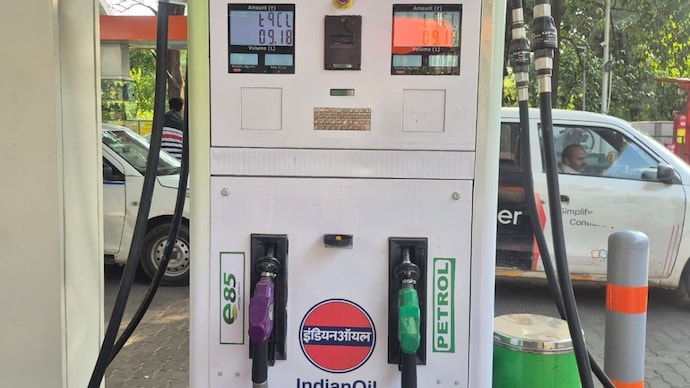
As the debate over ethanol-blended petrol intensifies, Union Road Transport and Highways Minister Nitin Gadkari has defended the government's E20 fuel programme, challenging critics to identify a single vehicle that has been damaged because of using the higher ethanol blend.
Speaking at the Viksit Bharat Conclave on Tuesday, Gadkari dismissed allegations that E20 petrol harms vehicles, calling such claims part of a "false narrative" driven by paid campaigns.
"There is no case of any car facing issues due to E20 petrol. Has there been any car in the country that faced issues due to the use of E20 petrol? Just name one," the minister said.
His remarks come at a time when India's ethanol-blending programme is under renewed scrutiny. While the government has achieved its target of 20 per cent ethanol blending in petrol to reduce crude oil imports, lower emissions and support the agricultural sector, questions continue to be raised over its impact on vehicles that were originally designed for lower ethanol blends.
Survey points to growing ownership concerns
Contrary to the government's position, a recent LocalCircles survey suggests many owners of older petrol vehicles believe E20 fuel is affecting their vehicles.
The survey, based on responses from over 44,000 owners of petrol vehicles manufactured before 2023 across 305 districts, found that 55 per cent of respondents reported higher wear and tear or increased repair requirements since early 2025. The figure represents a sharp rise from 29 per cent recorded in a similar survey conducted just a month earlier.
Among those who reported problems, nearly one-fourth described the increase in repairs as significant, while another sizeable group said maintenance requirements had risen moderately. Only 38 per cent said they had not observed any unusual changes.
The survey attributes these complaints to ethanol's chemical properties. Since ethanol readily absorbs moisture, it can potentially promote corrosion in fuel-system components and gradually degrade rubber and plastic parts such as hoses, seals and O-rings, particularly in vehicles that were not originally engineered for E20 fuel.
What the ARAI study found
A separate study conducted by the Automotive Research Association of India (ARAI) paints a more nuanced picture.
According to the report, which has not been made public, the use of E20 in vehicles designed for E10 fuel did not adversely affect metallic fuel-system components. However, the study found that certain non-metallic components including rubber hoses, gaskets, seals and O-rings could deteriorate over time and may eventually require replacement.
The findings are consistent with observations made by the Society of Indian Automobile Manufacturers (SIAM), which also indicated that some rubber fuel-system parts could experience accelerated ageing when exposed to higher ethanol blends.
The ARAI study further noted that overall durability and emissions performance remained broadly comparable to E10 fuel in most vehicles tested. Tailpipe and evaporative emissions largely remained within regulatory limits, while startability and drivability were found to be satisfactory in most cases, with some exceptions in older BS-IV two-wheelers.
Fuel efficiency, however, was found to decline slightly. The study estimated fuel consumption could increase by around 2 to 6 per cent with E20 compared to E10, although the impact varied across different vehicle models.
Mixed engine durability results
Engine durability testing produced mixed outcomes across manufacturers.
According to a report by The Times of India, one manufacturer reported no significant issues after approximately 400 hours of testing. Another manufacturer, however, observed thermomechanical failure of an exhaust valve during cumulative testing of around 809 hours. The report noted that experts differed on whether the failure could be directly attributed to E20 fuel, with some pointing out that standard durability testing often extends to around 2,000 hours.
For two-wheelers, manufacturers participating in the study did not report major durability concerns during testing.
Transition still underway
The findings assume significance because a large share of India's existing vehicle fleet predates mandatory E20 compatibility norms.
Production of E20 material-compatible vehicles began in 2023, while from April 2025 all newly manufactured vehicles are required to be both material- and fuel-compatible with E20. Older vehicles, particularly those built before these standards came into force, were largely designed for E10 or lower ethanol blends.
As India continues expanding ethanol use to improve energy security and reduce emissions, the debate has shifted beyond fuel economy to long-term compatibility. While the government maintains there is no proven case of vehicle damage caused by E20 petrol, surveys and technical studies indicate that certain older vehicles may experience higher maintenance requirements, particularly in rubber fuel-system components, underscoring the need for continued monitoring as the transition progresses.
Subscribe to Auto Today Magazine
As the debate over ethanol-blended petrol intensifies, Union Road Transport and Highways Minister Nitin Gadkari has defended the government's E20 fuel programme, challenging critics to identify a single vehicle that has been damaged because of using the higher ethanol blend.
Speaking at the Viksit Bharat Conclave on Tuesday, Gadkari dismissed allegations that E20 petrol harms vehicles, calling such claims part of a "false narrative" driven by paid campaigns.
"There is no case of any car facing issues due to E20 petrol. Has there been any car in the country that faced issues due to the use of E20 petrol? Just name one," the minister said.
His remarks come at a time when India's ethanol-blending programme is under renewed scrutiny. While the government has achieved its target of 20 per cent ethanol blending in petrol to reduce crude oil imports, lower emissions and support the agricultural sector, questions continue to be raised over its impact on vehicles that were originally designed for lower ethanol blends.
Survey points to growing ownership concerns
Contrary to the government's position, a recent LocalCircles survey suggests many owners of older petrol vehicles believe E20 fuel is affecting their vehicles.
The survey, based on responses from over 44,000 owners of petrol vehicles manufactured before 2023 across 305 districts, found that 55 per cent of respondents reported higher wear and tear or increased repair requirements since early 2025. The figure represents a sharp rise from 29 per cent recorded in a similar survey conducted just a month earlier.
Among those who reported problems, nearly one-fourth described the increase in repairs as significant, while another sizeable group said maintenance requirements had risen moderately. Only 38 per cent said they had not observed any unusual changes.
The survey attributes these complaints to ethanol's chemical properties. Since ethanol readily absorbs moisture, it can potentially promote corrosion in fuel-system components and gradually degrade rubber and plastic parts such as hoses, seals and O-rings, particularly in vehicles that were not originally engineered for E20 fuel.
What the ARAI study found
A separate study conducted by the Automotive Research Association of India (ARAI) paints a more nuanced picture.
According to the report, which has not been made public, the use of E20 in vehicles designed for E10 fuel did not adversely affect metallic fuel-system components. However, the study found that certain non-metallic components including rubber hoses, gaskets, seals and O-rings could deteriorate over time and may eventually require replacement.
The findings are consistent with observations made by the Society of Indian Automobile Manufacturers (SIAM), which also indicated that some rubber fuel-system parts could experience accelerated ageing when exposed to higher ethanol blends.
The ARAI study further noted that overall durability and emissions performance remained broadly comparable to E10 fuel in most vehicles tested. Tailpipe and evaporative emissions largely remained within regulatory limits, while startability and drivability were found to be satisfactory in most cases, with some exceptions in older BS-IV two-wheelers.
Fuel efficiency, however, was found to decline slightly. The study estimated fuel consumption could increase by around 2 to 6 per cent with E20 compared to E10, although the impact varied across different vehicle models.
Mixed engine durability results
Engine durability testing produced mixed outcomes across manufacturers.
According to a report by The Times of India, one manufacturer reported no significant issues after approximately 400 hours of testing. Another manufacturer, however, observed thermomechanical failure of an exhaust valve during cumulative testing of around 809 hours. The report noted that experts differed on whether the failure could be directly attributed to E20 fuel, with some pointing out that standard durability testing often extends to around 2,000 hours.
For two-wheelers, manufacturers participating in the study did not report major durability concerns during testing.
Transition still underway
The findings assume significance because a large share of India's existing vehicle fleet predates mandatory E20 compatibility norms.
Production of E20 material-compatible vehicles began in 2023, while from April 2025 all newly manufactured vehicles are required to be both material- and fuel-compatible with E20. Older vehicles, particularly those built before these standards came into force, were largely designed for E10 or lower ethanol blends.
As India continues expanding ethanol use to improve energy security and reduce emissions, the debate has shifted beyond fuel economy to long-term compatibility. While the government maintains there is no proven case of vehicle damage caused by E20 petrol, surveys and technical studies indicate that certain older vehicles may experience higher maintenance requirements, particularly in rubber fuel-system components, underscoring the need for continued monitoring as the transition progresses.
Subscribe to Auto Today Magazine

