E20 today, E30 tomorrow? Should you rethink your next petrol vehicle purchase?
While E20 is now the norm, the notification of E22, E25, E27 and E30 standards raises fresh questions about how future fuel policies could impact today's petrol vehicles and in the future diesel will likely be blended with 15 per cent isobutanol.
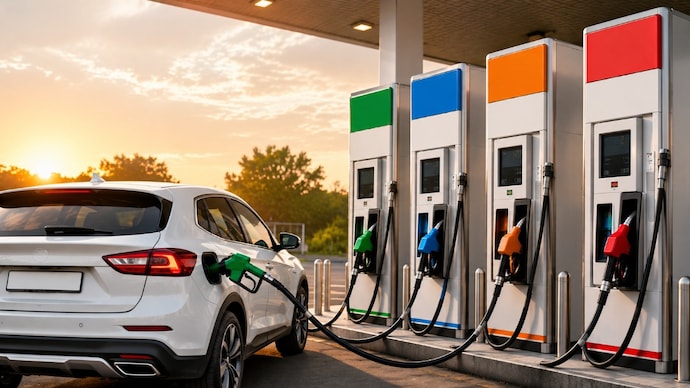
Ethanol and E85 fuel has emerged as one of the most discussed developments in India's automotive and energy sectors, and it has now officially arrived in the national capital. On June 5, Union Petroleum and Natural Gas Minister Hardeep Singh Puri inaugurated Delhi's first E85 fuel dispensing station at Indian Oil's Pusa Road outlet, marking the commercial rollout of the high-ethanol fuel.
However, E85 itself is not the immediate concern for most vehicle owners. The fuel is being offered separately and can only be used in flex-fuel vehicles specifically engineered to handle ethanol concentrations of up to 85 per cent. In Delhi, E85 is currently priced around Rs 20 per litre lower than E20 fuel, making it an attractive option for compatible vehicles.
The bigger question lies elsewhere
In May, the government officially notified fuel standards for higher ethanol-petrol blends, including E22, E25, E27 and E30. While these blends are not yet available at fuel stations, the notification establishes the technical framework for their future introduction and signals the next phase of India's ethanol-blending programme. More importantly, it suggests that E20 may not be the final destination.
The rapid transition from E10 to E20 in recent years has already demonstrated how quickly fuel policies can evolve.
Should you be worried about E22, E25, E27 and E30?
When India transitioned from E10 to E20, some motorists reported a slight drop in fuel efficiency, while others experienced minor drivability issues in older vehicles. However, the shift did not create widespread problems because most modern vehicles had already been upgraded to handle higher ethanol content.
The challenge becomes more significant as ethanol concentrations rise beyond 20 per cent.
Ethanol contains less energy per litre than petrol, meaning higher blends generally result in lower fuel economy unless engines are specifically calibrated to compensate. Ethanol is also more corrosive than petrol and attracts moisture, which can affect fuel-system components such as fuel pumps, injectors, rubber seals, hoses and storage systems if they are not designed for higher concentrations.
What happens with E22?
For most E20-compliant vehicles, E22 is unlikely to create any major operational issues. The difference between 20 per cent and 22 per cent ethanol is relatively small, and modern engine management systems can usually adjust fuel delivery to maintain smooth performance.
Fuel economy may drop marginally, but the impact is expected to be negligible for most users.
What happens with E25?
At 25 per cent ethanol concentration, calibration becomes increasingly important. Vehicles designed specifically for E20 may still operate safely, but long-term exposure could accelerate wear on fuel-system components that were not engineered for higher ethanol content.
What happens with E27?
E27 begins to enter territory where compatibility concerns become more pronounced. Ethanol's lower energy density can lead to a more noticeable reduction in mileage, while material compatibility becomes a larger issue.
Vehicles not specifically certified for such blends may experience increased stress on fuel-system components over time. Cold-start performance could also become more challenging, particularly in colder regions.
What happens with E30?
At E30, the gap between current E20 vehicle specifications and fuel requirements becomes substantial. Engines may still run, but manufacturers would likely need dedicated calibrations, upgraded fuel-system materials and revised emission-control strategies to ensure long-term durability and compliance.
Without appropriate engineering changes, prolonged use could increase the risk of component degradation and performance inconsistencies.
Can conversion kits solve the problem?
Conversion kits could play an important role if ethanol blends continue to rise. These kits typically include upgraded fuel lines, seals, injectors and electronic control modules capable of adjusting fuel delivery for higher ethanol concentrations.
Such solutions have been used in markets where flex-fuel vehicles are common. However, widespread adoption in India would require regulatory approval, manufacturer support and standardised certification processes to ensure reliability and safety.
For existing vehicle owners, approved conversion kits could potentially offer a more affordable alternative to replacing vehicles entirely if future fuel blends exceed current compatibility limits.
The diesel question has also emerged
The discussion is no longer limited to petrol.
During the unveiling of the flex-fuel version of the Maruti Suzuki WagonR, Union Road Transport and Highways Minister Nitin Gadkari revealed that the government is considering allowing up to 15 per cent isobutanol blending in diesel.
Isobutanol is another biofuel that offers certain advantages over ethanol, including higher energy density and lower water absorption characteristics. However, how modern diesel engines, fuel-injection systems, emission-control equipment and long-term durability will respond to such blends remains largely untested in real-world Indian conditions.
Manufacturers are expected to undertake extensive validation before any large-scale rollout occurs.
Should you still buy a petrol car?
If you are buying a new petrol vehicle in 2026, there is no immediate reason to avoid it. All major manufacturers now offer E20-compliant engines, and E20 is expected to remain the mainstream petrol grade for several years. Even if higher blends such as E22 or E25 are introduced, the transition is likely to be gradual rather than sudden.
However, the government's recent notification of E22, E25, E27 and E30 fuel standards raises an important question for long-term owners. While today's E20-compliant vehicles are designed to handle 20 per cent ethanol blends, it is not yet clear how these vehicles will perform over hundreds of thousands of kilometres on significantly higher ethanol concentrations.
For buyers who typically replace their cars every five to seven years, this is unlikely to be a concern. But those planning to keep a petrol vehicle for 10-15 years may want to consider whether future fuel policies could eventually require upgrades, recalibrations or conversion kits.
The bigger uncertainty is not E85, which is meant only for flex-fuel vehicles, but whether India accelerates beyond E20 faster than expected, just as it fast-tracked the transition from E10 to E20.
The fuel itself is not a problem today, but the direction of future policy is something prospective buyers can no longer ignore.
Subscribe to Auto Today Magazine
Ethanol and E85 fuel has emerged as one of the most discussed developments in India's automotive and energy sectors, and it has now officially arrived in the national capital. On June 5, Union Petroleum and Natural Gas Minister Hardeep Singh Puri inaugurated Delhi's first E85 fuel dispensing station at Indian Oil's Pusa Road outlet, marking the commercial rollout of the high-ethanol fuel.
However, E85 itself is not the immediate concern for most vehicle owners. The fuel is being offered separately and can only be used in flex-fuel vehicles specifically engineered to handle ethanol concentrations of up to 85 per cent. In Delhi, E85 is currently priced around Rs 20 per litre lower than E20 fuel, making it an attractive option for compatible vehicles.
The bigger question lies elsewhere
In May, the government officially notified fuel standards for higher ethanol-petrol blends, including E22, E25, E27 and E30. While these blends are not yet available at fuel stations, the notification establishes the technical framework for their future introduction and signals the next phase of India's ethanol-blending programme. More importantly, it suggests that E20 may not be the final destination.
The rapid transition from E10 to E20 in recent years has already demonstrated how quickly fuel policies can evolve.
Should you be worried about E22, E25, E27 and E30?
When India transitioned from E10 to E20, some motorists reported a slight drop in fuel efficiency, while others experienced minor drivability issues in older vehicles. However, the shift did not create widespread problems because most modern vehicles had already been upgraded to handle higher ethanol content.
The challenge becomes more significant as ethanol concentrations rise beyond 20 per cent.
Ethanol contains less energy per litre than petrol, meaning higher blends generally result in lower fuel economy unless engines are specifically calibrated to compensate. Ethanol is also more corrosive than petrol and attracts moisture, which can affect fuel-system components such as fuel pumps, injectors, rubber seals, hoses and storage systems if they are not designed for higher concentrations.
What happens with E22?
For most E20-compliant vehicles, E22 is unlikely to create any major operational issues. The difference between 20 per cent and 22 per cent ethanol is relatively small, and modern engine management systems can usually adjust fuel delivery to maintain smooth performance.
Fuel economy may drop marginally, but the impact is expected to be negligible for most users.
What happens with E25?
At 25 per cent ethanol concentration, calibration becomes increasingly important. Vehicles designed specifically for E20 may still operate safely, but long-term exposure could accelerate wear on fuel-system components that were not engineered for higher ethanol content.
What happens with E27?
E27 begins to enter territory where compatibility concerns become more pronounced. Ethanol's lower energy density can lead to a more noticeable reduction in mileage, while material compatibility becomes a larger issue.
Vehicles not specifically certified for such blends may experience increased stress on fuel-system components over time. Cold-start performance could also become more challenging, particularly in colder regions.
What happens with E30?
At E30, the gap between current E20 vehicle specifications and fuel requirements becomes substantial. Engines may still run, but manufacturers would likely need dedicated calibrations, upgraded fuel-system materials and revised emission-control strategies to ensure long-term durability and compliance.
Without appropriate engineering changes, prolonged use could increase the risk of component degradation and performance inconsistencies.
Can conversion kits solve the problem?
Conversion kits could play an important role if ethanol blends continue to rise. These kits typically include upgraded fuel lines, seals, injectors and electronic control modules capable of adjusting fuel delivery for higher ethanol concentrations.
Such solutions have been used in markets where flex-fuel vehicles are common. However, widespread adoption in India would require regulatory approval, manufacturer support and standardised certification processes to ensure reliability and safety.
For existing vehicle owners, approved conversion kits could potentially offer a more affordable alternative to replacing vehicles entirely if future fuel blends exceed current compatibility limits.
The diesel question has also emerged
The discussion is no longer limited to petrol.
During the unveiling of the flex-fuel version of the Maruti Suzuki WagonR, Union Road Transport and Highways Minister Nitin Gadkari revealed that the government is considering allowing up to 15 per cent isobutanol blending in diesel.
Isobutanol is another biofuel that offers certain advantages over ethanol, including higher energy density and lower water absorption characteristics. However, how modern diesel engines, fuel-injection systems, emission-control equipment and long-term durability will respond to such blends remains largely untested in real-world Indian conditions.
Manufacturers are expected to undertake extensive validation before any large-scale rollout occurs.
Should you still buy a petrol car?
If you are buying a new petrol vehicle in 2026, there is no immediate reason to avoid it. All major manufacturers now offer E20-compliant engines, and E20 is expected to remain the mainstream petrol grade for several years. Even if higher blends such as E22 or E25 are introduced, the transition is likely to be gradual rather than sudden.
However, the government's recent notification of E22, E25, E27 and E30 fuel standards raises an important question for long-term owners. While today's E20-compliant vehicles are designed to handle 20 per cent ethanol blends, it is not yet clear how these vehicles will perform over hundreds of thousands of kilometres on significantly higher ethanol concentrations.
For buyers who typically replace their cars every five to seven years, this is unlikely to be a concern. But those planning to keep a petrol vehicle for 10-15 years may want to consider whether future fuel policies could eventually require upgrades, recalibrations or conversion kits.
The bigger uncertainty is not E85, which is meant only for flex-fuel vehicles, but whether India accelerates beyond E20 faster than expected, just as it fast-tracked the transition from E10 to E20.
The fuel itself is not a problem today, but the direction of future policy is something prospective buyers can no longer ignore.
Subscribe to Auto Today Magazine

