What happens if your E10 or E20 car is filled with E25 petrol?
With higher ethanol blends already notified, questions are being raised over whether E10- and E20-compatible cars can safely run on the new fuel, and what impact it could have on mileage, performance and long-term reliability.
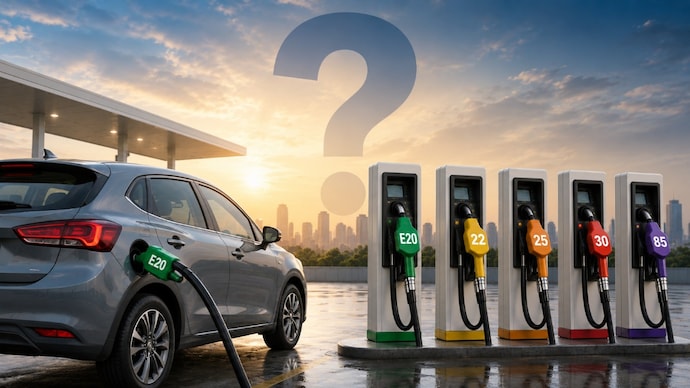
Ethanol blending has attracted significant attention in India, along with criticism of the government's rollout. The current standard is E20 (20 per cent ethanol-blended petrol), and many owners of older petrol vehicles have reported reduced fuel efficiency and increased wear and tear after switching to the higher blend. While such concerns have been widely discussed on social media and highlighted in surveys, the government's ethanol-blending programme is primarily aimed at reducing crude oil imports, cutting fuel costs, and lowering dependence.
With even higher ethanol blends already notified, the next question is what happens beyond E20. If India moves to E25, will existing E10- and E20-compatible vehicles be able to use the fuel safely? Could it affect mileage, performance, engine durability or maintenance costs? Here's a closer look at the potential implications if we move to E25.
India's transition to E20 petrol was accompanied by widespread complaints from owners of older petrol vehicles over reduced fuel efficiency and increased maintenance costs. If ethanol content rises further to 25%, the impact will largely depend on when a vehicle was manufactured and the level of ethanol compatibility it was originally designed for.
What happens if an E10-compatible car runs on E25?
For vehicles designed only for E10 petrol, regularly using E25 could create significantly more problems than the shift from E10 to E20. These vehicles were engineered for a maximum ethanol content of 10 per cent, and using a fuel with 25 per cent ethanol could accelerate wear on components that were never designed for such blends.
The concern isn't merely theoretical. During the transition to E20, many owners of older petrol vehicles reported a noticeable drop in fuel efficiency and rising maintenance costs.
A nationwide survey conducted by citizen engagement platform LocalCircles found that 66 per cent of owners of petrol vehicles manufactured before 2023 said their vehicle's fuel efficiency had dropped by more than 10 per cent after the wider rollout of E20 petrol. This marked a sharp increase from 45 per cent recorded in a similar survey conducted earlier.
Among over 22,000 respondents, 23 per cent reported mileage losses exceeding 20 per cent, another 23 per cent reported a decline of 15-20 per cent, while 20 per cent said fuel efficiency had fallen by 10-15 per cent. Separately, among nearly 22,700 respondents, 24 per cent reported a major increase in wear and tear, while 21 per cent cited moderate increases. Many said they had to replace or repair components such as fuel pumps, injectors, carburettors, fuel lines and fuel tanks.
While the survey reflects owners' experiences rather than controlled engineering testing, it underscores the concerns surrounding higher ethanol blends in vehicles that were not originally designed for them.
If ethanol content rises further to E25, E10-compatible vehicles could face an even greater impact over prolonged use, including:
- Lower fuel economy due to ethanol's lower energy density compared with petrol
- Faster deterioration of rubber seals, hoses and gaskets
- Increased corrosion in fuel tanks, injectors and fuel lines
- Greater moisture absorption, as ethanol is hygroscopic and attracts water
- Leaner combustion that may affect drivability and engine smoothness
- Increased stress on fuel pumps and injectors over time
Older cars and two-wheelers with carburettor-based fuel systems are expected to be particularly vulnerable, as they lack the materials and engine calibration required to safely handle higher ethanol concentrations.
What about E20-compatible cars?
Vehicles certified for E20 fuel are in a better position, but that does not automatically mean they are E25-ready.
Automakers engineered E20-compliant models with ethanol-resistant materials, revised fuel system components and engine calibrations that can safely accommodate 20 per cent ethanol. However, increasing ethanol content to 25 per cent would still require manufacturers to validate durability, emissions compliance and engine mapping.
For most E20-compatible vehicles, an occasional tank of E25 is unlikely to cause immediate mechanical damage. However, continuous use without manufacturer approval could result in:
- Slightly lower fuel efficiency
- Long-term durability concerns for components not certified for E25
Will E25 become mandatory?
Whether E25 eventually becomes India's standard petrol blend and whether E20 continues to be available alongside it remains to be seen. Even today, a handful of fuel stations retail 100 octane petrol with little or no ethanol, but it comes at a significant premium over regular E20 petrol, making it an impractical option for most motorists.
Any move towards E25 is expected to be gradual, with the government factoring in vehicle readiness, fuel infrastructure and industry preparedness before expanding its rollout. If approved, the transition is likely to mirror the phased implementation of E20, giving automakers time to develop and certify E25-compatible vehicles while allowing owners of older petrol vehicles to adapt before any wider adoption.
Subscribe to Auto Today Magazine
Ethanol blending has attracted significant attention in India, along with criticism of the government's rollout. The current standard is E20 (20 per cent ethanol-blended petrol), and many owners of older petrol vehicles have reported reduced fuel efficiency and increased wear and tear after switching to the higher blend. While such concerns have been widely discussed on social media and highlighted in surveys, the government's ethanol-blending programme is primarily aimed at reducing crude oil imports, cutting fuel costs, and lowering dependence.
With even higher ethanol blends already notified, the next question is what happens beyond E20. If India moves to E25, will existing E10- and E20-compatible vehicles be able to use the fuel safely? Could it affect mileage, performance, engine durability or maintenance costs? Here's a closer look at the potential implications if we move to E25.
India's transition to E20 petrol was accompanied by widespread complaints from owners of older petrol vehicles over reduced fuel efficiency and increased maintenance costs. If ethanol content rises further to 25%, the impact will largely depend on when a vehicle was manufactured and the level of ethanol compatibility it was originally designed for.
What happens if an E10-compatible car runs on E25?
For vehicles designed only for E10 petrol, regularly using E25 could create significantly more problems than the shift from E10 to E20. These vehicles were engineered for a maximum ethanol content of 10 per cent, and using a fuel with 25 per cent ethanol could accelerate wear on components that were never designed for such blends.
The concern isn't merely theoretical. During the transition to E20, many owners of older petrol vehicles reported a noticeable drop in fuel efficiency and rising maintenance costs.
A nationwide survey conducted by citizen engagement platform LocalCircles found that 66 per cent of owners of petrol vehicles manufactured before 2023 said their vehicle's fuel efficiency had dropped by more than 10 per cent after the wider rollout of E20 petrol. This marked a sharp increase from 45 per cent recorded in a similar survey conducted earlier.
Among over 22,000 respondents, 23 per cent reported mileage losses exceeding 20 per cent, another 23 per cent reported a decline of 15-20 per cent, while 20 per cent said fuel efficiency had fallen by 10-15 per cent. Separately, among nearly 22,700 respondents, 24 per cent reported a major increase in wear and tear, while 21 per cent cited moderate increases. Many said they had to replace or repair components such as fuel pumps, injectors, carburettors, fuel lines and fuel tanks.
While the survey reflects owners' experiences rather than controlled engineering testing, it underscores the concerns surrounding higher ethanol blends in vehicles that were not originally designed for them.
If ethanol content rises further to E25, E10-compatible vehicles could face an even greater impact over prolonged use, including:
- Lower fuel economy due to ethanol's lower energy density compared with petrol
- Faster deterioration of rubber seals, hoses and gaskets
- Increased corrosion in fuel tanks, injectors and fuel lines
- Greater moisture absorption, as ethanol is hygroscopic and attracts water
- Leaner combustion that may affect drivability and engine smoothness
- Increased stress on fuel pumps and injectors over time
Older cars and two-wheelers with carburettor-based fuel systems are expected to be particularly vulnerable, as they lack the materials and engine calibration required to safely handle higher ethanol concentrations.
What about E20-compatible cars?
Vehicles certified for E20 fuel are in a better position, but that does not automatically mean they are E25-ready.
Automakers engineered E20-compliant models with ethanol-resistant materials, revised fuel system components and engine calibrations that can safely accommodate 20 per cent ethanol. However, increasing ethanol content to 25 per cent would still require manufacturers to validate durability, emissions compliance and engine mapping.
For most E20-compatible vehicles, an occasional tank of E25 is unlikely to cause immediate mechanical damage. However, continuous use without manufacturer approval could result in:
- Slightly lower fuel efficiency
- Long-term durability concerns for components not certified for E25
Will E25 become mandatory?
Whether E25 eventually becomes India's standard petrol blend and whether E20 continues to be available alongside it remains to be seen. Even today, a handful of fuel stations retail 100 octane petrol with little or no ethanol, but it comes at a significant premium over regular E20 petrol, making it an impractical option for most motorists.
Any move towards E25 is expected to be gradual, with the government factoring in vehicle readiness, fuel infrastructure and industry preparedness before expanding its rollout. If approved, the transition is likely to mirror the phased implementation of E20, giving automakers time to develop and certify E25-compatible vehicles while allowing owners of older petrol vehicles to adapt before any wider adoption.
Subscribe to Auto Today Magazine

