2026 Tata Tiago.ev facelift review, first drive: The only viable entry electric car
The Tata Tiago.ev has received its first major update, bringing a refreshed design, a more premium cabin, additional features, and faster charging, while retaining its strengths of comfort, practicality, and urban-friendly performance.
Along with the Tata Tiago ICE, which includes petrol and the CNG powertrains, Tata also updated its most affordable electric car. Having driven the 2025 update for the Tata Tiago.ev last year, and been mighty impressed by how it condensed the formula of an entry-level EV in a very acceptable package, we were keen on seeing how the first major update for the hatch turns out.
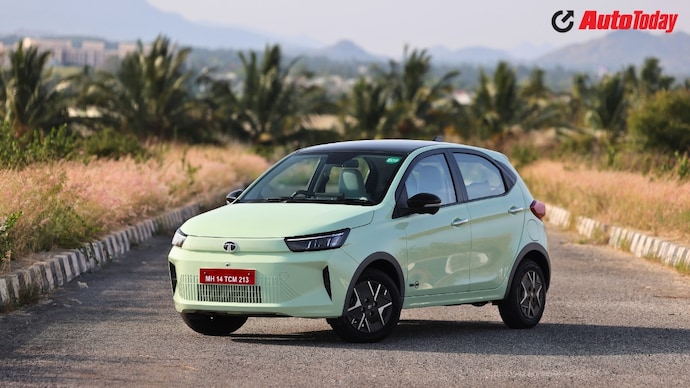
When it comes to the exterior, the Tata Tiago.ev has taken the same steps as its gas-powered siblings, the front now gets a new bonnet and fenders, that has allowed Tata to give it a major bumper and nose upgrade. The headlamps are LEDs and flank a body coloured panel – unlike the ICE, that makes it look a bit odd, especially given the new colours, it looks a bit odd without the black panel (present on the Tiago), and makes it look incomplete. Down below, the grille is revised, and is EV specific, with vertical slats. The corners have housings for foglamps, but the top-spec Tiago.ev doesn’t come with fogs, but can be opted for as an accessory. It looks bigger than before, but while the ICE Tiago looks fairly complete as a design, no contrasting colours on the electric makes it look odd.
Over to the sides, the Tiago.ev looks the same as before, but gets a fresh wheel cover design, still no alloys for the electric hatch. An interesting bit are the wheel arch cladding that are grey in colour, and have a pattern because its made out of recycled materials – a really cool bit in line with the Tiago.ev’s clean powertrain.
The rear feels more cohesive than the front, the tail unit is LED with a faux connected element while the lower bumper is black and sunken, but the presence of black plastic that contrasts with the grey cladding on the sides makes up for a strange look, this too could’ve been recycled plastic.
Inside is where the majority of the changes have been brought. The cabin is very fresh, with an all new dashboard with layered fabric upholstery - makes it feel spacious and premium inside. The 10.25-inch display is the same as before and comes with wireless smartphone integration. The steering is new too, black, no gloss, matte finish but the new Tata.ev branding is a bit strange and feels not so upmarket, especially compared to the older illuminated unit.
The fabric finish extends to the seats and the doors, that also get new door pads with a floating design, looks pretty cool, especially with the minimalist window switches. The IP is also floating, but its the same unit as before, just aesthetically presented in the updated cabin. Features a new too, it gets a 360-degree camera, blind view monitor, armrest, rear aircon vents to name a few, making the Tiago.ev the best equipped entry EV.
But the cabin suffers from fit and finish problems, panels don't fit flush, there are gaps on surfaces and the doors pads the the central console weren’t really solid. That being said, the quality levels of the plastics and the fabric is a great improvement, the only drawback in the EV being the lighter shades for the cabin that are prone to getting dirty.
The Tiago.ev is the most fun Tiago to drive. Period. The 75bhp and 115Nm of torque from the electric motor is the same as before, and the hatch is good fun in city conditions. Overtakes are quick, the steering is light and the Tiago.ev can really weave through traffic. The acceleration is brisk, but doesn’t shove the occupants, feels linear, but could do with a bit more control on the torque delivery over a full sprint, and this may be down to the small tyres that don’t have a great contact patch. The steering too starts feeling disconnected and vague post 90kmph, and the car doesn’t inspire confidence in triple digits, but most people would never take this over 80kmph, both for the sake of preserving the charge and because this is an outright urban EV.
Ride quality is truly a highlight. There is no car that rides the way the Tiago.ev does, the other entry-level hatch from the French automaker has a commendable ride quality, but that peaks on being very pliant and floaty on good roads. The Tiago meanwhile has great ride on good roads, and feels like a mini-tank on bad ones, I struggled to find undulations that could bother it, that is how good it is, but driving through bad patches isn’t a brilliant feeling as the small tyres don’t put down the power so effectively while handling the punishment. The new seats too play their part in making the hatch comfortable, but the lack of adjustable headrest feels odd.
Range isn’t something we could put to the test, but a realistic number would be between 190-210km of normal city driving on a single charge. What did feel a bit alarming was how quickly the Tiago.ev drained its battery while we had it parked with the AC on blast during the shoot, we drove a total of 60km, and the range available was around 90km by the time we were done, so efficiency is greatly affected with driving behaviour and the aircon on the 24kWh battery pack. But for most users, at this price point, there is nothing superior when it comes to the blend of performance and range in a capable hatchback.
Changes to the BMS and new battery tech has allowed Tata to increase the maximum charging speed to 30kW DC. This means that the battery can more or less be fully charged in about 50 minutes, and reach 80 per cent in less than half an hour, a real benefit for the Tiago.ev buyers
As a product, the Tiago.ev feels better, much better. The design is evolved, not great, but a bit more large-hatch-ish, the interiors are a treat, it feels really upmarket, features are plenty, and easily best-in-segment. Performance is at par, and does make the Tiago.ev feel like the best car to go for in its price range, especially with the BaaS scheme that starts at Rs 4.69 lakh making it extremely affordable. In the segment, the Tiago.ev continues to soldier on as the most comfortable, tech-loaded, capable electric car, but more stringent quality checks could really make it a great car.
Subscribe to Auto Today Magazine
Along with the Tata Tiago ICE, which includes petrol and the CNG powertrains, Tata also updated its most affordable electric car. Having driven the 2025 update for the Tata Tiago.ev last year, and been mighty impressed by how it condensed the formula of an entry-level EV in a very acceptable package, we were keen on seeing how the first major update for the hatch turns out.
When it comes to the exterior, the Tata Tiago.ev has taken the same steps as its gas-powered siblings, the front now gets a new bonnet and fenders, that has allowed Tata to give it a major bumper and nose upgrade. The headlamps are LEDs and flank a body coloured panel – unlike the ICE, that makes it look a bit odd, especially given the new colours, it looks a bit odd without the black panel (present on the Tiago), and makes it look incomplete. Down below, the grille is revised, and is EV specific, with vertical slats. The corners have housings for foglamps, but the top-spec Tiago.ev doesn’t come with fogs, but can be opted for as an accessory. It looks bigger than before, but while the ICE Tiago looks fairly complete as a design, no contrasting colours on the electric makes it look odd.
Over to the sides, the Tiago.ev looks the same as before, but gets a fresh wheel cover design, still no alloys for the electric hatch. An interesting bit are the wheel arch cladding that are grey in colour, and have a pattern because its made out of recycled materials – a really cool bit in line with the Tiago.ev’s clean powertrain.
The rear feels more cohesive than the front, the tail unit is LED with a faux connected element while the lower bumper is black and sunken, but the presence of black plastic that contrasts with the grey cladding on the sides makes up for a strange look, this too could’ve been recycled plastic.
Inside is where the majority of the changes have been brought. The cabin is very fresh, with an all new dashboard with layered fabric upholstery - makes it feel spacious and premium inside. The 10.25-inch display is the same as before and comes with wireless smartphone integration. The steering is new too, black, no gloss, matte finish but the new Tata.ev branding is a bit strange and feels not so upmarket, especially compared to the older illuminated unit.
The fabric finish extends to the seats and the doors, that also get new door pads with a floating design, looks pretty cool, especially with the minimalist window switches. The IP is also floating, but its the same unit as before, just aesthetically presented in the updated cabin. Features a new too, it gets a 360-degree camera, blind view monitor, armrest, rear aircon vents to name a few, making the Tiago.ev the best equipped entry EV.
But the cabin suffers from fit and finish problems, panels don't fit flush, there are gaps on surfaces and the doors pads the the central console weren’t really solid. That being said, the quality levels of the plastics and the fabric is a great improvement, the only drawback in the EV being the lighter shades for the cabin that are prone to getting dirty.
The Tiago.ev is the most fun Tiago to drive. Period. The 75bhp and 115Nm of torque from the electric motor is the same as before, and the hatch is good fun in city conditions. Overtakes are quick, the steering is light and the Tiago.ev can really weave through traffic. The acceleration is brisk, but doesn’t shove the occupants, feels linear, but could do with a bit more control on the torque delivery over a full sprint, and this may be down to the small tyres that don’t have a great contact patch. The steering too starts feeling disconnected and vague post 90kmph, and the car doesn’t inspire confidence in triple digits, but most people would never take this over 80kmph, both for the sake of preserving the charge and because this is an outright urban EV.
Ride quality is truly a highlight. There is no car that rides the way the Tiago.ev does, the other entry-level hatch from the French automaker has a commendable ride quality, but that peaks on being very pliant and floaty on good roads. The Tiago meanwhile has great ride on good roads, and feels like a mini-tank on bad ones, I struggled to find undulations that could bother it, that is how good it is, but driving through bad patches isn’t a brilliant feeling as the small tyres don’t put down the power so effectively while handling the punishment. The new seats too play their part in making the hatch comfortable, but the lack of adjustable headrest feels odd.
Range isn’t something we could put to the test, but a realistic number would be between 190-210km of normal city driving on a single charge. What did feel a bit alarming was how quickly the Tiago.ev drained its battery while we had it parked with the AC on blast during the shoot, we drove a total of 60km, and the range available was around 90km by the time we were done, so efficiency is greatly affected with driving behaviour and the aircon on the 24kWh battery pack. But for most users, at this price point, there is nothing superior when it comes to the blend of performance and range in a capable hatchback.
Changes to the BMS and new battery tech has allowed Tata to increase the maximum charging speed to 30kW DC. This means that the battery can more or less be fully charged in about 50 minutes, and reach 80 per cent in less than half an hour, a real benefit for the Tiago.ev buyers
As a product, the Tiago.ev feels better, much better. The design is evolved, not great, but a bit more large-hatch-ish, the interiors are a treat, it feels really upmarket, features are plenty, and easily best-in-segment. Performance is at par, and does make the Tiago.ev feel like the best car to go for in its price range, especially with the BaaS scheme that starts at Rs 4.69 lakh making it extremely affordable. In the segment, the Tiago.ev continues to soldier on as the most comfortable, tech-loaded, capable electric car, but more stringent quality checks could really make it a great car.
Subscribe to Auto Today Magazine

