Are FDs, gold, property losing their edge? Here's what Indians are exploring next
For decades, Indian investors largely stuck to stocks, FDs, gold and property to build wealth. But as portfolios evolve, a new set of assets is starting to attract attention. Have a look.
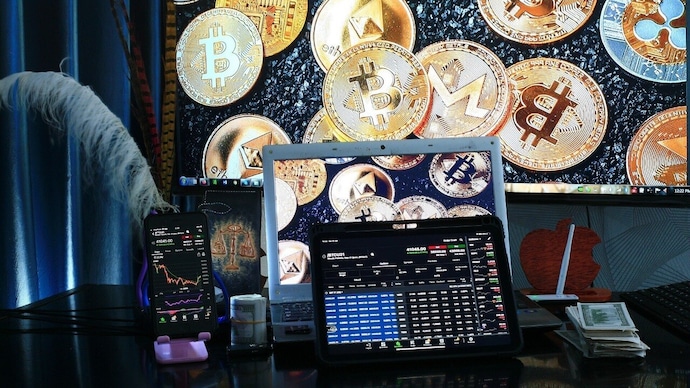
For years, the wealth-building formula for Indian investors has been fairly simple: equities for growth, fixed deposits for safety, gold for security and real estate for long-term wealth.
That formula is now beginning to change.
As investors get younger, better informed and more comfortable with digital financial products, the search for wealth is moving beyond traditional assets. Private credit, structured debt, real assets, international investments and crypto are increasingly finding a place in the conversation.
Experts say the shift does not mean traditional investments are losing relevance. Instead, investors are getting more choices and are looking at ways to build portfolios that are better diversified.
CRYPTO ENTERS THE WIDER PORTFOLIO
Minal Thukral, Executive VP, Growth & Crypto Business Head at CoinDCX, said traditional assets will continue to remain the foundation of Indian household wealth.
However, she said the idea of a complete portfolio is changing, particularly among younger investors.
"Indian investors, particularly those under 35, want exposure to global, high growth asset classes, and crypto has emerged as one of the clearest expressions of that appetite," Thukral said.
According to her, the crypto investor has also become more mature compared with a few years ago. Instead of treating the entire market as a speculative bet, investors are increasingly looking at established tokens such as Bitcoin and Ethereum and keeping riskier assets to measured levels.
"Back in 2021, when the market was booming, a lot of Indians thought crypto simply meant meme coins. That perception is changing," she said.
Thukral believes crypto is going through a journey similar to equities, which took years to become a widely accepted wealth-building option for Indian households.
NO SINGLE ASSET WILL DRIVE WEALTH CREATION
The next phase of wealth creation is unlikely to be led by one particular asset class, Thukral said.
Instead, investors now have access to a much wider range of choices, including international assets and alternative investments that were earlier largely available to institutional investors.
"The next phase of wealth creation will be defined by balance, investors building portfolios that reflect their individual risk appetite and time horizon," she said.
She added that crypto should be viewed as one part of a broader financial plan rather than a standalone bet.
This also means investors need to understand what they are buying before putting money into it.
For example, Bitcoin and Ethereum have different purposes. Bitcoin is built around scarcity and a fixed supply, while Ethereum supports smart contracts and decentralised applications.
"Investors should only allocate to an asset they genuinely understand, and resist the pull of any asset class simply because it is trending," Thukral said.
ALTERNATIVES GAIN GROUND
The shift towards alternative investments is also visible among wealthier investors.
Chirag Mehta, Founder of Arbour Investments, said the traditional investment script is being rewritten as portfolios mature and investors look for assets that do not necessarily move in line with the stock market.
"India's high-net-worth and family-office investors are looking beyond listed markets - toward private credit, structured debt, and real assets," Mehta said.
He pointed to the growth of Alternative Investment Funds (AIFs), saying commitments raised by AIFs have grown several-fold over the past decade to cross Rs 12 lakh crore. Category II AIFs, which include private credit and real estate strategies, have been a key part of this growth.
According to Mehta, the shift is being driven by three factors: the need for diversification, better access to information and improved access to investment structures that were earlier largely restricted to institutions.
WHY PRIVATE CREDIT IS ATTRACTING ATTENTION
Not every alternative investment requires investors to lock away their money for years, Mehta said.
At Arbour, the current focus is on debt syndication through non-convertible debentures (NCDs), particularly structured, real-estate-backed instruments.
Such investments offer investors a defined tenure and coupon, along with asset-level security, he said.
"For investors who want the growth story of Indian real estate without the volatility of listed proxies or the illiquidity of direct ownership, secured debt is an increasingly compelling middle path," Mehta said.
He described a well-structured NCD as an option that can sit between a fixed deposit and an equity fund in terms of its risk and return profile.
CRYPTO INVESTING BECOMES MORE SYSTEMATIC
Thukral also pointed to another emerging trend: disciplined, small-ticket investing in digital assets.
Crypto is still often associated with speculation, but investors are increasingly using systematic approaches to build exposure over time rather than trying to predict the right time to enter the market.
She compared this with the growth of systematic investment plans (SIPs) in mutual funds.
"Digital assets are at a similar inflection point today. The asset class is not new, but the behaviour around it is only now maturing into something closer to long-term portfolio construction," Thukral said.
She also highlighted tokenised real-world assets as an area worth watching. These could cover assets such as real estate, commodities and receivables, using blockchain technology to enable fractional ownership and potentially improve liquidity.
However, she said regulatory clarity would play an important role in determining how quickly the segment develops.
REAL ESTATE REMAINS PART OF THE ALTERNATIVES STORY
Real estate is also evolving beyond direct property ownership.
Mehta said Arbour is in the process of establishing a SEBI-regulated Category II AIF that will extend its focus from financing into ownership.
The proposed fund is expected to participate in development-led and private-equity real estate opportunities in high-growth markets.
The firm is targeting mid-to-high teens in terms of internal rate of return (IRR), although Mehta stressed that this is a forward-looking objective and not a guaranteed return.
"Our approach stays consistent whether we lend or invest: rigorous, parameter-driven underwriting, integration across the development lifecycle, and returns tied to genuine value creation rather than leverage alone," he said.
DIVERSIFICATION MATTERS MORE THAN CHASING RETURNS
With more investment options available, experts say investors should not confuse greater choice with a need to take greater risk.
Thukral said there is no universal percentage that every retail investor should allocate to alternatives. The right allocation depends on factors such as financial goals, risk appetite, investment horizon, liquidity needs and the overall portfolio.
"The key principle should be diversification rather than concentration," she said.
Investors should also avoid putting money into assets they cannot afford to lose, chasing short-term market momentum or making decisions based only on social media trends.
Mehta said the questions investors ask also need to change as alternatives become more common.
The focus should not simply be on the return being offered. Investors should ask who is managing their money, how their capital is secured and what happens if an investment does not perform as expected.
"India's next wealth creation story will not be written in a single asset class. It will be built across them - debt and equity, income and growth, public and private," Mehta said.
For Indian investors, then, the biggest change may not be the arrival of a new asset class. It may be the shift from choosing one familiar investment to building a portfolio where different assets play different roles.
For years, the wealth-building formula for Indian investors has been fairly simple: equities for growth, fixed deposits for safety, gold for security and real estate for long-term wealth.
That formula is now beginning to change.
As investors get younger, better informed and more comfortable with digital financial products, the search for wealth is moving beyond traditional assets. Private credit, structured debt, real assets, international investments and crypto are increasingly finding a place in the conversation.
Experts say the shift does not mean traditional investments are losing relevance. Instead, investors are getting more choices and are looking at ways to build portfolios that are better diversified.
CRYPTO ENTERS THE WIDER PORTFOLIO
Minal Thukral, Executive VP, Growth & Crypto Business Head at CoinDCX, said traditional assets will continue to remain the foundation of Indian household wealth.
However, she said the idea of a complete portfolio is changing, particularly among younger investors.
"Indian investors, particularly those under 35, want exposure to global, high growth asset classes, and crypto has emerged as one of the clearest expressions of that appetite," Thukral said.
According to her, the crypto investor has also become more mature compared with a few years ago. Instead of treating the entire market as a speculative bet, investors are increasingly looking at established tokens such as Bitcoin and Ethereum and keeping riskier assets to measured levels.
"Back in 2021, when the market was booming, a lot of Indians thought crypto simply meant meme coins. That perception is changing," she said.
Thukral believes crypto is going through a journey similar to equities, which took years to become a widely accepted wealth-building option for Indian households.
NO SINGLE ASSET WILL DRIVE WEALTH CREATION
The next phase of wealth creation is unlikely to be led by one particular asset class, Thukral said.
Instead, investors now have access to a much wider range of choices, including international assets and alternative investments that were earlier largely available to institutional investors.
"The next phase of wealth creation will be defined by balance, investors building portfolios that reflect their individual risk appetite and time horizon," she said.
She added that crypto should be viewed as one part of a broader financial plan rather than a standalone bet.
This also means investors need to understand what they are buying before putting money into it.
For example, Bitcoin and Ethereum have different purposes. Bitcoin is built around scarcity and a fixed supply, while Ethereum supports smart contracts and decentralised applications.
"Investors should only allocate to an asset they genuinely understand, and resist the pull of any asset class simply because it is trending," Thukral said.
ALTERNATIVES GAIN GROUND
The shift towards alternative investments is also visible among wealthier investors.
Chirag Mehta, Founder of Arbour Investments, said the traditional investment script is being rewritten as portfolios mature and investors look for assets that do not necessarily move in line with the stock market.
"India's high-net-worth and family-office investors are looking beyond listed markets - toward private credit, structured debt, and real assets," Mehta said.
He pointed to the growth of Alternative Investment Funds (AIFs), saying commitments raised by AIFs have grown several-fold over the past decade to cross Rs 12 lakh crore. Category II AIFs, which include private credit and real estate strategies, have been a key part of this growth.
According to Mehta, the shift is being driven by three factors: the need for diversification, better access to information and improved access to investment structures that were earlier largely restricted to institutions.
WHY PRIVATE CREDIT IS ATTRACTING ATTENTION
Not every alternative investment requires investors to lock away their money for years, Mehta said.
At Arbour, the current focus is on debt syndication through non-convertible debentures (NCDs), particularly structured, real-estate-backed instruments.
Such investments offer investors a defined tenure and coupon, along with asset-level security, he said.
"For investors who want the growth story of Indian real estate without the volatility of listed proxies or the illiquidity of direct ownership, secured debt is an increasingly compelling middle path," Mehta said.
He described a well-structured NCD as an option that can sit between a fixed deposit and an equity fund in terms of its risk and return profile.
CRYPTO INVESTING BECOMES MORE SYSTEMATIC
Thukral also pointed to another emerging trend: disciplined, small-ticket investing in digital assets.
Crypto is still often associated with speculation, but investors are increasingly using systematic approaches to build exposure over time rather than trying to predict the right time to enter the market.
She compared this with the growth of systematic investment plans (SIPs) in mutual funds.
"Digital assets are at a similar inflection point today. The asset class is not new, but the behaviour around it is only now maturing into something closer to long-term portfolio construction," Thukral said.
She also highlighted tokenised real-world assets as an area worth watching. These could cover assets such as real estate, commodities and receivables, using blockchain technology to enable fractional ownership and potentially improve liquidity.
However, she said regulatory clarity would play an important role in determining how quickly the segment develops.
REAL ESTATE REMAINS PART OF THE ALTERNATIVES STORY
Real estate is also evolving beyond direct property ownership.
Mehta said Arbour is in the process of establishing a SEBI-regulated Category II AIF that will extend its focus from financing into ownership.
The proposed fund is expected to participate in development-led and private-equity real estate opportunities in high-growth markets.
The firm is targeting mid-to-high teens in terms of internal rate of return (IRR), although Mehta stressed that this is a forward-looking objective and not a guaranteed return.
"Our approach stays consistent whether we lend or invest: rigorous, parameter-driven underwriting, integration across the development lifecycle, and returns tied to genuine value creation rather than leverage alone," he said.
DIVERSIFICATION MATTERS MORE THAN CHASING RETURNS
With more investment options available, experts say investors should not confuse greater choice with a need to take greater risk.
Thukral said there is no universal percentage that every retail investor should allocate to alternatives. The right allocation depends on factors such as financial goals, risk appetite, investment horizon, liquidity needs and the overall portfolio.
"The key principle should be diversification rather than concentration," she said.
Investors should also avoid putting money into assets they cannot afford to lose, chasing short-term market momentum or making decisions based only on social media trends.
Mehta said the questions investors ask also need to change as alternatives become more common.
The focus should not simply be on the return being offered. Investors should ask who is managing their money, how their capital is secured and what happens if an investment does not perform as expected.
"India's next wealth creation story will not be written in a single asset class. It will be built across them - debt and equity, income and growth, public and private," Mehta said.
For Indian investors, then, the biggest change may not be the arrival of a new asset class. It may be the shift from choosing one familiar investment to building a portfolio where different assets play different roles.
For years, the wealth-building formula for Indian investors has been fairly simple: equities for growth, fixed deposits for safety, gold for security and real estate for long-term wealth.
That formula is now beginning to change.
As investors get younger, better informed and more comfortable with digital financial products, the search for wealth is moving beyond traditional assets. Private credit, structured debt, real assets, international investments and crypto are increasingly finding a place in the conversation.
Experts say the shift does not mean traditional investments are losing relevance. Instead, investors are getting more choices and are looking at ways to build portfolios that are better diversified.
CRYPTO ENTERS THE WIDER PORTFOLIO
Minal Thukral, Executive VP, Growth & Crypto Business Head at CoinDCX, said traditional assets will continue to remain the foundation of Indian household wealth.
However, she said the idea of a complete portfolio is changing, particularly among younger investors.
"Indian investors, particularly those under 35, want exposure to global, high growth asset classes, and crypto has emerged as one of the clearest expressions of that appetite," Thukral said.
According to her, the crypto investor has also become more mature compared with a few years ago. Instead of treating the entire market as a speculative bet, investors are increasingly looking at established tokens such as Bitcoin and Ethereum and keeping riskier assets to measured levels.
"Back in 2021, when the market was booming, a lot of Indians thought crypto simply meant meme coins. That perception is changing," she said.
Thukral believes crypto is going through a journey similar to equities, which took years to become a widely accepted wealth-building option for Indian households.
NO SINGLE ASSET WILL DRIVE WEALTH CREATION
The next phase of wealth creation is unlikely to be led by one particular asset class, Thukral said.
Instead, investors now have access to a much wider range of choices, including international assets and alternative investments that were earlier largely available to institutional investors.
"The next phase of wealth creation will be defined by balance, investors building portfolios that reflect their individual risk appetite and time horizon," she said.
She added that crypto should be viewed as one part of a broader financial plan rather than a standalone bet.
This also means investors need to understand what they are buying before putting money into it.
For example, Bitcoin and Ethereum have different purposes. Bitcoin is built around scarcity and a fixed supply, while Ethereum supports smart contracts and decentralised applications.
"Investors should only allocate to an asset they genuinely understand, and resist the pull of any asset class simply because it is trending," Thukral said.
ALTERNATIVES GAIN GROUND
The shift towards alternative investments is also visible among wealthier investors.
Chirag Mehta, Founder of Arbour Investments, said the traditional investment script is being rewritten as portfolios mature and investors look for assets that do not necessarily move in line with the stock market.
"India's high-net-worth and family-office investors are looking beyond listed markets - toward private credit, structured debt, and real assets," Mehta said.
He pointed to the growth of Alternative Investment Funds (AIFs), saying commitments raised by AIFs have grown several-fold over the past decade to cross Rs 12 lakh crore. Category II AIFs, which include private credit and real estate strategies, have been a key part of this growth.
According to Mehta, the shift is being driven by three factors: the need for diversification, better access to information and improved access to investment structures that were earlier largely restricted to institutions.
WHY PRIVATE CREDIT IS ATTRACTING ATTENTION
Not every alternative investment requires investors to lock away their money for years, Mehta said.
At Arbour, the current focus is on debt syndication through non-convertible debentures (NCDs), particularly structured, real-estate-backed instruments.
Such investments offer investors a defined tenure and coupon, along with asset-level security, he said.
"For investors who want the growth story of Indian real estate without the volatility of listed proxies or the illiquidity of direct ownership, secured debt is an increasingly compelling middle path," Mehta said.
He described a well-structured NCD as an option that can sit between a fixed deposit and an equity fund in terms of its risk and return profile.
CRYPTO INVESTING BECOMES MORE SYSTEMATIC
Thukral also pointed to another emerging trend: disciplined, small-ticket investing in digital assets.
Crypto is still often associated with speculation, but investors are increasingly using systematic approaches to build exposure over time rather than trying to predict the right time to enter the market.
She compared this with the growth of systematic investment plans (SIPs) in mutual funds.
"Digital assets are at a similar inflection point today. The asset class is not new, but the behaviour around it is only now maturing into something closer to long-term portfolio construction," Thukral said.
She also highlighted tokenised real-world assets as an area worth watching. These could cover assets such as real estate, commodities and receivables, using blockchain technology to enable fractional ownership and potentially improve liquidity.
However, she said regulatory clarity would play an important role in determining how quickly the segment develops.
REAL ESTATE REMAINS PART OF THE ALTERNATIVES STORY
Real estate is also evolving beyond direct property ownership.
Mehta said Arbour is in the process of establishing a SEBI-regulated Category II AIF that will extend its focus from financing into ownership.
The proposed fund is expected to participate in development-led and private-equity real estate opportunities in high-growth markets.
The firm is targeting mid-to-high teens in terms of internal rate of return (IRR), although Mehta stressed that this is a forward-looking objective and not a guaranteed return.
"Our approach stays consistent whether we lend or invest: rigorous, parameter-driven underwriting, integration across the development lifecycle, and returns tied to genuine value creation rather than leverage alone," he said.
DIVERSIFICATION MATTERS MORE THAN CHASING RETURNS
With more investment options available, experts say investors should not confuse greater choice with a need to take greater risk.
Thukral said there is no universal percentage that every retail investor should allocate to alternatives. The right allocation depends on factors such as financial goals, risk appetite, investment horizon, liquidity needs and the overall portfolio.
"The key principle should be diversification rather than concentration," she said.
Investors should also avoid putting money into assets they cannot afford to lose, chasing short-term market momentum or making decisions based only on social media trends.
Mehta said the questions investors ask also need to change as alternatives become more common.
The focus should not simply be on the return being offered. Investors should ask who is managing their money, how their capital is secured and what happens if an investment does not perform as expected.
"India's next wealth creation story will not be written in a single asset class. It will be built across them - debt and equity, income and growth, public and private," Mehta said.
For Indian investors, then, the biggest change may not be the arrival of a new asset class. It may be the shift from choosing one familiar investment to building a portfolio where different assets play different roles.

