Delhi has a huge Metro network. So why is reaching the station still a challenge?
Delhi's Metro carries more than six million passengers daily, but reaching and leaving stations remains difficult. Studies and operators say solving the last mile, including safety and reliable electric links, will shape wider public transport use.
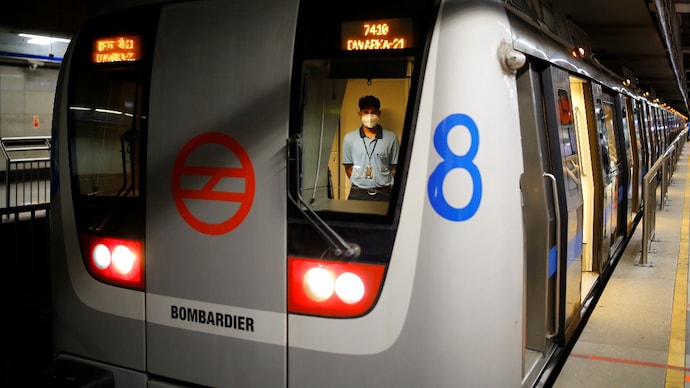
The capital's Metro carries more than six million passengers every day, as per Delhi Metro Rail Corporation (DMRC) data but the journey between the station and home remains one of the biggest barriers to public transport.
Delhi Metro has transformed the way millions travel across the capital. With the world's third-largest Metro network carrying more than six million passengers every day, it is widely regarded as one of the city's biggest infrastructure successes.
Yet Delhi continues to battle traffic congestion, hazardous air pollution and billions of dollars in annual economic losses caused by gridlock. This raises an important question.
If the Metro works so well, why does getting around the city still feel so difficult?
The answer may lie in what happens after passengers leave the station.
LAST MILE REMAINS THE BIGGEST CHALLENGE
As per WRI (World Resources Institute) India study, commuters spend 40% of their total travel time and 48% of their travel costs, covering just 18% of the total travel distance required to reach public mass transit modes like the Delhi Metro.
In other words, while the Metro solves most of the trip, the final stretch often becomes the biggest obstacle. While this may account for only a small portion of the overall commute, it often determines whether commuters choose public transport in the first place.
Therefore, the biggest obstacle is what transport planners describe as 'last-mile connectivity', the journey between a Metro station and a person's workplace, school or home.
According to the same WRI India report, in India, where urban congestion is a major challenge, well-planned last-mile solutions can encourage public transport adoption.
IT IS NOT JUST ABOUT CONVENIENCE
The challenge extends beyond reducing travel time.
For many commuters, this is a matter of convenience. For many women, it is also a matter of safety, as per a case study on the public transport journeys of women.
Although metro rail itself offers security facilities such as well-lit infrastructure, CCTV surveillance, security personnel and women-only coaches, issues related to personal safety occur in the first-and last-mile trips to the metro stations.
Multiple studies on urban mobility in Delhi consistently identify personal safety as one of the most important considerations when women choose transport for this final leg of the journey.
WHY ELECTRIC MOBILITY HAS A ROLE TO PLAY
Policymakers have also recognised this gap.
As per International Council on Clean Transportation (ICCT) documents, as part of the city's clean mobility strategy, authorities are expanding electric mobility solutions that better connect with public transport.
The objective is not simply to electrify vehicles. It is to make the entire journey more seamless, reliable and convenient.
Private mobility providers can support this effort by complementing, rather than competing with, public transport, as a WRI India case study of new-mobility pilots at a Metro station demonstrates.
This is where cab services who are clean and eco-friendly can play a role.
Bach Tuan Anh, CEO of Green SM India, said, "If we can make the journey after the Metro more reliable and more reassuring, we have created real value for our customers."
Rather than competing with the Metro, Green SM positions itself as a complement to public transport. The company focusses on the journey between Metro stations and passengers' final destinations.
Alongside operating an all-electric fleet, he says the company has invested in driver training, service standards and in-vehicle safety technologies, including a three-camera system, to improve passenger confidence.
Bach said that the conversation is ultimately bigger than electric vehicles.
"Electric vehicles are only the starting point," he says. "Our goal is to build a service that people trust whenever they need to get home safely."
"If we can make the journey after the Metro more reliable and more reassuring, we have created real value for our customers."
According to him, building trust is just as important as deploying electric vehicles.
As India continues investing heavily in Metro rail projects across several cities, equal attention must now be given to what happens once commuters leave the station, as per experts.
Delhi has shown that investing in Metro infrastructure can transform the way a city moves. But if public transport is to become the first choice for even more people, the journey cannot end at the station.
As a WRI India–Toyota Mobility Foundation study of Metro access across three Indian cities concludes, solving the last-mile challenge could determine how successful India's expanding Metro networks ultimately become.
"Sometimes, the shortest part of the journey determines the success of the entire transport system."
The capital's Metro carries more than six million passengers every day, as per Delhi Metro Rail Corporation (DMRC) data but the journey between the station and home remains one of the biggest barriers to public transport.
Delhi Metro has transformed the way millions travel across the capital. With the world's third-largest Metro network carrying more than six million passengers every day, it is widely regarded as one of the city's biggest infrastructure successes.
Yet Delhi continues to battle traffic congestion, hazardous air pollution and billions of dollars in annual economic losses caused by gridlock. This raises an important question.
If the Metro works so well, why does getting around the city still feel so difficult?
The answer may lie in what happens after passengers leave the station.
LAST MILE REMAINS THE BIGGEST CHALLENGE
As per WRI (World Resources Institute) India study, commuters spend 40% of their total travel time and 48% of their travel costs, covering just 18% of the total travel distance required to reach public mass transit modes like the Delhi Metro.
In other words, while the Metro solves most of the trip, the final stretch often becomes the biggest obstacle. While this may account for only a small portion of the overall commute, it often determines whether commuters choose public transport in the first place.
Therefore, the biggest obstacle is what transport planners describe as 'last-mile connectivity', the journey between a Metro station and a person's workplace, school or home.
According to the same WRI India report, in India, where urban congestion is a major challenge, well-planned last-mile solutions can encourage public transport adoption.
IT IS NOT JUST ABOUT CONVENIENCE
The challenge extends beyond reducing travel time.
For many commuters, this is a matter of convenience. For many women, it is also a matter of safety, as per a case study on the public transport journeys of women.
Although metro rail itself offers security facilities such as well-lit infrastructure, CCTV surveillance, security personnel and women-only coaches, issues related to personal safety occur in the first-and last-mile trips to the metro stations.
Multiple studies on urban mobility in Delhi consistently identify personal safety as one of the most important considerations when women choose transport for this final leg of the journey.
WHY ELECTRIC MOBILITY HAS A ROLE TO PLAY
Policymakers have also recognised this gap.
As per International Council on Clean Transportation (ICCT) documents, as part of the city's clean mobility strategy, authorities are expanding electric mobility solutions that better connect with public transport.
The objective is not simply to electrify vehicles. It is to make the entire journey more seamless, reliable and convenient.
Private mobility providers can support this effort by complementing, rather than competing with, public transport, as a WRI India case study of new-mobility pilots at a Metro station demonstrates.
This is where cab services who are clean and eco-friendly can play a role.
Bach Tuan Anh, CEO of Green SM India, said, "If we can make the journey after the Metro more reliable and more reassuring, we have created real value for our customers."
Rather than competing with the Metro, Green SM positions itself as a complement to public transport. The company focusses on the journey between Metro stations and passengers' final destinations.
Alongside operating an all-electric fleet, he says the company has invested in driver training, service standards and in-vehicle safety technologies, including a three-camera system, to improve passenger confidence.
Bach said that the conversation is ultimately bigger than electric vehicles.
"Electric vehicles are only the starting point," he says. "Our goal is to build a service that people trust whenever they need to get home safely."
"If we can make the journey after the Metro more reliable and more reassuring, we have created real value for our customers."
According to him, building trust is just as important as deploying electric vehicles.
As India continues investing heavily in Metro rail projects across several cities, equal attention must now be given to what happens once commuters leave the station, as per experts.
Delhi has shown that investing in Metro infrastructure can transform the way a city moves. But if public transport is to become the first choice for even more people, the journey cannot end at the station.
As a WRI India–Toyota Mobility Foundation study of Metro access across three Indian cities concludes, solving the last-mile challenge could determine how successful India's expanding Metro networks ultimately become.
"Sometimes, the shortest part of the journey determines the success of the entire transport system."
The capital's Metro carries more than six million passengers every day, as per Delhi Metro Rail Corporation (DMRC) data but the journey between the station and home remains one of the biggest barriers to public transport.
Delhi Metro has transformed the way millions travel across the capital. With the world's third-largest Metro network carrying more than six million passengers every day, it is widely regarded as one of the city's biggest infrastructure successes.
Yet Delhi continues to battle traffic congestion, hazardous air pollution and billions of dollars in annual economic losses caused by gridlock. This raises an important question.
If the Metro works so well, why does getting around the city still feel so difficult?
The answer may lie in what happens after passengers leave the station.
LAST MILE REMAINS THE BIGGEST CHALLENGE
As per WRI (World Resources Institute) India study, commuters spend 40% of their total travel time and 48% of their travel costs, covering just 18% of the total travel distance required to reach public mass transit modes like the Delhi Metro.
In other words, while the Metro solves most of the trip, the final stretch often becomes the biggest obstacle. While this may account for only a small portion of the overall commute, it often determines whether commuters choose public transport in the first place.
Therefore, the biggest obstacle is what transport planners describe as 'last-mile connectivity', the journey between a Metro station and a person's workplace, school or home.
According to the same WRI India report, in India, where urban congestion is a major challenge, well-planned last-mile solutions can encourage public transport adoption.
IT IS NOT JUST ABOUT CONVENIENCE
The challenge extends beyond reducing travel time.
For many commuters, this is a matter of convenience. For many women, it is also a matter of safety, as per a case study on the public transport journeys of women.
Although metro rail itself offers security facilities such as well-lit infrastructure, CCTV surveillance, security personnel and women-only coaches, issues related to personal safety occur in the first-and last-mile trips to the metro stations.
Multiple studies on urban mobility in Delhi consistently identify personal safety as one of the most important considerations when women choose transport for this final leg of the journey.
WHY ELECTRIC MOBILITY HAS A ROLE TO PLAY
Policymakers have also recognised this gap.
As per International Council on Clean Transportation (ICCT) documents, as part of the city's clean mobility strategy, authorities are expanding electric mobility solutions that better connect with public transport.
The objective is not simply to electrify vehicles. It is to make the entire journey more seamless, reliable and convenient.
Private mobility providers can support this effort by complementing, rather than competing with, public transport, as a WRI India case study of new-mobility pilots at a Metro station demonstrates.
This is where cab services who are clean and eco-friendly can play a role.
Bach Tuan Anh, CEO of Green SM India, said, "If we can make the journey after the Metro more reliable and more reassuring, we have created real value for our customers."
Rather than competing with the Metro, Green SM positions itself as a complement to public transport. The company focusses on the journey between Metro stations and passengers' final destinations.
Alongside operating an all-electric fleet, he says the company has invested in driver training, service standards and in-vehicle safety technologies, including a three-camera system, to improve passenger confidence.
Bach said that the conversation is ultimately bigger than electric vehicles.
"Electric vehicles are only the starting point," he says. "Our goal is to build a service that people trust whenever they need to get home safely."
"If we can make the journey after the Metro more reliable and more reassuring, we have created real value for our customers."
According to him, building trust is just as important as deploying electric vehicles.
As India continues investing heavily in Metro rail projects across several cities, equal attention must now be given to what happens once commuters leave the station, as per experts.
Delhi has shown that investing in Metro infrastructure can transform the way a city moves. But if public transport is to become the first choice for even more people, the journey cannot end at the station.
As a WRI India–Toyota Mobility Foundation study of Metro access across three Indian cities concludes, solving the last-mile challenge could determine how successful India's expanding Metro networks ultimately become.
"Sometimes, the shortest part of the journey determines the success of the entire transport system."

