Delhi govt approves Rs 1,668-crore Ambedkar University's Dheerpur campus proposal
Delhi has approved Ambedkar University Delhi's Rs 1,668 crore Dheerpur campus project. The new site is expected to ease space shortages and support student-centred expansion.
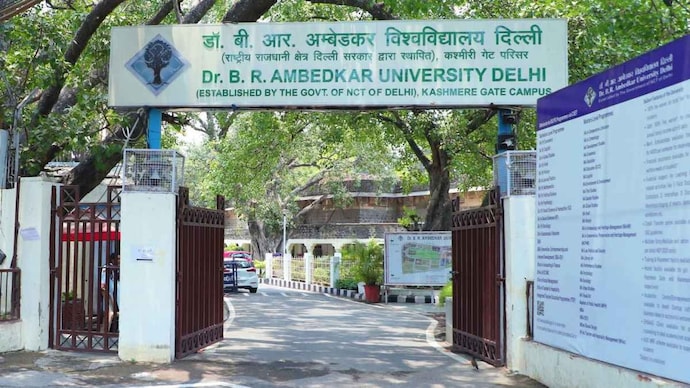
Dr BR Ambedkar University Delhi's upcoming Dheerpur campus is expected to give the university a modern, student-centric learning environment and ease long-standing space constraints, Vice Chancellor Anu Singh Lather said. The Delhi government recently approved the project at an estimated cost of Rs 1,668 crore.
Lather said the project had been in the pipeline for several years but had now gathered pace after the new government's approval. She said the university had already finalised architectural designs for both the proposed Dheerpur and Rohini campuses, though construction would begin with Dheerpur first, and added that the work could be completed in around three years, subject to timelines set by the Public Works Department.
Speaking to PTI, Lather said the earlier estimate for the Dheerpur campus was around Rs 1,199 crore. After the PWD revised the estimates, taking several factors into account, the approved project cost went up sharply. "The government has been very fast in taking decisions. The Chief Minister and the Education Minister were very keen that the project should finally see the light of the day," she said.
She said the new campus would be built around the collaborative and student-centred learning principles set out in the National Education Policy.
"It will have modern infrastructure, technology-enabled teaching-learning spaces, collaborative work areas, open discussion zones and co-learning spaces where students can meet, deliberate and innovate. We believe higher education has to become student-centric," she said.
Lather said the university's expansion had been held back by lack of space, even as it was among the early institutions to implement several provisions of the NEP. "We had limited space in our existing campuses. With the new land, we finally have the opportunity to build a futuristic university with updated infrastructure," she said.
She added that the university had recently opened a new academic block at its Karampura campus with 18 classrooms, faculty rooms and seminar halls to ease pressure on existing facilities.
The vice chancellor said the university's student numbers had risen sharply in recent years, making infrastructure expansion necessary.
"In 2019, the university had an effective strength of around 2,400 students across three campuses. Today we have about 6,300 students across four campuses, and with the introduction of one-year postgraduate programmes and expansion of PhD admissions, the number is expected to reach nearly 7,000 by the end of this year," she said.
On academic reforms, Lather said the university had introduced one-year postgraduate programmes in seven disciplines on an experimental basis this academic session.
"The response has largely mirrored the popularity of our existing programmes. Psychology has emerged as the most preferred one-year programme, followed by Economics and English. These have traditionally been our flagship courses and continue to attract strong demand because of their employment prospects," she said.
She added that admissions were open to graduates from all universities who had completed a four-year undergraduate programme. "If justice has to be done to society at large, opportunities must be open to everyone. Students from other universities are welcome to apply, and admissions will continue to be merit-based," she said.
Lather also said the university had tried to build a stronger research culture by encouraging publication in internationally indexed journals. "When I joined, I realised that much of the work in humanities and social sciences was going into book chapters or general writing rather than peer-reviewed research publications.
We developed an ecosystem that encouraged publication in Scopus and Web of Science-indexed journals," she said.
According to her, the university's institutional h-index has risen from zero in 2019 to around 30-32 now. She said annual faculty research awards had also been introduced, and that while only a few teachers qualified in the first year, nearly 52 received awards across categories last year.
The university has also doubled its PhD fellowship from Rs 8,000 to Rs 16,000 a month, she added.
On technology, Lather said artificial intelligence had already been added to the curriculum at introductory and advanced levels in selected programmes. "We started preparing for AI nearly five years ago. Experts from IIT Kharagpur, Netaji Subhas University of Technology and industry were invited to guide our faculty on how AI could be meaningfully integrated into humanities and social sciences," she said.
She added that while AI would have a growing role in higher education, it would need to be used carefully, especially in disciplines dealing with human and social issues. Overall, she said the Dheerpur campus would support the university's next phase of growth by expanding capacity and creating updated spaces for teaching, learning and research.
Dr BR Ambedkar University Delhi's upcoming Dheerpur campus is expected to give the university a modern, student-centric learning environment and ease long-standing space constraints, Vice Chancellor Anu Singh Lather said. The Delhi government recently approved the project at an estimated cost of Rs 1,668 crore.
Lather said the project had been in the pipeline for several years but had now gathered pace after the new government's approval. She said the university had already finalised architectural designs for both the proposed Dheerpur and Rohini campuses, though construction would begin with Dheerpur first, and added that the work could be completed in around three years, subject to timelines set by the Public Works Department.
Speaking to PTI, Lather said the earlier estimate for the Dheerpur campus was around Rs 1,199 crore. After the PWD revised the estimates, taking several factors into account, the approved project cost went up sharply. "The government has been very fast in taking decisions. The Chief Minister and the Education Minister were very keen that the project should finally see the light of the day," she said.
She said the new campus would be built around the collaborative and student-centred learning principles set out in the National Education Policy.
"It will have modern infrastructure, technology-enabled teaching-learning spaces, collaborative work areas, open discussion zones and co-learning spaces where students can meet, deliberate and innovate. We believe higher education has to become student-centric," she said.
Lather said the university's expansion had been held back by lack of space, even as it was among the early institutions to implement several provisions of the NEP. "We had limited space in our existing campuses. With the new land, we finally have the opportunity to build a futuristic university with updated infrastructure," she said.
She added that the university had recently opened a new academic block at its Karampura campus with 18 classrooms, faculty rooms and seminar halls to ease pressure on existing facilities.
The vice chancellor said the university's student numbers had risen sharply in recent years, making infrastructure expansion necessary.
"In 2019, the university had an effective strength of around 2,400 students across three campuses. Today we have about 6,300 students across four campuses, and with the introduction of one-year postgraduate programmes and expansion of PhD admissions, the number is expected to reach nearly 7,000 by the end of this year," she said.
On academic reforms, Lather said the university had introduced one-year postgraduate programmes in seven disciplines on an experimental basis this academic session.
"The response has largely mirrored the popularity of our existing programmes. Psychology has emerged as the most preferred one-year programme, followed by Economics and English. These have traditionally been our flagship courses and continue to attract strong demand because of their employment prospects," she said.
She added that admissions were open to graduates from all universities who had completed a four-year undergraduate programme. "If justice has to be done to society at large, opportunities must be open to everyone. Students from other universities are welcome to apply, and admissions will continue to be merit-based," she said.
Lather also said the university had tried to build a stronger research culture by encouraging publication in internationally indexed journals. "When I joined, I realised that much of the work in humanities and social sciences was going into book chapters or general writing rather than peer-reviewed research publications.
We developed an ecosystem that encouraged publication in Scopus and Web of Science-indexed journals," she said.
According to her, the university's institutional h-index has risen from zero in 2019 to around 30-32 now. She said annual faculty research awards had also been introduced, and that while only a few teachers qualified in the first year, nearly 52 received awards across categories last year.
The university has also doubled its PhD fellowship from Rs 8,000 to Rs 16,000 a month, she added.
On technology, Lather said artificial intelligence had already been added to the curriculum at introductory and advanced levels in selected programmes. "We started preparing for AI nearly five years ago. Experts from IIT Kharagpur, Netaji Subhas University of Technology and industry were invited to guide our faculty on how AI could be meaningfully integrated into humanities and social sciences," she said.
She added that while AI would have a growing role in higher education, it would need to be used carefully, especially in disciplines dealing with human and social issues. Overall, she said the Dheerpur campus would support the university's next phase of growth by expanding capacity and creating updated spaces for teaching, learning and research.

