Delhi govt rolls back work-from-home for its employees as West Asia conflict eases
The Delhi government has withdrawn the work-from-home arrangement and staggered office timings for its employees after citing the normalisation of the geopolitical situation that prompted the fuel-saving measures.
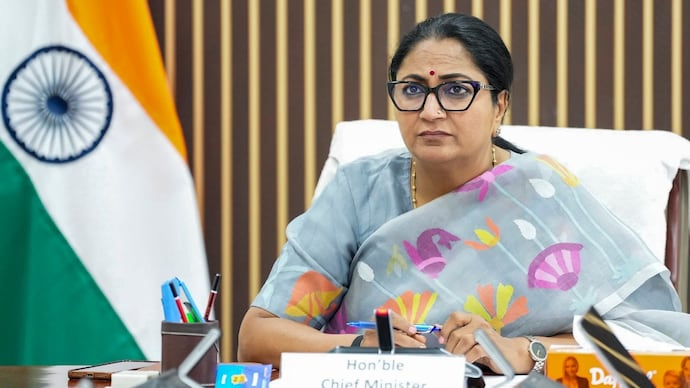
The Delhi government has withdrawn the work-from-home (WFH) arrangement and staggered office timings for its employees after citing an improvement in the geopolitical situation in West Asia, following reports of a ceasefire between the United States and Iran.
Chief Minister Rekha Gupta on Saturday approved the rollback of the measures that had been introduced earlier this year as part of an energy conservation drive.
"Now that the geopolitical situation has practically normalised, Chief Minister Rekha Gupta has approved withdrawal of Work from Home on Wednesdays and Saturdays," the Chief Minister's Office said in a statement.
With the withdrawal of the directive, Delhi government employees will resume their normal office timings of 10.00 am to 6.30 pm. The schedule for the Municipal Corporation of Delhi (MCD) remains unchanged, with staff continuing to work from 8.30 am to 5 pm.
The hybrid work policy was introduced in May this year, when the Delhi government directed its employees to work from home for two days every week. The decision came in the wake of Prime Minister Narendra Modi's appeal for prudent fuel consumption and responsible spending amid uncertainty triggered by the US-Iran conflict and concerns over global energy supplies.
Along with the work-from-home policy, the Delhi government had announced a broader set of fuel-saving measures aimed at reducing fuel consumption and easing pressure on the country's foreign exchange reserves.
As part of the initiative, half of all official meetings were shifted to virtual mode to minimise travel. Office timings of departments under the Delhi government and the Municipal Corporation of Delhi (MCD) were also staggered to reduce peak-hour traffic congestion and fuel usage.
The government had also curtailed the use of official vehicles by reducing the monthly petrol entitlement for officers by 20 per cent, lowering the limit from 200 litres. It further decided not to purchase any new government vehicles for six months.
To encourage greater use of public transport, the administration announced plans to observe a "Metro Day" and urged citizens to voluntarily participate in a weekly "No Car Day". It also introduced 58 special buses across 29 government colonies to facilitate commuting for government employees.
The measures followed Prime Minister Narendra Modi's appeal in May, in which he urged citizens to adopt responsible consumption practices. Among his suggestions were reducing unnecessary fuel use, opting for public transport and carpooling, using work-from-home wherever feasible, postponing gold purchases for a year, and avoiding non-essential foreign travel and destination weddings abroad.
Government sources had clarified at the time that these were not austerity measures or mandatory economic restrictions. Instead, they were presented as voluntary steps promoting responsible consumption and economic patriotism amid rising global energy prices and pressure on India's foreign exchange reserves caused by the Iran conflict and disruption in shipping through the Strait of Hormuz.
Officials had also emphasised that the government was not discouraging spending, but encouraging citizens to spend wisely, given India's heavy dependence on imports of crude oil, gold, fertilisers and edible oil.
The Delhi government has withdrawn the work-from-home (WFH) arrangement and staggered office timings for its employees after citing an improvement in the geopolitical situation in West Asia, following reports of a ceasefire between the United States and Iran.
Chief Minister Rekha Gupta on Saturday approved the rollback of the measures that had been introduced earlier this year as part of an energy conservation drive.
"Now that the geopolitical situation has practically normalised, Chief Minister Rekha Gupta has approved withdrawal of Work from Home on Wednesdays and Saturdays," the Chief Minister's Office said in a statement.
With the withdrawal of the directive, Delhi government employees will resume their normal office timings of 10.00 am to 6.30 pm. The schedule for the Municipal Corporation of Delhi (MCD) remains unchanged, with staff continuing to work from 8.30 am to 5 pm.
The hybrid work policy was introduced in May this year, when the Delhi government directed its employees to work from home for two days every week. The decision came in the wake of Prime Minister Narendra Modi's appeal for prudent fuel consumption and responsible spending amid uncertainty triggered by the US-Iran conflict and concerns over global energy supplies.
Along with the work-from-home policy, the Delhi government had announced a broader set of fuel-saving measures aimed at reducing fuel consumption and easing pressure on the country's foreign exchange reserves.
As part of the initiative, half of all official meetings were shifted to virtual mode to minimise travel. Office timings of departments under the Delhi government and the Municipal Corporation of Delhi (MCD) were also staggered to reduce peak-hour traffic congestion and fuel usage.
The government had also curtailed the use of official vehicles by reducing the monthly petrol entitlement for officers by 20 per cent, lowering the limit from 200 litres. It further decided not to purchase any new government vehicles for six months.
To encourage greater use of public transport, the administration announced plans to observe a "Metro Day" and urged citizens to voluntarily participate in a weekly "No Car Day". It also introduced 58 special buses across 29 government colonies to facilitate commuting for government employees.
The measures followed Prime Minister Narendra Modi's appeal in May, in which he urged citizens to adopt responsible consumption practices. Among his suggestions were reducing unnecessary fuel use, opting for public transport and carpooling, using work-from-home wherever feasible, postponing gold purchases for a year, and avoiding non-essential foreign travel and destination weddings abroad.
Government sources had clarified at the time that these were not austerity measures or mandatory economic restrictions. Instead, they were presented as voluntary steps promoting responsible consumption and economic patriotism amid rising global energy prices and pressure on India's foreign exchange reserves caused by the Iran conflict and disruption in shipping through the Strait of Hormuz.
Officials had also emphasised that the government was not discouraging spending, but encouraging citizens to spend wisely, given India's heavy dependence on imports of crude oil, gold, fertilisers and edible oil.

