Delhi's power and water crisis, summer 2026: A city on the boil
A severe heatwave has pushed Delhi into simultaneous power and water stress. The strain is testing civic infrastructure and the Rekha Gupta government's summer response.
As a relentless heatwave pushes temperatures beyond 45°C across the national capital, Delhi is grappling with an escalating power and water crisis that is straining the city’s infrastructure and disrupting daily life for millions.
The twin challenge has emerged as one of the biggest governance tests for the Rekha Gupta-led BJP government, which assumed office last year amid promises of improving civic services and infrastructure resilience.
Delhi’s electricity demand has already crossed unprecedented levels this summer. On May 20, the city recorded a peak power demand of 8,039 MW for the first time ever, before climbing further to 8,647 MW the following day — equalling the all-time record set in 2024. Officials fear the figure could breach 9,000 MW as temperatures continue to rise in June.
The surge has largely been driven by round-the-clock use of air conditioners, coolers and fans as residents attempt to cope with the extreme weather conditions.
Although distribution companies BSES and Tata Power-DDL have managed to avert a citywide blackout so far, several areas including Rohini, Janakpuri, Narela, Hauz Khas and Shalimar Bagh have witnessed repeated unscheduled outages triggered by overloaded transformers and stressed distribution networks.
The national power situation has also come under pressure, with India’s peak power deficit touching around 2.57 gigawatts on May 22. Authorities have urged consumers to reduce unnecessary electricity consumption during peak hours.
To stabilise supply, Delhi’s discoms are depending heavily on power purchase agreements with states such as Rajasthan, Uttar Pradesh and Himachal Pradesh. Officials say AI-based demand forecasting systems and a renewable energy mix of nearly 2,670 MW, including solar, hydro and wind energy, are also being used to manage the load.
At the same time, Delhi’s water supply system is struggling to meet surging summer demand. Delhi Jal Board treatment plants are reportedly operating below the target output of 1,000 million gallons per day even as residential consumption rises sharply.
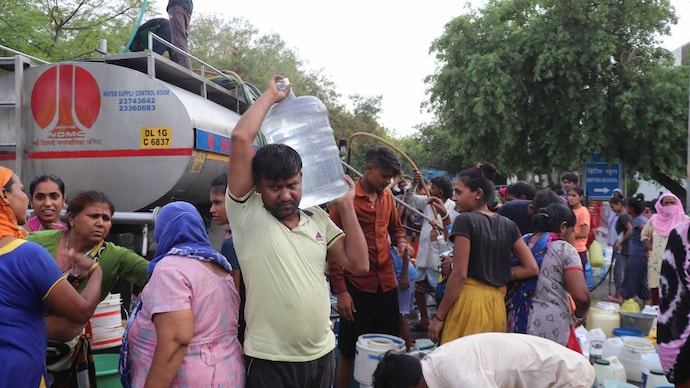
The situation has been worsened by the low and polluted flow of the Yamuna river, the capital’s primary water source. Large parts of Delhi, particularly unauthorised colonies lacking piped connections, continue to depend on water tankers that residents allege are irregular, delayed and vulnerable to misuse.
In response, the Delhi government launched its Summer Action Plan 2026 ahead of the peak season. The initiative includes deployment of nearly 1,000 GPS-enabled water tankers, a mobile app with photographic delivery verification, expansion of the tube-well network and the setting up of 28 emergency water centres across the city.
Authorities have also increased water quality monitoring, with over 1,600 samples reportedly being tested daily.
On the long-term front, Water Minister Parvesh Verma has announced a proposed 50-year water master plan aimed at desilting the Wazirabad Barrage, replacing ageing pipelines, reducing leakages and introducing real-time digital monitoring of water treatment infrastructure.
However, residents across several constituencies say relief on the ground remains limited. Long queues for water, erratic tanker supply and recurring electricity cuts continue to define daily life in many neighbourhoods despite government assurances.
With June, traditionally Delhi’s harshest summer month, still ahead, officials warn that the capital’s infrastructure could face even greater pressure in the coming weeks, raising concerns that the city’s annual summer crisis may intensify further.
As a relentless heatwave pushes temperatures beyond 45°C across the national capital, Delhi is grappling with an escalating power and water crisis that is straining the city’s infrastructure and disrupting daily life for millions.
The twin challenge has emerged as one of the biggest governance tests for the Rekha Gupta-led BJP government, which assumed office last year amid promises of improving civic services and infrastructure resilience.
Delhi’s electricity demand has already crossed unprecedented levels this summer. On May 20, the city recorded a peak power demand of 8,039 MW for the first time ever, before climbing further to 8,647 MW the following day — equalling the all-time record set in 2024. Officials fear the figure could breach 9,000 MW as temperatures continue to rise in June.
The surge has largely been driven by round-the-clock use of air conditioners, coolers and fans as residents attempt to cope with the extreme weather conditions.
Although distribution companies BSES and Tata Power-DDL have managed to avert a citywide blackout so far, several areas including Rohini, Janakpuri, Narela, Hauz Khas and Shalimar Bagh have witnessed repeated unscheduled outages triggered by overloaded transformers and stressed distribution networks.
The national power situation has also come under pressure, with India’s peak power deficit touching around 2.57 gigawatts on May 22. Authorities have urged consumers to reduce unnecessary electricity consumption during peak hours.
To stabilise supply, Delhi’s discoms are depending heavily on power purchase agreements with states such as Rajasthan, Uttar Pradesh and Himachal Pradesh. Officials say AI-based demand forecasting systems and a renewable energy mix of nearly 2,670 MW, including solar, hydro and wind energy, are also being used to manage the load.
At the same time, Delhi’s water supply system is struggling to meet surging summer demand. Delhi Jal Board treatment plants are reportedly operating below the target output of 1,000 million gallons per day even as residential consumption rises sharply.
The situation has been worsened by the low and polluted flow of the Yamuna river, the capital’s primary water source. Large parts of Delhi, particularly unauthorised colonies lacking piped connections, continue to depend on water tankers that residents allege are irregular, delayed and vulnerable to misuse.
In response, the Delhi government launched its Summer Action Plan 2026 ahead of the peak season. The initiative includes deployment of nearly 1,000 GPS-enabled water tankers, a mobile app with photographic delivery verification, expansion of the tube-well network and the setting up of 28 emergency water centres across the city.
Authorities have also increased water quality monitoring, with over 1,600 samples reportedly being tested daily.
On the long-term front, Water Minister Parvesh Verma has announced a proposed 50-year water master plan aimed at desilting the Wazirabad Barrage, replacing ageing pipelines, reducing leakages and introducing real-time digital monitoring of water treatment infrastructure.
However, residents across several constituencies say relief on the ground remains limited. Long queues for water, erratic tanker supply and recurring electricity cuts continue to define daily life in many neighbourhoods despite government assurances.
With June, traditionally Delhi’s harshest summer month, still ahead, officials warn that the capital’s infrastructure could face even greater pressure in the coming weeks, raising concerns that the city’s annual summer crisis may intensify further.

