Delhi's traffic congestion drops nearly 33% in 3 months, thanks to AI monitoring
Delhi's average traffic congestion length has declined significantly following enforcement and engineering interventions at key bottlenecks, as officials expand AI-driven monitoring.
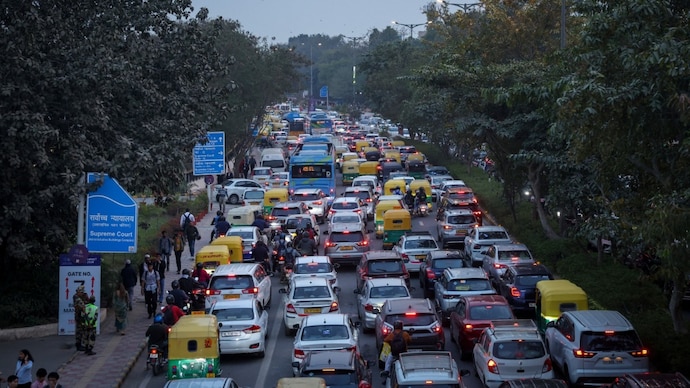
Traffic congestion at several key bottlenecks across Delhi has been reduced by nearly one-third over the past three months following a series of enforcement and infrastructure measures, including the deployment of AI-based traffic management systems, officials said on Monday.
The average congestion length in the city, tracked through Google Maps at 15-minute intervals, fell to 32.43 km between April and June 25 from 48.25 km during January-March.
Lieutenant Governor Taranjit Singh Sandhu reviewed the anti-congestion steps and directed the police to aggressively expand AI-based and digital traffic management systems. He chaired a high-level review meeting with Commissioner of Police Satish Golchha and senior traffic police officers to assess the implementation of directives issued during his visit to the Delhi Traffic Police headquarters at Todapur on April 2.
Officials said the improvement was linked to greater visibility of traffic police personnel on roads, foot patrolling, engineering interventions and technology-based enforcement. Month-on-month congestion fell across 34 of the 62 priority traffic hotspots identified by Delhi Traffic Police under its citizen-centric initiative, "Project Sangam".
Among the sharpest improvements, congestion at Pushta Road in Kailash Nagar fell by 82.59 per cent, while Khajuri Chowk recorded a 74.29 per cent drop. Traffic flow at the Teen Murti roundabout improved by 66.01 per cent. At the same time, congestion worsened at four identified hotspots because of road construction and other factors. These were Naraina Flyover, where congestion rose by 1.28 per cent, South Extension Part-I by 7.55 per cent, Max Hospital in Saket by 14.93 per cent, and Bhavbhuti Marg, where congestion increased by 349.87 per cent.
Officials also identified Dwarka Mor, Sarai Kale Khan, Mukarba Chowk and Dabri Gol Chakkar as persistent bottlenecks that need urgent infrastructure and operational measures.
The LG was informed that joint surveys and regular coordination meetings with civic agencies, including the Delhi Metro Rail Corporation, Public Works Department, National Highways Authority of India, Delhi Transport Corporation, New Delhi Municipal Council and Municipal Corporation of Delhi, have begun to remove encroachments and improve traffic movement.
During the meeting, Sandhu stressed the need to scale up artificial intelligence-based and digital enforcement systems for round-the-clock monitoring of traffic violations and better congestion management. He said traffic snarls lead to a waste of time and fuel and also add significantly to pollution levels in the city.
Calling seamless mobility critical for Delhi's competitiveness and its emergence as a global destination for investment and tourism, he assured full administrative support to Delhi Traffic Police and said he would personally visit several identified hotspots to review the changes on the ground. Overall, the review noted a broad improvement at several major congestion points, while highlighting a few stretches where further work is still needed.
Traffic congestion at several key bottlenecks across Delhi has been reduced by nearly one-third over the past three months following a series of enforcement and infrastructure measures, including the deployment of AI-based traffic management systems, officials said on Monday.
The average congestion length in the city, tracked through Google Maps at 15-minute intervals, fell to 32.43 km between April and June 25 from 48.25 km during January-March.
Lieutenant Governor Taranjit Singh Sandhu reviewed the anti-congestion steps and directed the police to aggressively expand AI-based and digital traffic management systems. He chaired a high-level review meeting with Commissioner of Police Satish Golchha and senior traffic police officers to assess the implementation of directives issued during his visit to the Delhi Traffic Police headquarters at Todapur on April 2.
Officials said the improvement was linked to greater visibility of traffic police personnel on roads, foot patrolling, engineering interventions and technology-based enforcement. Month-on-month congestion fell across 34 of the 62 priority traffic hotspots identified by Delhi Traffic Police under its citizen-centric initiative, "Project Sangam".
Among the sharpest improvements, congestion at Pushta Road in Kailash Nagar fell by 82.59 per cent, while Khajuri Chowk recorded a 74.29 per cent drop. Traffic flow at the Teen Murti roundabout improved by 66.01 per cent. At the same time, congestion worsened at four identified hotspots because of road construction and other factors. These were Naraina Flyover, where congestion rose by 1.28 per cent, South Extension Part-I by 7.55 per cent, Max Hospital in Saket by 14.93 per cent, and Bhavbhuti Marg, where congestion increased by 349.87 per cent.
Officials also identified Dwarka Mor, Sarai Kale Khan, Mukarba Chowk and Dabri Gol Chakkar as persistent bottlenecks that need urgent infrastructure and operational measures.
The LG was informed that joint surveys and regular coordination meetings with civic agencies, including the Delhi Metro Rail Corporation, Public Works Department, National Highways Authority of India, Delhi Transport Corporation, New Delhi Municipal Council and Municipal Corporation of Delhi, have begun to remove encroachments and improve traffic movement.
During the meeting, Sandhu stressed the need to scale up artificial intelligence-based and digital enforcement systems for round-the-clock monitoring of traffic violations and better congestion management. He said traffic snarls lead to a waste of time and fuel and also add significantly to pollution levels in the city.
Calling seamless mobility critical for Delhi's competitiveness and its emergence as a global destination for investment and tourism, he assured full administrative support to Delhi Traffic Police and said he would personally visit several identified hotspots to review the changes on the ground. Overall, the review noted a broad improvement at several major congestion points, while highlighting a few stretches where further work is still needed.

