Heavy rain batters Mumbai, train services affected; Tulsi, Vihar lakes overflow
The India Meteorological Department has forecast intermittent light to moderate rainfall in Mumbai and its suburbs through the day. The rain also pushed up water levels in the city's reservoirs, with Tulsi lake starting to overflow late on Tuesday night, hours after nearby Vihar lake overflowed.
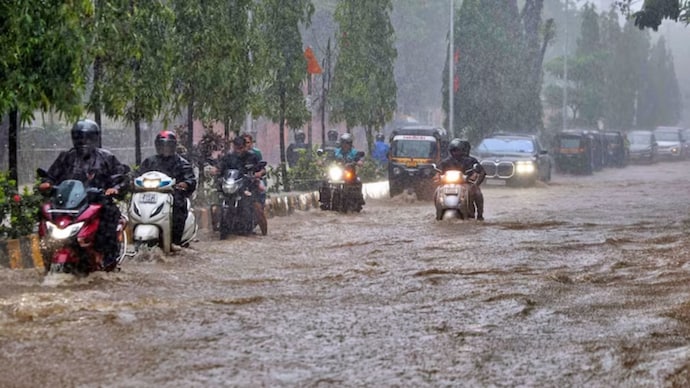
Heavy rain and thunderstorms returned to Mumbai on Wednesday morning after a brief respite, disrupting local train services and causing trouble for office-goers.
Long-distance trains towards Gujarat also remained affected because of waterlogging in the Vasai-Virar section in neighbouring Palghar district and at several places in south Gujarat, while services on the Mumbai-Pune route were still being restored after landslides in the Bhor Ghat section on Monday.
The rain also pushed up water levels in the city's reservoirs, with Tulsi lake starting to overflow late on Tuesday night, hours after nearby Vihar lake overflowed. The India Meteorological Department has forecast intermittent light to moderate rain in Mumbai and its suburbs through the day.
Local trains on both the Central Railway and Western Railway networks were running 25 to 30 minutes late, though Metro and public bus services were operating normally.
On the Central Railway network, services on one section were delayed after the stone base under the tracks was washed away between Neral and Shelu stations in neighbouring Raigad district due to heavy rain in the early hours.
Central Railway Chief Public Relations Officer Swapnil Nila told PTI that the washout near Neral station was noticed at around 4 am and both tracks were attended to immediately. Train services resumed before 6.15 am.
He also said restoration work in the Bhor Ghat section between Karjat and Lonavala was still under way after the landslide earlier this week, and several long-distance trains had been diverted, cancelled or terminated before destination.
Western Railway Chief Public Relations Officer Vineet Abhishek said the movement of mail and express trains remained suspended from 7.20 pm on Tuesday till 6.50 am on Wednesday because of waterlogging near a bridge close to Sachin station in the Surat area.
Operations resumed after the water receded. He said 39 trains had been cancelled, 21 terminated before destination and 46 rescheduled so far because of the disruption.
Abhishek said, "Local trains are running between Churchgate, Virar and Dahanu with delays of 25 to 30 minutes, mainly due to speed restrictions between Vasai, Nalasopara and Virar," adding that the tracks were flooded but the water was below the danger level. He said more than 200 suburban services were cancelled on Tuesday for several reasons, mainly monsoon-related flooding.
Western Railway had suspended suburban services beyond Vasai Road at around 4.30 pm on Tuesday after floodwaters rose above track level. This left hundreds of commuters stranded, with many walking from Vasai to Virar through knee-deep water along the tracks.
Videos on social media showed long queues of passengers wading through flooded tracks using mobile phone flashlights even after midnight.
Some clips purportedly showed commuters protesting at Vasai Road station and travelling from Vasai to Virar in tractors after train services were suspended, though PTI could not independently verify the authenticity of the videos.
According to the Brihanmumbai Municipal Corporation, the island city received an average rainfall of 61.13 mm in the 48 hours ending 8 am on Wednesday, while the eastern and western suburbs recorded 86.66 mm and 86.90 mm respectively.
The civic body, citing the IMD forecast, said Mumbai and its suburbs were likely to see a generally cloudy sky with intermittent spells of light to moderate rain during the day. A high tide of 3.77 metres is expected at 5.17 pm on Wednesday, and the next high tide of 3.49 metres is forecast at 7 am on Thursday.
Tulsi, the smallest of Mumbai's seven water supply reservoirs, began overflowing at 11.43 pm on Tuesday, nearly three hours after Vihar started overflowing at 9 pm, the BMC said.
Even with the two lakes overflowing, the combined water stock in the seven reservoirs supplying drinking water to Mumbai stood at 41.43 per cent of total live storage capacity. The seven reservoirs together had a live storage of 598,589 million litres against a total capacity of 1,447,363 million litres.
The BMC said Modak Sagar was 72 per cent full, Tansa nearly 69 per cent, Bhatsa 36 per cent, Middle Vaitarna 35 per cent and Upper Vaitarna 21 per cent, while Vihar and Tulsi were at full capacity after overflowing on Tuesday night.
Located inside Sanjay Gandhi National Park, about 35 km from the BMC headquarters, Tulsi has a live storage capacity of 8,046 million litres and supplies an average of 18 million litres of water a day to the city. Overflow from Tulsi flows into Vihar, the civic body said.
Vihar, Tulsi and Powai lakes are all within Mumbai. Powai also overflowed earlier this month, though its water is not used for drinking. Tulsi lake was built in 1879 at a cost of around Rs 40 lakh.
It has a catchment area of 6.76 sq km and a water spread area of about 1.35 sq km when full. The BMC said Tulsi had overflowed on August 16 last year and on August 4 in 2024. Overall, Wednesday's rain once again affected transport across Mumbai and nearby sections, even as water levels in the city's reservoirs continued to rise.
Heavy rain and thunderstorms returned to Mumbai on Wednesday morning after a brief respite, disrupting local train services and causing trouble for office-goers.
Long-distance trains towards Gujarat also remained affected because of waterlogging in the Vasai-Virar section in neighbouring Palghar district and at several places in south Gujarat, while services on the Mumbai-Pune route were still being restored after landslides in the Bhor Ghat section on Monday.
The rain also pushed up water levels in the city's reservoirs, with Tulsi lake starting to overflow late on Tuesday night, hours after nearby Vihar lake overflowed. The India Meteorological Department has forecast intermittent light to moderate rain in Mumbai and its suburbs through the day.
Local trains on both the Central Railway and Western Railway networks were running 25 to 30 minutes late, though Metro and public bus services were operating normally.
On the Central Railway network, services on one section were delayed after the stone base under the tracks was washed away between Neral and Shelu stations in neighbouring Raigad district due to heavy rain in the early hours.
Central Railway Chief Public Relations Officer Swapnil Nila told PTI that the washout near Neral station was noticed at around 4 am and both tracks were attended to immediately. Train services resumed before 6.15 am.
He also said restoration work in the Bhor Ghat section between Karjat and Lonavala was still under way after the landslide earlier this week, and several long-distance trains had been diverted, cancelled or terminated before destination.
Western Railway Chief Public Relations Officer Vineet Abhishek said the movement of mail and express trains remained suspended from 7.20 pm on Tuesday till 6.50 am on Wednesday because of waterlogging near a bridge close to Sachin station in the Surat area.
Operations resumed after the water receded. He said 39 trains had been cancelled, 21 terminated before destination and 46 rescheduled so far because of the disruption.
Abhishek said, "Local trains are running between Churchgate, Virar and Dahanu with delays of 25 to 30 minutes, mainly due to speed restrictions between Vasai, Nalasopara and Virar," adding that the tracks were flooded but the water was below the danger level. He said more than 200 suburban services were cancelled on Tuesday for several reasons, mainly monsoon-related flooding.
Western Railway had suspended suburban services beyond Vasai Road at around 4.30 pm on Tuesday after floodwaters rose above track level. This left hundreds of commuters stranded, with many walking from Vasai to Virar through knee-deep water along the tracks.
Videos on social media showed long queues of passengers wading through flooded tracks using mobile phone flashlights even after midnight.
Some clips purportedly showed commuters protesting at Vasai Road station and travelling from Vasai to Virar in tractors after train services were suspended, though PTI could not independently verify the authenticity of the videos.
According to the Brihanmumbai Municipal Corporation, the island city received an average rainfall of 61.13 mm in the 48 hours ending 8 am on Wednesday, while the eastern and western suburbs recorded 86.66 mm and 86.90 mm respectively.
The civic body, citing the IMD forecast, said Mumbai and its suburbs were likely to see a generally cloudy sky with intermittent spells of light to moderate rain during the day. A high tide of 3.77 metres is expected at 5.17 pm on Wednesday, and the next high tide of 3.49 metres is forecast at 7 am on Thursday.
Tulsi, the smallest of Mumbai's seven water supply reservoirs, began overflowing at 11.43 pm on Tuesday, nearly three hours after Vihar started overflowing at 9 pm, the BMC said.
Even with the two lakes overflowing, the combined water stock in the seven reservoirs supplying drinking water to Mumbai stood at 41.43 per cent of total live storage capacity. The seven reservoirs together had a live storage of 598,589 million litres against a total capacity of 1,447,363 million litres.
The BMC said Modak Sagar was 72 per cent full, Tansa nearly 69 per cent, Bhatsa 36 per cent, Middle Vaitarna 35 per cent and Upper Vaitarna 21 per cent, while Vihar and Tulsi were at full capacity after overflowing on Tuesday night.
Located inside Sanjay Gandhi National Park, about 35 km from the BMC headquarters, Tulsi has a live storage capacity of 8,046 million litres and supplies an average of 18 million litres of water a day to the city. Overflow from Tulsi flows into Vihar, the civic body said.
Vihar, Tulsi and Powai lakes are all within Mumbai. Powai also overflowed earlier this month, though its water is not used for drinking. Tulsi lake was built in 1879 at a cost of around Rs 40 lakh.
It has a catchment area of 6.76 sq km and a water spread area of about 1.35 sq km when full. The BMC said Tulsi had overflowed on August 16 last year and on August 4 in 2024. Overall, Wednesday's rain once again affected transport across Mumbai and nearby sections, even as water levels in the city's reservoirs continued to rise.

