Centre waives excise duty on higher ethanol blends, but vehicle adoption remains low
In May, the Bureau of Indian Standards laid down specifications for E22 to E30 fuel blends, paving the way for the next phase of India's ethanol blending programme.
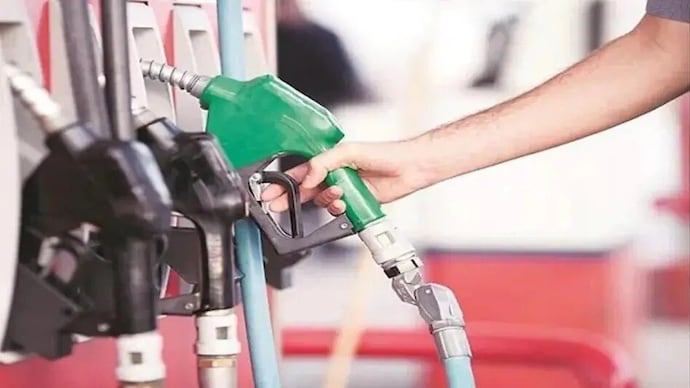
The Centre’s decision to remove excise duty on higher ethanol-blended petrol marks another major push in India’s biofuel transition. According to a notification issued by the Ministry of Finance on June 10, conforming to Bureau of Indian Standards norms, petrol blended with 22 per cent, 25 per cent, 27 per cent, and 30 per cent ethanol will now attract zero excise duty.
The move comes as India looks to cut its dependence on imported crude oil and expand the use of domestically produced biofuels. In May, the Bureau of Indian Standards laid down specifications for E22 to E30 fuel blends, paving the way for the next phase of India’s ethanol blending programme.
But even as the government prepares for higher ethanol blends, conventional petrol vehicles continue to dominate registrations over E20-classified variants. Data from the Vahan dashboard shows that conventional petrol vehicles continued to dominate registrations in recent years, even after the introduction of E20 fuel in February 2023. Registrations explicitly classified under the E20 petrol category remained comparatively low, particularly in the two-wheeler segment, through FY24 and FY25.
In FY24, around 1.61 crore conventional petrol two-wheelers were registered compared to nearly five lakh vehicles classified as petrol/E20. The gap remained largely unchanged in FY25, with 1.71 crore petrol models registered, against around six lakh E20 petrol variants.
The transition began picking up pace only in FY26, when registrations of E20 petrol two-wheelers rose sharply to nearly 79 lakh units — although conventional petrol variants still accounted for more than 1.2 crore registrations.
A similar trend was visible in the passenger vehicle segment. In FY24, around 22.5 lakh conventional petrol four-wheelers were registered, while E20 petrol variants remained negligible. Adoption improved in FY25 and accelerated in FY26, when E20 petrol four-wheeler registrations crossed 12 lakh units.
The slower shift towards E20-classified vehicles comes even as policymakers prepare for higher ethanol blends. According to the Society of Indian Automobile Manufacturers, a national body representing major vehicle and engine manufacturers in India, in NITI Aayog’s report “Roadmap for Ethanol Blending in India”, “E20 material compliant and E10 engine tuned vehicles” were proposed for rollout from April 2023, followed by “E20 tuned engine vehicles” from April 2025.
The report also noted that vehicles using higher ethanol blends would require changes related to material compatibility, engine tuning and optimisation, while vehicles designed for lower ethanol content could see lower fuel economy when operated on higher ethanol blends.
The Centre’s decision to remove excise duty on higher ethanol-blended petrol marks another major push in India’s biofuel transition. According to a notification issued by the Ministry of Finance on June 10, conforming to Bureau of Indian Standards norms, petrol blended with 22 per cent, 25 per cent, 27 per cent, and 30 per cent ethanol will now attract zero excise duty.
The move comes as India looks to cut its dependence on imported crude oil and expand the use of domestically produced biofuels. In May, the Bureau of Indian Standards laid down specifications for E22 to E30 fuel blends, paving the way for the next phase of India’s ethanol blending programme.
But even as the government prepares for higher ethanol blends, conventional petrol vehicles continue to dominate registrations over E20-classified variants. Data from the Vahan dashboard shows that conventional petrol vehicles continued to dominate registrations in recent years, even after the introduction of E20 fuel in February 2023. Registrations explicitly classified under the E20 petrol category remained comparatively low, particularly in the two-wheeler segment, through FY24 and FY25.
In FY24, around 1.61 crore conventional petrol two-wheelers were registered compared to nearly five lakh vehicles classified as petrol/E20. The gap remained largely unchanged in FY25, with 1.71 crore petrol models registered, against around six lakh E20 petrol variants.
The transition began picking up pace only in FY26, when registrations of E20 petrol two-wheelers rose sharply to nearly 79 lakh units — although conventional petrol variants still accounted for more than 1.2 crore registrations.
A similar trend was visible in the passenger vehicle segment. In FY24, around 22.5 lakh conventional petrol four-wheelers were registered, while E20 petrol variants remained negligible. Adoption improved in FY25 and accelerated in FY26, when E20 petrol four-wheeler registrations crossed 12 lakh units.
The slower shift towards E20-classified vehicles comes even as policymakers prepare for higher ethanol blends. According to the Society of Indian Automobile Manufacturers, a national body representing major vehicle and engine manufacturers in India, in NITI Aayog’s report “Roadmap for Ethanol Blending in India”, “E20 material compliant and E10 engine tuned vehicles” were proposed for rollout from April 2023, followed by “E20 tuned engine vehicles” from April 2025.
The report also noted that vehicles using higher ethanol blends would require changes related to material compatibility, engine tuning and optimisation, while vehicles designed for lower ethanol content could see lower fuel economy when operated on higher ethanol blends.

