School rules then and now: What deserves an A+ and what needs detention?
From uniforms and punctuality to mobile phone bans and permission to drink water, school rules have shaped generations of students. But as classrooms evolve, which rules still serve a purpose, and which deserve a rethink? This feature explores the debate over the modern school rulebook.
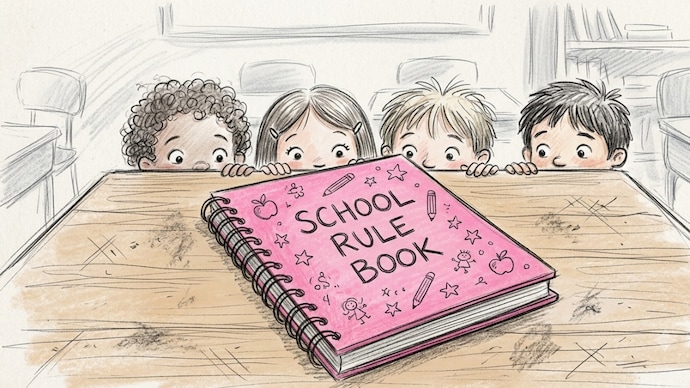
Every school had one. A rulebook thick enough to make you wonder whether you were joining a classroom or signing a peace treaty. Some rules were printed in the school diary. Others floated through the corridors like unwritten laws. You didn't know who created them, but you knew breaking them meant trouble.
For generations, students have followed them without much thought.
But as classrooms become more collaborative, technology-driven, and focused on well-being, perhaps it's time to ask: if schools were writing their rulebooks from scratch today, which rules would still make the cut, and which ones deserve a rethink?
RULES THAT HAVE STOOD THE TEST OF TIME
Some school rules have aged remarkably well because their purpose extends far beyond the classroom. Being punctual teaches students that time matters, not just their own, but everyone else's.
Raising a hand before speaking ensures that every voice has a chance to be heard, while waiting for one's turn is a lesson in respect that remains relevant in classrooms, boardrooms, and everyday conversations.
Similarly, rules against bullying, discrimination, and disrespect have become even more important in today's world. These are not merely school regulations; they are values that help shape responsible citizens.
Even the much-debated school uniform continues to have its supporters. While students may argue about ties in summer or perfectly polished shoes, uniforms can reduce visible economic differences and create a sense of belonging. They remind students that, inside the classroom at least, everyone starts on equal footing.
RULES THAT MAY NEED A REWRITE
Then some rules feel less like life lessons and more like leftovers from another era. Does asking permission before taking a sip of water really build discipline?
Does complete silence in the corridors make schools more effective, or simply quieter? Fixed seating arrangements may keep classrooms organised, but they can also limit collaboration and interaction among students.
The biggest debate, of course, is about mobile phones. A decade ago, banning them seemed like the obvious choice. Today, the same device can serve as a calculator, dictionary, camera, notebook, and learning tool.
The question is no longer whether phones belong in schools, but whether students should be taught how to use them responsibly instead of pretending they don't exist.
Rules that promote safety and respect are essential, but those that regulate every small action can sometimes leave little room for independence. After all, students eventually step into a world where they are expected to make responsible choices without asking for permission first.
FROM OBEDIENCE TO RESPONSIBILITY
Perhaps the biggest difference between yesterday's school rulebook and tomorrow's lies in what schools hope to achieve. Traditional rules often focused on obedience: following instructions, maintaining order, and avoiding mistakes. Modern education, however, increasingly values curiosity, critical thinking, and collaboration alongside discipline.
That doesn't mean schools need fewer rules. It means they need rules that prepare students for the realities of today's world. Alongside punctuality and respect, future rulebooks may place greater emphasis on digital etiquette, mental well-being, teamwork, and responsible decision-making.
THE FINAL BELL
Every generation remembers school through its own set of rules. Some became lifelong habits; we still queue instinctively and apologise for being late.
Others simply make for amusing stories at reunions, like being told not to step on the freshly mopped corridor or being sent back because a shirt wasn't tucked in.
The best school rulebook, then, isn't the strictest one. It's the one that teaches lessons students continue to follow long after they've left the classroom.
Rules should not exist simply because "that's how it's always been done." They should exist because they still make sense. And perhaps that's the one rule every school should keep.
Every school had one. A rulebook thick enough to make you wonder whether you were joining a classroom or signing a peace treaty. Some rules were printed in the school diary. Others floated through the corridors like unwritten laws. You didn't know who created them, but you knew breaking them meant trouble.
For generations, students have followed them without much thought.
But as classrooms become more collaborative, technology-driven, and focused on well-being, perhaps it's time to ask: if schools were writing their rulebooks from scratch today, which rules would still make the cut, and which ones deserve a rethink?
RULES THAT HAVE STOOD THE TEST OF TIME
Some school rules have aged remarkably well because their purpose extends far beyond the classroom. Being punctual teaches students that time matters, not just their own, but everyone else's.
Raising a hand before speaking ensures that every voice has a chance to be heard, while waiting for one's turn is a lesson in respect that remains relevant in classrooms, boardrooms, and everyday conversations.
Similarly, rules against bullying, discrimination, and disrespect have become even more important in today's world. These are not merely school regulations; they are values that help shape responsible citizens.
Even the much-debated school uniform continues to have its supporters. While students may argue about ties in summer or perfectly polished shoes, uniforms can reduce visible economic differences and create a sense of belonging. They remind students that, inside the classroom at least, everyone starts on equal footing.
RULES THAT MAY NEED A REWRITE
Then some rules feel less like life lessons and more like leftovers from another era. Does asking permission before taking a sip of water really build discipline?
Does complete silence in the corridors make schools more effective, or simply quieter? Fixed seating arrangements may keep classrooms organised, but they can also limit collaboration and interaction among students.
The biggest debate, of course, is about mobile phones. A decade ago, banning them seemed like the obvious choice. Today, the same device can serve as a calculator, dictionary, camera, notebook, and learning tool.
The question is no longer whether phones belong in schools, but whether students should be taught how to use them responsibly instead of pretending they don't exist.
Rules that promote safety and respect are essential, but those that regulate every small action can sometimes leave little room for independence. After all, students eventually step into a world where they are expected to make responsible choices without asking for permission first.
FROM OBEDIENCE TO RESPONSIBILITY
Perhaps the biggest difference between yesterday's school rulebook and tomorrow's lies in what schools hope to achieve. Traditional rules often focused on obedience: following instructions, maintaining order, and avoiding mistakes. Modern education, however, increasingly values curiosity, critical thinking, and collaboration alongside discipline.
That doesn't mean schools need fewer rules. It means they need rules that prepare students for the realities of today's world. Alongside punctuality and respect, future rulebooks may place greater emphasis on digital etiquette, mental well-being, teamwork, and responsible decision-making.
THE FINAL BELL
Every generation remembers school through its own set of rules. Some became lifelong habits; we still queue instinctively and apologise for being late.
Others simply make for amusing stories at reunions, like being told not to step on the freshly mopped corridor or being sent back because a shirt wasn't tucked in.
The best school rulebook, then, isn't the strictest one. It's the one that teaches lessons students continue to follow long after they've left the classroom.
Rules should not exist simply because "that's how it's always been done." They should exist because they still make sense. And perhaps that's the one rule every school should keep.

