Quote of the day by Karl Marx: History repeats itself, first as tragedy, second as...
Karl Marx's famous line explains how historical events return in altered forms. It warns that societies often repeat old mistakes without addressing deeper inequalities.
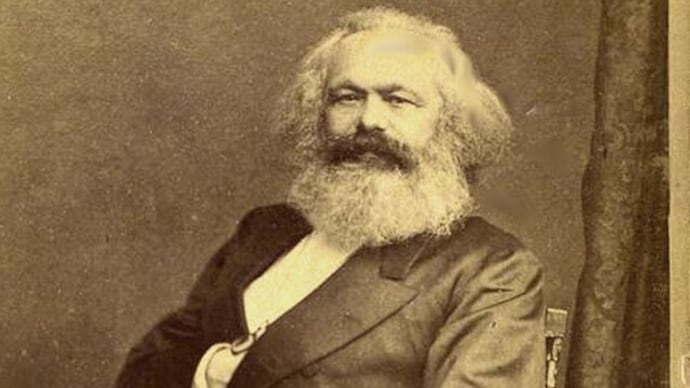
"History repeats itself, first as tragedy, second as farce."
This is a famous quote by Karl Marx, taken from his work The Eighteenth Brumaire of Louis Bonaparte (1852). The line reflects his observation that historical events often reappear in different forms.
The first time, they appear serious and destructive; the second time, they may seem exaggerated or even absurd, but still carry consequences.
WHO IS KARL MARX?
Karl Marx was born on May 5, 1818, in Trier, Germany, and died on March 14, 1883, in London, United Kingdom. He was a philosopher, economist, historian and political theorist whose ideas shaped modern socialism and communism.
Along with Friedrich Engels, he wrote The Communist Manifesto, and later developed his critique of capitalism in Das Kapital. His work focused on class struggle, economic systems and how societies evolve over time.
Marx was deeply analytical and critical of existing social and economic systems. He spent much of his life studying history, philosophy and political economy. His writings often examined inequality between social classes and how power is distributed in society. Though he faced financial struggles for much of his life, he remained committed to his intellectual work.
MEANING OF THE QUOTE
The quote suggests that human societies often repeat similar patterns of behaviour, especially in politics and power struggles. The first occurrence of an event may be serious, dramatic and deeply impactful. This is what Marx calls “tragedy." When similar events happen again, they may appear less original or even ridiculous—this is the “farce."
However, Marx’s deeper message is not humour but warning. He suggests that societies fail to learn from history, repeating mistakes in different forms. Events may change in appearance, but underlying problems such as inequality, power imbalance and political manipulation often remain.
The philosophy behind the quote encourages awareness of historical patterns. It suggests that studying the past can help societies avoid repeating harmful mistakes in the future.
OTHER QUOTES BY KARL MARX
Workers of the world, unite!
The history of all hitherto existing society is the history of class struggles.
Philosophers have only interpreted the world; the point is to change it.
Religion is the opium of the people.
From each according to his ability, to each according to his needs.
Karl Marx’s quote remains relevant because it highlights how human societies often repeat political and social patterns.
His observation encourages deeper reflection on history, urging people to learn from the past instead of repeating it. The message reminds readers that understanding history is essential to building a more aware and responsible future.
"History repeats itself, first as tragedy, second as farce."
This is a famous quote by Karl Marx, taken from his work The Eighteenth Brumaire of Louis Bonaparte (1852). The line reflects his observation that historical events often reappear in different forms.
The first time, they appear serious and destructive; the second time, they may seem exaggerated or even absurd, but still carry consequences.
WHO IS KARL MARX?
Karl Marx was born on May 5, 1818, in Trier, Germany, and died on March 14, 1883, in London, United Kingdom. He was a philosopher, economist, historian and political theorist whose ideas shaped modern socialism and communism.
Along with Friedrich Engels, he wrote The Communist Manifesto, and later developed his critique of capitalism in Das Kapital. His work focused on class struggle, economic systems and how societies evolve over time.
Marx was deeply analytical and critical of existing social and economic systems. He spent much of his life studying history, philosophy and political economy. His writings often examined inequality between social classes and how power is distributed in society. Though he faced financial struggles for much of his life, he remained committed to his intellectual work.
MEANING OF THE QUOTE
The quote suggests that human societies often repeat similar patterns of behaviour, especially in politics and power struggles. The first occurrence of an event may be serious, dramatic and deeply impactful. This is what Marx calls “tragedy." When similar events happen again, they may appear less original or even ridiculous—this is the “farce."
However, Marx’s deeper message is not humour but warning. He suggests that societies fail to learn from history, repeating mistakes in different forms. Events may change in appearance, but underlying problems such as inequality, power imbalance and political manipulation often remain.
The philosophy behind the quote encourages awareness of historical patterns. It suggests that studying the past can help societies avoid repeating harmful mistakes in the future.
OTHER QUOTES BY KARL MARX
Workers of the world, unite!
The history of all hitherto existing society is the history of class struggles.
Philosophers have only interpreted the world; the point is to change it.
Religion is the opium of the people.
From each according to his ability, to each according to his needs.
Karl Marx’s quote remains relevant because it highlights how human societies often repeat political and social patterns.
His observation encourages deeper reflection on history, urging people to learn from the past instead of repeating it. The message reminds readers that understanding history is essential to building a more aware and responsible future.

