Sutlej: The river that starts near Mount Kailash but doesn't flow through Nepal
The Sutlej River originates near Mount Kailash but never flows through Nepal. This ancient Himalayan river has changed course over millennia, shaped civilizations, and even influenced Nepal's early 19th-century territorial expansion before flowing through China, India, and Pakistan.
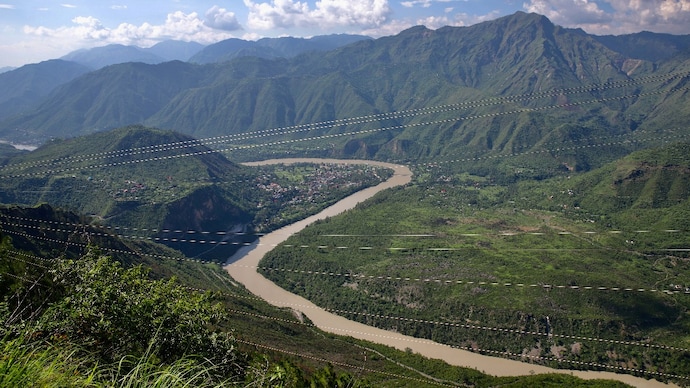
Given that the Sutlej River originates near Mount Kailash and Lake Mansarovar in the Tibetan Plateau, many assume it flows through Nepal. Surprisingly, it does not.
Instead, the river rises on the southern slopes of Mount Kailash near Lake Mansarovar, emerging from Rakshastal in Tibet (China), where it is locally known as the Longcchen Khabab River.
From there, it flows westward before entering India through Shipki La in Himachal Pradesh at an altitude of about 3,930 metres. It then continues through Himachal Pradesh and Punjab before eventually entering Pakistan.
Although the river never passes through Nepal, it has a fascinating historical connection with the country that dates back more than two centuries.
A RIVER WITH ANCIENT ROOTS
The Sutlej is one of the oldest known rivers of the Indian subcontinent. During the Vedic period, it was known as Satudri, while in Sanskrit, the language of ancient India, it was called Shatadru.
Stretching nearly 900 miles (1,400 kilometres), the Sutlej is the longest among the five rivers of Himachal Pradesh. After entering India, it flows through the districts of Kinnaur, Shimla, Kullu, Mandi, Solan, and Bilaspur before continuing into Punjab.
The river is also one of northern India's most important water sources, supporting irrigation across vast agricultural regions, according to Britannica.
WHAT CONTROLS THE SUTLEJ'S FLOW?
The Sutlej is primarily fed by Himalayan snowmelt during spring and summer and by rainfall from the South Asian monsoon.
The arrival of the summer monsoon often brings heavy rainfall, which can cause extensive flooding downstream. The largest recorded flood occurred in 1955, when the river discharged nearly 600,000 cubic feet (17,000 cubic metres) of water per second. During winter, however, water levels drop considerably because there is little rainfall and reduced glacier melt, according to Britannica.
IF IT DOESN'T FLOW THROUGH NEPAL, WHY IS IT LINKED TO IT?
While the Sutlej River does not flow through Nepal today, it was once closely associated with Nepal's territorial expansion.
During the early 19th century, the expanding Gorkha Kingdom pushed its western frontier as far as the Sutlej River and briefly crossed it during its military campaign in the Kangra region.
However, in 1809, the Gorkhas were defeated by the forces of Kangra King Sansar Chand, who received military support from Maharaja Ranjit Singh of the Sikh Empire. The defeat marked the end of Nepal's westward expansion, according to the Archaeological Survey of India Report for the Year 1872–73.
Although the river itself never became part of Nepal's geography, it briefly became part of Nepal's military history.
A RIVER SHARED BY THREE NATIONS
Today, the Sutlej flows through China (Tibet Autonomous Region), India, and Pakistan, making it one of South Asia's important transboundary rivers.
From its origins near Mount Kailash to its journey through the Himalayas and the plains of Punjab, the Sutlej has shaped landscapes, civilizations, and history for thousands of years. Its story is a reminder that a river's historical influence can extend well beyond the countries it actually flows through.
Given that the Sutlej River originates near Mount Kailash and Lake Mansarovar in the Tibetan Plateau, many assume it flows through Nepal. Surprisingly, it does not.
Instead, the river rises on the southern slopes of Mount Kailash near Lake Mansarovar, emerging from Rakshastal in Tibet (China), where it is locally known as the Longcchen Khabab River.
From there, it flows westward before entering India through Shipki La in Himachal Pradesh at an altitude of about 3,930 metres. It then continues through Himachal Pradesh and Punjab before eventually entering Pakistan.
Although the river never passes through Nepal, it has a fascinating historical connection with the country that dates back more than two centuries.
A RIVER WITH ANCIENT ROOTS
The Sutlej is one of the oldest known rivers of the Indian subcontinent. During the Vedic period, it was known as Satudri, while in Sanskrit, the language of ancient India, it was called Shatadru.
Stretching nearly 900 miles (1,400 kilometres), the Sutlej is the longest among the five rivers of Himachal Pradesh. After entering India, it flows through the districts of Kinnaur, Shimla, Kullu, Mandi, Solan, and Bilaspur before continuing into Punjab.
The river is also one of northern India's most important water sources, supporting irrigation across vast agricultural regions, according to Britannica.
WHAT CONTROLS THE SUTLEJ'S FLOW?
The Sutlej is primarily fed by Himalayan snowmelt during spring and summer and by rainfall from the South Asian monsoon.
The arrival of the summer monsoon often brings heavy rainfall, which can cause extensive flooding downstream. The largest recorded flood occurred in 1955, when the river discharged nearly 600,000 cubic feet (17,000 cubic metres) of water per second. During winter, however, water levels drop considerably because there is little rainfall and reduced glacier melt, according to Britannica.
IF IT DOESN'T FLOW THROUGH NEPAL, WHY IS IT LINKED TO IT?
While the Sutlej River does not flow through Nepal today, it was once closely associated with Nepal's territorial expansion.
During the early 19th century, the expanding Gorkha Kingdom pushed its western frontier as far as the Sutlej River and briefly crossed it during its military campaign in the Kangra region.
However, in 1809, the Gorkhas were defeated by the forces of Kangra King Sansar Chand, who received military support from Maharaja Ranjit Singh of the Sikh Empire. The defeat marked the end of Nepal's westward expansion, according to the Archaeological Survey of India Report for the Year 1872–73.
Although the river itself never became part of Nepal's geography, it briefly became part of Nepal's military history.
A RIVER SHARED BY THREE NATIONS
Today, the Sutlej flows through China (Tibet Autonomous Region), India, and Pakistan, making it one of South Asia's important transboundary rivers.
From its origins near Mount Kailash to its journey through the Himalayas and the plains of Punjab, the Sutlej has shaped landscapes, civilizations, and history for thousands of years. Its story is a reminder that a river's historical influence can extend well beyond the countries it actually flows through.

