Canada says, come. Indian students say, we'll think about it
Canada says it remains open to Indian students, but many are choosing cautiously. Visa restrictions, higher living costs, immigration policy changes, and growing competition from destinations like Germany, Australia, and Ireland have transformed Canada from the default choice into one of many options.
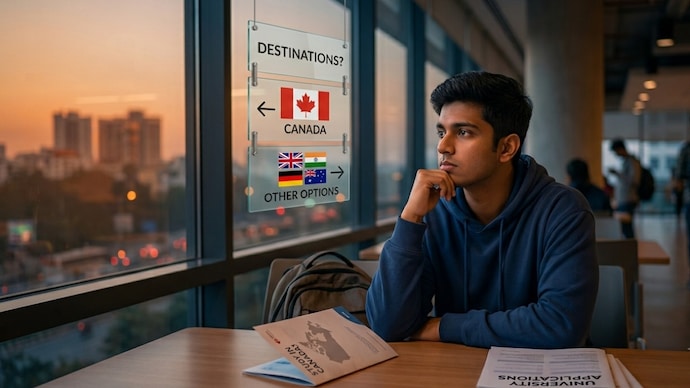
Not too long ago, the conversation around studying abroad in India almost always included one country: Canada.
For thousands of Indian students, Canada represented the ideal combination of a globally recognised degree, relatively affordable tuition compared to the US, generous post-study work opportunities, and, perhaps most importantly, a clear pathway to permanent residency. From metropolitan cities to small towns, "Canada jaana hai" became a common aspiration.
Today, that certainty has begun to fade.
While Canada is once again extending an open invitation to international students, many Indian families appear to be responding with caution rather than excitement.
CANADA'S PITCH TO INDIAN STUDENTS
On June 22, Canadian High Commissioner to India Chris Cooter attempted to reassure prospective students, making it clear that Canada has not closed its doors to Indians.
Speaking to ANI, Cooter said there is a widespread but inaccurate perception in India that Canada has become less welcoming to international students following changes to its immigration system.
"The reason is that there is a kind of misperception in India that Canada is shutting the doors. That is not at all the case," he said.
He acknowledged that Canada had introduced a cap on international students due to housing shortages and concerns about the quality of some educational institutions.
"It's true that a couple of years ago we did impose a cap because we had issues—there simply wasn't enough housing, there were some fly-by-night colleges, we wanted to clean that up. But we've done that," he said.
Highlighting Canada's continued appeal, Cooter added that the country currently hosts around 400,000 international students.
"And now we host 400,000 students in Canada. That's more than the EU, UK, and Australia combined. It's more than the US hosts."
He urged Indian students and parents to continue considering Canada, saying the country offers world-class education across universities and polytechnics.
Yet, the numbers suggest that Indian students are already looking elsewhere.
FROM FIRST CHOICE TO ONE AMONG MANY
There was a time when Canada was almost the default answer for students dreaming of an overseas education. Today, that dream has become more diversified.
Students now have a wider range of destinations to choose from, including Germany, Australia, Ireland, New Zealand, the UK, and several European countries, many of which have actively expanded their international education offerings.
Canada is no longer competing only with the United States. It is competing with a much broader global classroom.
THE NUMBERS TELL THE STORY
The shift is visible in official data.
According to a report submitted by Canada's auditor general to parliament, the share of Indians in the country's incoming international student population was just 8.1% in September 2025, a dramatic fall from 51.6% in 2023.
The decline has been equally visible from India's side. According to the Union Education Ministry, the number of Indian students choosing Canada dropped by 41%, from 2,33,532 in 2023 to 1,37,608 in 2024.
These figures indicate that while Canada remains an important destination, it is no longer attracting Indian students at the pace it once did.
WHY ARE STUDENTS STEPPING BACK?
The slowdown did not happen overnight. There are several reasons: visa and immigration restrictions, high living costs, and, in 2023, a diplomatic crisis that damaged ties between the two countries, as reported by the BBC.
One of the biggest turning points came in early 2024, when Canada announced a two-year cap on international students enrolling in undergraduate and diploma programmes, limiting study permits to around 350,000 annually. Postgraduate programmes were exempt.
For many Indian students, this was an immediate signal that securing admission had become significantly more competitive. At the same time, living expenses rose sharply.
Rent prices climbed across major Canadian cities, financial requirements for obtaining study permits became stricter, and finding part-time work became increasingly difficult, factors that substantially increased the overall cost of studying in Canada.
The combination of higher costs and tighter immigration policies prompted many students to reconsider their options.
A POLICY SHIFT, NOT A TEMPORARY SLOWDOWN
Recent statements from the Canadian government suggest that these changes are part of a broader restructuring rather than a temporary adjustment.
On June 26, Canadian Prime Minister Mark Carney said the country has witnessed a 60% drop in international student arrivals, adding that Canada has "taken back control of immigration" and is rebuilding a more sustainable immigration system.
According to an Immigration, Refugees and Citizenship Canada (IRCC) report, international student arrivals between January and October 2025 fell by nearly 60% compared with the same period in 2024. More than 1.5 lakh fewer students arrived during that period.
The decline remained consistent throughout the year.
In August 2025, around 45,000 new study permits were issued, down sharply from nearly 80,000 during the same month a year earlier. By October, new arrivals had dropped to just over 3,000, making it one of the weakest months on record.
Unlike previous fluctuations driven by global events, this slowdown reflects deliberate policy decisions. Caps on study permits, tighter financial requirements, and increased scrutiny of private colleges have fundamentally changed Canada's international education landscape.
CANADA IS STILL OPEN, BUT STUDENTS ARE ASKING TOUGHER QUESTIONS
Canada's message today is straightforward: We are still welcoming international students. Indian students, however, are no longer making decisions based solely on reputation or historical popularity.
They are asking practical questions. Will they be able to obtain a visa easily? Can they afford rising rents? Will part-time jobs be available? What are the chances of securing post-study work and eventually settling in the country?
These questions are increasingly influencing destination choices.
Canada continues to offer globally respected universities, strong research opportunities, and quality education. But the conditions that once made it the undisputed favourite among Indian students have changed.
The result is a noticeable shift in student behaviour. Canada may once again be saying, "Come." But for many Indian students, the response has become far more measured:
"We'll think about it."
Not too long ago, the conversation around studying abroad in India almost always included one country: Canada.
For thousands of Indian students, Canada represented the ideal combination of a globally recognised degree, relatively affordable tuition compared to the US, generous post-study work opportunities, and, perhaps most importantly, a clear pathway to permanent residency. From metropolitan cities to small towns, "Canada jaana hai" became a common aspiration.
Today, that certainty has begun to fade.
While Canada is once again extending an open invitation to international students, many Indian families appear to be responding with caution rather than excitement.
CANADA'S PITCH TO INDIAN STUDENTS
On June 22, Canadian High Commissioner to India Chris Cooter attempted to reassure prospective students, making it clear that Canada has not closed its doors to Indians.
Speaking to ANI, Cooter said there is a widespread but inaccurate perception in India that Canada has become less welcoming to international students following changes to its immigration system.
"The reason is that there is a kind of misperception in India that Canada is shutting the doors. That is not at all the case," he said.
He acknowledged that Canada had introduced a cap on international students due to housing shortages and concerns about the quality of some educational institutions.
"It's true that a couple of years ago we did impose a cap because we had issues—there simply wasn't enough housing, there were some fly-by-night colleges, we wanted to clean that up. But we've done that," he said.
Highlighting Canada's continued appeal, Cooter added that the country currently hosts around 400,000 international students.
"And now we host 400,000 students in Canada. That's more than the EU, UK, and Australia combined. It's more than the US hosts."
He urged Indian students and parents to continue considering Canada, saying the country offers world-class education across universities and polytechnics.
Yet, the numbers suggest that Indian students are already looking elsewhere.
FROM FIRST CHOICE TO ONE AMONG MANY
There was a time when Canada was almost the default answer for students dreaming of an overseas education. Today, that dream has become more diversified.
Students now have a wider range of destinations to choose from, including Germany, Australia, Ireland, New Zealand, the UK, and several European countries, many of which have actively expanded their international education offerings.
Canada is no longer competing only with the United States. It is competing with a much broader global classroom.
THE NUMBERS TELL THE STORY
The shift is visible in official data.
According to a report submitted by Canada's auditor general to parliament, the share of Indians in the country's incoming international student population was just 8.1% in September 2025, a dramatic fall from 51.6% in 2023.
The decline has been equally visible from India's side. According to the Union Education Ministry, the number of Indian students choosing Canada dropped by 41%, from 2,33,532 in 2023 to 1,37,608 in 2024.
These figures indicate that while Canada remains an important destination, it is no longer attracting Indian students at the pace it once did.
WHY ARE STUDENTS STEPPING BACK?
The slowdown did not happen overnight. There are several reasons: visa and immigration restrictions, high living costs, and, in 2023, a diplomatic crisis that damaged ties between the two countries, as reported by the BBC.
One of the biggest turning points came in early 2024, when Canada announced a two-year cap on international students enrolling in undergraduate and diploma programmes, limiting study permits to around 350,000 annually. Postgraduate programmes were exempt.
For many Indian students, this was an immediate signal that securing admission had become significantly more competitive. At the same time, living expenses rose sharply.
Rent prices climbed across major Canadian cities, financial requirements for obtaining study permits became stricter, and finding part-time work became increasingly difficult, factors that substantially increased the overall cost of studying in Canada.
The combination of higher costs and tighter immigration policies prompted many students to reconsider their options.
A POLICY SHIFT, NOT A TEMPORARY SLOWDOWN
Recent statements from the Canadian government suggest that these changes are part of a broader restructuring rather than a temporary adjustment.
On June 26, Canadian Prime Minister Mark Carney said the country has witnessed a 60% drop in international student arrivals, adding that Canada has "taken back control of immigration" and is rebuilding a more sustainable immigration system.
According to an Immigration, Refugees and Citizenship Canada (IRCC) report, international student arrivals between January and October 2025 fell by nearly 60% compared with the same period in 2024. More than 1.5 lakh fewer students arrived during that period.
The decline remained consistent throughout the year.
In August 2025, around 45,000 new study permits were issued, down sharply from nearly 80,000 during the same month a year earlier. By October, new arrivals had dropped to just over 3,000, making it one of the weakest months on record.
Unlike previous fluctuations driven by global events, this slowdown reflects deliberate policy decisions. Caps on study permits, tighter financial requirements, and increased scrutiny of private colleges have fundamentally changed Canada's international education landscape.
CANADA IS STILL OPEN, BUT STUDENTS ARE ASKING TOUGHER QUESTIONS
Canada's message today is straightforward: We are still welcoming international students. Indian students, however, are no longer making decisions based solely on reputation or historical popularity.
They are asking practical questions. Will they be able to obtain a visa easily? Can they afford rising rents? Will part-time jobs be available? What are the chances of securing post-study work and eventually settling in the country?
These questions are increasingly influencing destination choices.
Canada continues to offer globally respected universities, strong research opportunities, and quality education. But the conditions that once made it the undisputed favourite among Indian students have changed.
The result is a noticeable shift in student behaviour. Canada may once again be saying, "Come." But for many Indian students, the response has become far more measured:
"We'll think about it."

