CBSE Class 7–9 students can keep foreign language combinations till Class 10
CBSE Classes 7–9 students can continue with their existing foreign language combination till Class 10. The revised three-language policy requiring two Indian languages will apply only to future Class 6 batches.
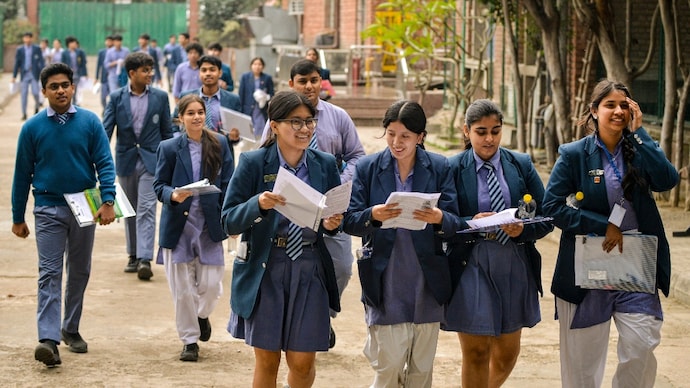
Students currently in Classes 7, 8 and 9 who have opted for two foreign languages under CBSE's three-language policy will be allowed to continue with the same language combination until Class 10, sources told ANI.
According to the sources, the requirement to study at least two Indian languages under the revised policy will apply only to students entering Class 6 in the future and will not be enforced retrospectively for those already studying in Classes 7, 8 and 9.
It comes after schools and parents raised concerns over the board's recent communication asking affiliated schools to implement the three-language policy from July.
Many feared that students who had been studying two foreign languages for years would suddenly have to drop one in favour of an Indian language.
RELIEF FOR PARENTS AND STUDENTS
Union Education Minister Dharmendra Pradhan, in an interview statement with Times of India, acknowledged that the earlier communication had created confusion.
He said the earlier CBSE directive lacked clarity but assured that the ambiguity has now been addressed. Students who are already studying two foreign languages will be allowed to continue doing so until they complete Class 10.
However, it is important to note that CBSE has not yet officially confirmed this transition. The board is expected to issue an amended order after deliberations in its governing council, which is likely to formally clarify how the policy will be implemented for students already enroled.
WHO WILL THE NEW RULE APPLY TO?
According to Pradhan, the requirement to study two Indian languages under the National Education Policy 2020 will begin with students entering Class 6 and will move forward with each new batch rather than being applied retrospectively.
This means students currently in Classes 7, 8 and 9 who opted for two foreign languages can continue with their existing combination until Class 10. Students joining Class 6, however, will study three languages, two of which must be Indian languages.
BOOKS, SKILLS AND THE ROAD AHEAD
Pradhan said class-appropriate textbooks in 22 Indian languages would be made available. On concerns over teachers and resources, he said that this is CBSE's challenge, not the country's challenge, not the state board's challenge.
He also said vocational education will receive greater emphasis. Students in Classes 6 to 8 will complete 110 hours of skill modules each year, while a skill subject will become mandatory in Classes 9 and 10.
Meanwhile, CBSE officials are also examining whether a foreign language could be allowed in place of the compulsory vocational subject up to Class 10. That proposal, however, remains under discussion.
For now, while the minister's remarks have eased concerns for many families, students and schools will have to wait for the amended CBSE order before the changes become official.
Students currently in Classes 7, 8 and 9 who have opted for two foreign languages under CBSE's three-language policy will be allowed to continue with the same language combination until Class 10, sources told ANI.
According to the sources, the requirement to study at least two Indian languages under the revised policy will apply only to students entering Class 6 in the future and will not be enforced retrospectively for those already studying in Classes 7, 8 and 9.
It comes after schools and parents raised concerns over the board's recent communication asking affiliated schools to implement the three-language policy from July.
Many feared that students who had been studying two foreign languages for years would suddenly have to drop one in favour of an Indian language.
RELIEF FOR PARENTS AND STUDENTS
Union Education Minister Dharmendra Pradhan, in an interview statement with Times of India, acknowledged that the earlier communication had created confusion.
He said the earlier CBSE directive lacked clarity but assured that the ambiguity has now been addressed. Students who are already studying two foreign languages will be allowed to continue doing so until they complete Class 10.
However, it is important to note that CBSE has not yet officially confirmed this transition. The board is expected to issue an amended order after deliberations in its governing council, which is likely to formally clarify how the policy will be implemented for students already enroled.
WHO WILL THE NEW RULE APPLY TO?
According to Pradhan, the requirement to study two Indian languages under the National Education Policy 2020 will begin with students entering Class 6 and will move forward with each new batch rather than being applied retrospectively.
This means students currently in Classes 7, 8 and 9 who opted for two foreign languages can continue with their existing combination until Class 10. Students joining Class 6, however, will study three languages, two of which must be Indian languages.
BOOKS, SKILLS AND THE ROAD AHEAD
Pradhan said class-appropriate textbooks in 22 Indian languages would be made available. On concerns over teachers and resources, he said that this is CBSE's challenge, not the country's challenge, not the state board's challenge.
He also said vocational education will receive greater emphasis. Students in Classes 6 to 8 will complete 110 hours of skill modules each year, while a skill subject will become mandatory in Classes 9 and 10.
Meanwhile, CBSE officials are also examining whether a foreign language could be allowed in place of the compulsory vocational subject up to Class 10. That proposal, however, remains under discussion.
For now, while the minister's remarks have eased concerns for many families, students and schools will have to wait for the amended CBSE order before the changes become official.

