CBSE's 3-language policy just got clearer. Here are the 7 biggest updates
CBSE has issued a detailed clarification on its three-language policy, answering key questions on transition rules, board exams, foreign languages, textbooks and exemptions for current and future student batches.
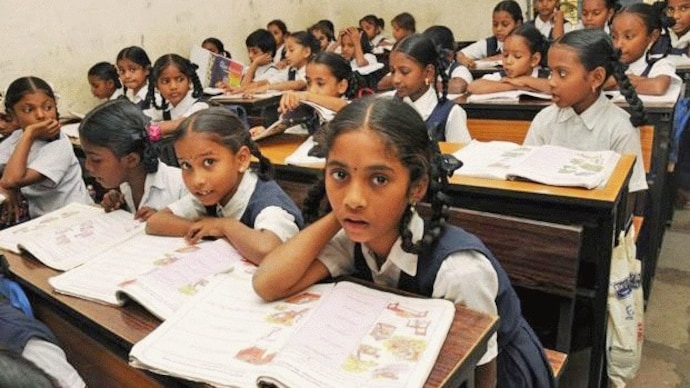
After CBSE's May 15 circular introducing the three-language policy for Class 9 from the 2026-27 academic session, many parents and schools were left confused about how the new rules would affect students who had already been studying two foreign languages, whether current batches would have to switch subjects midway, and if the third language would carry a Class 10 board examination.
The Central Board of Secondary Education (CBSE) has issued a detailed clarification explaining how the new rules will apply to different student batches. The fresh guidelines issued on June 29 answer key questions on foreign language combinations, board exams, textbooks, transition arrangements and exemptions, while offering one-time relief to students already studying under the older system.
Here are the seven biggest clarifications about the CBSE three-language policy:
1. No change for current Class 10 students
Students in Class 10 during the 2026-27 session will continue under the existing two-language system and will not have to take up a third language.
2. One-time relief for current Classes 7, 8 and 9
Students already studying two foreign languages, such as English and French or English and German, can continue with the same combination. They only need to add one Indian language instead of dropping a foreign language.
3. R3 board exam rule clarified
The May circular had stated that the third language (R3) would be assessed internally. CBSE has now clarified that this relaxation applies only to the current transition batches (Classes 7, 8 and 9). Students entering Class 6 from 2026-27 onwards under the new policy will have to appear for a Class 10 Board examination in the third language when they reach secondary school.
4. Textbook update
The earlier May circular had said current Class 9 students would temporarily use Class 6 textbooks for the third language until new books were ready. The latest clarification revises this approach, stating that grade-appropriate learning resources will instead be provided for the current Class 9 transition batch.
5. Dedicated Class 6 R3 textbooks introduced
Students entering Class 6 under the new policy will receive dedicated R3 textbooks in 22 scheduled Indian languages. These students will be the first batch to follow the revised three-language framework from the beginning of their schooling.
6. Future batches to follow the new policy from the start
Unlike the current transition batches, students entering Class 6 from 2026-27 onwards will follow the revised three-language framework throughout their schooling, with at least two Indian languages as part of their language combination.
7. Other relaxations continue
Exemptions remain for Children with Special Needs, foreign students returning to India and CBSE schools outside India. The board has also retained flexible provisions for schools to arrange language teachers and learning resources.
The latest clarification makes it clear that while CBSE is moving ahead with the National Education Policy's three-language framework, the transition will be gradual rather than abrupt. Existing students have been given flexibility to complete their schooling without major disruptions, while future batches entering Class 6 will follow the new policy from the beginning.
The clarification is expected to ease concerns among schools and parents as the rollout gathers pace.
After CBSE's May 15 circular introducing the three-language policy for Class 9 from the 2026-27 academic session, many parents and schools were left confused about how the new rules would affect students who had already been studying two foreign languages, whether current batches would have to switch subjects midway, and if the third language would carry a Class 10 board examination.
The Central Board of Secondary Education (CBSE) has issued a detailed clarification explaining how the new rules will apply to different student batches. The fresh guidelines issued on June 29 answer key questions on foreign language combinations, board exams, textbooks, transition arrangements and exemptions, while offering one-time relief to students already studying under the older system.
Here are the seven biggest clarifications about the CBSE three-language policy:
1. No change for current Class 10 students
Students in Class 10 during the 2026-27 session will continue under the existing two-language system and will not have to take up a third language.
2. One-time relief for current Classes 7, 8 and 9
Students already studying two foreign languages, such as English and French or English and German, can continue with the same combination. They only need to add one Indian language instead of dropping a foreign language.
3. R3 board exam rule clarified
The May circular had stated that the third language (R3) would be assessed internally. CBSE has now clarified that this relaxation applies only to the current transition batches (Classes 7, 8 and 9). Students entering Class 6 from 2026-27 onwards under the new policy will have to appear for a Class 10 Board examination in the third language when they reach secondary school.
4. Textbook update
The earlier May circular had said current Class 9 students would temporarily use Class 6 textbooks for the third language until new books were ready. The latest clarification revises this approach, stating that grade-appropriate learning resources will instead be provided for the current Class 9 transition batch.
5. Dedicated Class 6 R3 textbooks introduced
Students entering Class 6 under the new policy will receive dedicated R3 textbooks in 22 scheduled Indian languages. These students will be the first batch to follow the revised three-language framework from the beginning of their schooling.
6. Future batches to follow the new policy from the start
Unlike the current transition batches, students entering Class 6 from 2026-27 onwards will follow the revised three-language framework throughout their schooling, with at least two Indian languages as part of their language combination.
7. Other relaxations continue
Exemptions remain for Children with Special Needs, foreign students returning to India and CBSE schools outside India. The board has also retained flexible provisions for schools to arrange language teachers and learning resources.
The latest clarification makes it clear that while CBSE is moving ahead with the National Education Policy's three-language framework, the transition will be gradual rather than abrupt. Existing students have been given flexibility to complete their schooling without major disruptions, while future batches entering Class 6 will follow the new policy from the beginning.
The clarification is expected to ease concerns among schools and parents as the rollout gathers pace.

