Do you need a college degree? Elon Musk says no, PM's economic advisor agrees
Elon Musk has reignited the degree-versus-skills debate, arguing that online learning and proven ability matter more than college credentials. Prime Minister's Economic Advisory Council member Sanjeev Sanyal echoed the view, calling for universities to shift their focus towards research and practical learning.
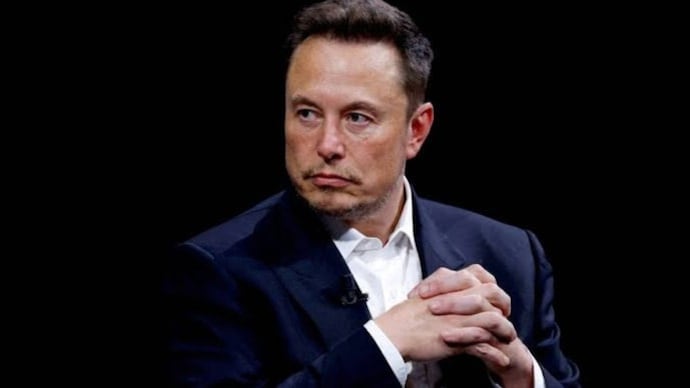
The debate over whether a college degree is still essential has found two influential backers. Tesla and SpaceX CEO Elon Musk says universities are no longer necessary for learning, arguing that virtually any skill can now be acquired online. Economist and Prime Minister's Economic Advisory Council member Sanjeev Sanyal says he has come to a similar conclusion, suggesting ambitious young people should start working early while earning degrees alongside their jobs.
According to Musk, the internet has fundamentally changed how people acquire knowledge, making high-quality education accessible to anyone willing to learn.
"You don't need college to learn stuff. Everything is available basically for free. You can learn anything you want for free," Musk said.
The remarks have reignited a broader debate over whether traditional degrees still hold the same value in an economy increasingly driven by skills, technology and continuous learning.
COLLEGE ISN'T ABOUT LEARNING, SAYS MUSK
While Musk acknowledged that colleges still serve a purpose, he argued that their biggest value lies in demonstrating discipline rather than imparting knowledge.
According to Musk, completing a degree shows that a person can stay committed to long-term goals, manage deadlines and complete difficult or even tedious assignments. In his view, college is less about acquiring knowledge and more about proving that someone can consistently meet responsibilities.
WHAT SHOULD EMPLOYERS LOOK FOR INSTEAD?
Musk believes companies should focus less on academic credentials and more on evidence of exceptional ability.
"If you're trying to do something exceptional, you must have evidence of exceptional ability. I don't consider going to college evidence of exceptional ability," he said.
To reinforce his point, Musk cited some of the biggest names in technology who never completed college, including Bill Gates, Steve Jobs and Larry Ellison.
A NEW PATH FOR SOME YOUNG TALENT
The debate is also being fuelled by a small number of students leaving prestigious institutions such as the IITs after securing jobs at global technology companies like Microsoft or choosing to build startups of their own.
While these cases remain exceptions, they reflect a growing belief in parts of the technology industry that demonstrable skills, execution and entrepreneurial ability can sometimes outweigh a formal degree.
SANJEEV SANYAL CALLS FOR A DIFFERENT MODEL
Echoing Musk's views, Sanyal argued that the traditional lecture-based college model has become less relevant in an era where knowledge is freely available online.
"I have come around to a similar view. With all knowledge freely available on tap, college is not needed for lecture-based learning," he wrote on X.
He suggested that ambitious 18-year-olds should enter the workforce while pursuing degrees alongside their jobs, with only a few disciplines continuing to require full-time, in-person education.
SHOULD UNIVERSITIES REINVENT THEMSELVES?
Sanyal believes universities should spend less time on classroom lectures and more on research, better testing systems and regularly updating curricula to meet industry needs.
He also argued that discipline and maturity are developed through real-world experiences—whether on a factory floor, in an office, through entrepreneurship or competitive sports—rather than in lecture halls.
Responding to critics, Sanyal questioned the idea that college is what makes people adults, arguing that adulthood long predates the widespread adoption of university education and that correlation should not be mistaken for causation.
A BROADER SHIFT IN HOW TALENT IS EVALUATED
The comments from Musk and Sanyal reflect a wider shift taking place across the technology industry, where practical skills, problem-solving ability and real-world experience are increasingly valued over formal educational qualifications.
With online courses, open-source resources, AI-powered learning tools and industry certifications becoming more accessible, employers are beginning to reassess whether a degree remains the best indicator of talent.
While degrees continue to hold significant value in fields such as medicine, law and scientific research, the conversation is changing in the technology sector.
Echoing the growing debate around the value of higher education, NVIDIA CEO Jensen Huang recently said AI skills are emerging as a stronger hiring criterion than formal degrees, with companies placing greater emphasis on practical knowledge and proven capabilities.
Together, the remarks from Musk, Sanyal and Huang point to a broader trend: as artificial intelligence reshapes the workplace, employers are increasingly prioritising demonstrable skills, adaptability and the ability to use AI tools over traditional academic credentials.
The debate over whether a college degree is still essential has found two influential backers. Tesla and SpaceX CEO Elon Musk says universities are no longer necessary for learning, arguing that virtually any skill can now be acquired online. Economist and Prime Minister's Economic Advisory Council member Sanjeev Sanyal says he has come to a similar conclusion, suggesting ambitious young people should start working early while earning degrees alongside their jobs.
According to Musk, the internet has fundamentally changed how people acquire knowledge, making high-quality education accessible to anyone willing to learn.
"You don't need college to learn stuff. Everything is available basically for free. You can learn anything you want for free," Musk said.
The remarks have reignited a broader debate over whether traditional degrees still hold the same value in an economy increasingly driven by skills, technology and continuous learning.
COLLEGE ISN'T ABOUT LEARNING, SAYS MUSK
While Musk acknowledged that colleges still serve a purpose, he argued that their biggest value lies in demonstrating discipline rather than imparting knowledge.
According to Musk, completing a degree shows that a person can stay committed to long-term goals, manage deadlines and complete difficult or even tedious assignments. In his view, college is less about acquiring knowledge and more about proving that someone can consistently meet responsibilities.
WHAT SHOULD EMPLOYERS LOOK FOR INSTEAD?
Musk believes companies should focus less on academic credentials and more on evidence of exceptional ability.
"If you're trying to do something exceptional, you must have evidence of exceptional ability. I don't consider going to college evidence of exceptional ability," he said.
To reinforce his point, Musk cited some of the biggest names in technology who never completed college, including Bill Gates, Steve Jobs and Larry Ellison.
A NEW PATH FOR SOME YOUNG TALENT
The debate is also being fuelled by a small number of students leaving prestigious institutions such as the IITs after securing jobs at global technology companies like Microsoft or choosing to build startups of their own.
While these cases remain exceptions, they reflect a growing belief in parts of the technology industry that demonstrable skills, execution and entrepreneurial ability can sometimes outweigh a formal degree.
SANJEEV SANYAL CALLS FOR A DIFFERENT MODEL
Echoing Musk's views, Sanyal argued that the traditional lecture-based college model has become less relevant in an era where knowledge is freely available online.
"I have come around to a similar view. With all knowledge freely available on tap, college is not needed for lecture-based learning," he wrote on X.
He suggested that ambitious 18-year-olds should enter the workforce while pursuing degrees alongside their jobs, with only a few disciplines continuing to require full-time, in-person education.
SHOULD UNIVERSITIES REINVENT THEMSELVES?
Sanyal believes universities should spend less time on classroom lectures and more on research, better testing systems and regularly updating curricula to meet industry needs.
He also argued that discipline and maturity are developed through real-world experiences—whether on a factory floor, in an office, through entrepreneurship or competitive sports—rather than in lecture halls.
Responding to critics, Sanyal questioned the idea that college is what makes people adults, arguing that adulthood long predates the widespread adoption of university education and that correlation should not be mistaken for causation.
A BROADER SHIFT IN HOW TALENT IS EVALUATED
The comments from Musk and Sanyal reflect a wider shift taking place across the technology industry, where practical skills, problem-solving ability and real-world experience are increasingly valued over formal educational qualifications.
With online courses, open-source resources, AI-powered learning tools and industry certifications becoming more accessible, employers are beginning to reassess whether a degree remains the best indicator of talent.
While degrees continue to hold significant value in fields such as medicine, law and scientific research, the conversation is changing in the technology sector.
Echoing the growing debate around the value of higher education, NVIDIA CEO Jensen Huang recently said AI skills are emerging as a stronger hiring criterion than formal degrees, with companies placing greater emphasis on practical knowledge and proven capabilities.
Together, the remarks from Musk, Sanyal and Huang point to a broader trend: as artificial intelligence reshapes the workplace, employers are increasingly prioritising demonstrable skills, adaptability and the ability to use AI tools over traditional academic credentials.

