Emergency in NCERT isn't new: Yogendra Yadav says it's been taught since 2007
As debate erupts over the Emergency chapter in NCERT's Class 9 textbook, political scientist Yogendra Yadav says the subject is far from new. He has revisited the story of how a detailed chapter on the Emergency entered NCERT Political Science textbooks in 2007, during the UPA government, despite political sensitivities.
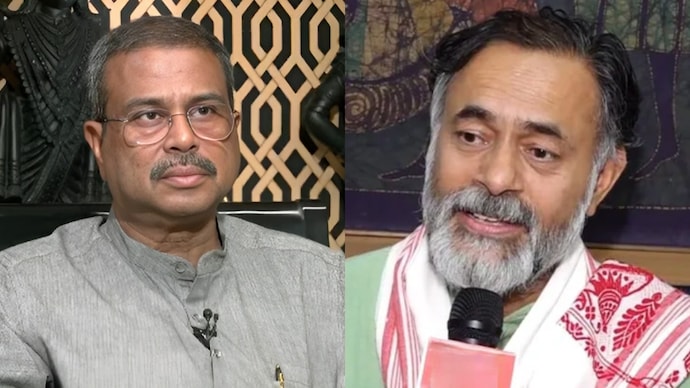
The latest debate over the Emergency in NCERT textbooks has taken an unexpected turn.
A day after Union Education Minister Dharmendra Pradhan welcomed the inclusion of the Emergency in the new Class 9 Social Science textbook, saying future generations should know about "the dark deeds of the Emergency", political activist and Swaraj India founder Yogendra Yadav challenged one part of the narrative.
His point was simple: the Emergency is not making its debut in NCERT books.
In a post on X, Yadav wrote, "Dear Dharmendra Pradhan ji, this is a lie. There was a full chapter on the Emergency in the NCERT textbook since 2007. I was involved in writing it and ensuring that the ugly truth was not hidden from students of Political Science."
He also shared a Print.in article he had written in 2021, recounting the remarkable story of how that chapter found its way into official school textbooks nearly two decades ago.
WHAT HAS CHANGED NOW?
The current controversy began after NCERT introduced the Emergency in the new Class 9 Social Science textbook under the National Education Policy 2020 curriculum revision.
Until now, students mainly encountered the subject in Class 12 Political Science, where they studied the political and constitutional consequences of the 1975-77 Emergency in greater detail. The latest revision shifts that conversation to a much earlier stage of schooling.
Pradhan praised the move, saying students should understand this chapter of Indian democracy so that such events are never repeated.
Yadav, however, argued that presenting it as a completely new inclusion overlooks an important piece of NCERT's own history.
THE STORY BEHIND THE 2007 CHAPTER
In his 2021 article, Yadav recalled being part of the team that rewrote NCERT's Political Science textbooks under then NCERT Director Professor Krishna Kumar.
He wrote that introducing India Since Independence as a Class 12 Political Science textbook was itself a major shift. Until then, school textbooks had largely stopped at Independence, leaving students to study contemporary Indian politics without much understanding of the decades that followed.
According to Yadav, the team's philosophy was that students should not be shielded from uncomfortable political history.
"We decided that high school students must not be treated as infants, that textbooks in Political Science must not shy away from politics, and that we must not brush inconvenient truth under the carpet," he wrote.
The result was Chapter 6, The Crisis of Democratic Order, which examined the Emergency in detail. Rather than avoiding contentious issues, the authors adopted what Yadav described as a descriptive approach, presenting multiple viewpoints, relying on verifiable facts and even using photographs and political cartoons where words alone could not capture the complexities.
The chapter discussed the suspension of civil liberties, media censorship, Sanjay Gandhi's role, the Shah Commission, and incidents such as the Turkman Gate demolitions in Delhi and the custodial death of P Rajan in Kerala.
It also dealt with another politically sensitive issue. Yadav recalled that headlines claiming "NCERT puts Gujarat riots in the textbook" had begun appearing even before the book was written. The Gujarat riots were eventually included in the 2007 Class 12 Political Science textbook Politics in India Since Independence.
HOW THE CHAPTER SURVIVED POLITICAL SCRUTINY
Perhaps the most fascinating part of Yadav's account is what happened before the textbook reached students.
According to him, the manuscript had already been vetted by eminent scholars and examined word by word by a special NCERT committee. But one final hurdle remained. Before sending the book to print, NCERT Director Krishna Kumar suggested showing the draft to the then Human Resource Development Minister Arjun Singh, who would ultimately have to answer for its contents if questions were raised in Parliament.
During the meeting, Yadav wrote, Singh's private secretary, an IAS officer, questioned several parts of the Emergency chapter, including its references to the Shah Commission. Yadav said he defended the chapter by pointing out that its contents were based on verifiable facts and official records.
Near the end of the discussion, Singh reportedly turned to him and asked, "Professor Saheb, apko lagta hai hamara desh iske liye taiyar hai?" (Professor, do you think our country is ready for this?)
Yadav recalled responding that a mature democracy should be willing to reflect on one of its most controversial chapters. Before the conversation went further, the late scientist and educationist Professor Yashpal is said to have intervened with the words, "Ab in panchhiyon ko khule asmaan me udne dijiye" (Let these birds fly in the open sky).
The meeting ended with no changes to the chapter. As Yadav summed it up, "Emergency made an unvarnished entry into the official school textbook, and that too during the Congress years."
WHY THE DEBATE MATTERS
The renewed discussion is less about whether students should learn about the Emergency and more about the history of how it has been taught.
The new Class 9 textbook certainly marks a shift because younger students will now study the Emergency years much earlier than before. But Yadav's intervention reminds readers that NCERT had already devoted an entire chapter to the subject in Class 12 nearly 19 years ago.
As political debates over textbooks continue, the conversation has expanded beyond what is being taught to how educational history itself is remembered.
Ironically, the latest row over the Emergency has also revived another story: the story of how one of independent India's most controversial political chapters first entered an official NCERT textbook during a Congress-led government, after surviving scrutiny from academics, bureaucrats and ministers alike.
The latest debate over the Emergency in NCERT textbooks has taken an unexpected turn.
A day after Union Education Minister Dharmendra Pradhan welcomed the inclusion of the Emergency in the new Class 9 Social Science textbook, saying future generations should know about "the dark deeds of the Emergency", political activist and Swaraj India founder Yogendra Yadav challenged one part of the narrative.
His point was simple: the Emergency is not making its debut in NCERT books.
In a post on X, Yadav wrote, "Dear Dharmendra Pradhan ji, this is a lie. There was a full chapter on the Emergency in the NCERT textbook since 2007. I was involved in writing it and ensuring that the ugly truth was not hidden from students of Political Science."
He also shared a Print.in article he had written in 2021, recounting the remarkable story of how that chapter found its way into official school textbooks nearly two decades ago.
WHAT HAS CHANGED NOW?
The current controversy began after NCERT introduced the Emergency in the new Class 9 Social Science textbook under the National Education Policy 2020 curriculum revision.
Until now, students mainly encountered the subject in Class 12 Political Science, where they studied the political and constitutional consequences of the 1975-77 Emergency in greater detail. The latest revision shifts that conversation to a much earlier stage of schooling.
Pradhan praised the move, saying students should understand this chapter of Indian democracy so that such events are never repeated.
Yadav, however, argued that presenting it as a completely new inclusion overlooks an important piece of NCERT's own history.
THE STORY BEHIND THE 2007 CHAPTER
In his 2021 article, Yadav recalled being part of the team that rewrote NCERT's Political Science textbooks under then NCERT Director Professor Krishna Kumar.
He wrote that introducing India Since Independence as a Class 12 Political Science textbook was itself a major shift. Until then, school textbooks had largely stopped at Independence, leaving students to study contemporary Indian politics without much understanding of the decades that followed.
According to Yadav, the team's philosophy was that students should not be shielded from uncomfortable political history.
"We decided that high school students must not be treated as infants, that textbooks in Political Science must not shy away from politics, and that we must not brush inconvenient truth under the carpet," he wrote.
The result was Chapter 6, The Crisis of Democratic Order, which examined the Emergency in detail. Rather than avoiding contentious issues, the authors adopted what Yadav described as a descriptive approach, presenting multiple viewpoints, relying on verifiable facts and even using photographs and political cartoons where words alone could not capture the complexities.
The chapter discussed the suspension of civil liberties, media censorship, Sanjay Gandhi's role, the Shah Commission, and incidents such as the Turkman Gate demolitions in Delhi and the custodial death of P Rajan in Kerala.
It also dealt with another politically sensitive issue. Yadav recalled that headlines claiming "NCERT puts Gujarat riots in the textbook" had begun appearing even before the book was written. The Gujarat riots were eventually included in the 2007 Class 12 Political Science textbook Politics in India Since Independence.
HOW THE CHAPTER SURVIVED POLITICAL SCRUTINY
Perhaps the most fascinating part of Yadav's account is what happened before the textbook reached students.
According to him, the manuscript had already been vetted by eminent scholars and examined word by word by a special NCERT committee. But one final hurdle remained. Before sending the book to print, NCERT Director Krishna Kumar suggested showing the draft to the then Human Resource Development Minister Arjun Singh, who would ultimately have to answer for its contents if questions were raised in Parliament.
During the meeting, Yadav wrote, Singh's private secretary, an IAS officer, questioned several parts of the Emergency chapter, including its references to the Shah Commission. Yadav said he defended the chapter by pointing out that its contents were based on verifiable facts and official records.
Near the end of the discussion, Singh reportedly turned to him and asked, "Professor Saheb, apko lagta hai hamara desh iske liye taiyar hai?" (Professor, do you think our country is ready for this?)
Yadav recalled responding that a mature democracy should be willing to reflect on one of its most controversial chapters. Before the conversation went further, the late scientist and educationist Professor Yashpal is said to have intervened with the words, "Ab in panchhiyon ko khule asmaan me udne dijiye" (Let these birds fly in the open sky).
The meeting ended with no changes to the chapter. As Yadav summed it up, "Emergency made an unvarnished entry into the official school textbook, and that too during the Congress years."
WHY THE DEBATE MATTERS
The renewed discussion is less about whether students should learn about the Emergency and more about the history of how it has been taught.
The new Class 9 textbook certainly marks a shift because younger students will now study the Emergency years much earlier than before. But Yadav's intervention reminds readers that NCERT had already devoted an entire chapter to the subject in Class 12 nearly 19 years ago.
As political debates over textbooks continue, the conversation has expanded beyond what is being taught to how educational history itself is remembered.
Ironically, the latest row over the Emergency has also revived another story: the story of how one of independent India's most controversial political chapters first entered an official NCERT textbook during a Congress-led government, after surviving scrutiny from academics, bureaucrats and ministers alike.

