Jantar Mantar Protest: Smells, sounds, and food that defined my first experience
At my first ever protest at Jantar-Mantar, I witnessed much more than slogans or speeches. It left behind the smells of biscuits, rain, and shared meals. For me, those fragrances captured the crowd's solidarity more vividly than their voices.
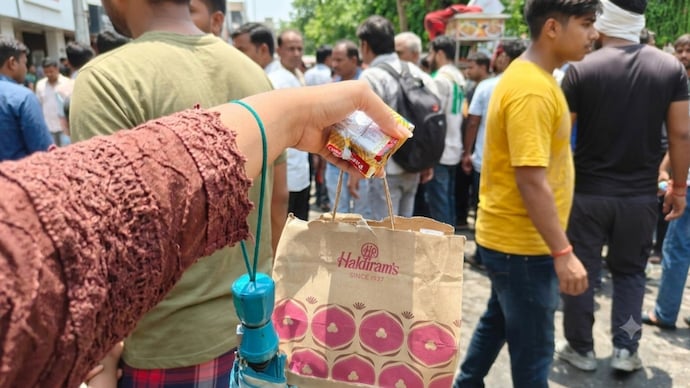
This was the first protest I had ever witnessed so close. I reached Jantar Mantar expecting loud slogans, speeches, and crowds. But I came back with something else entirely: smells that stayed with me long after I had left.
I was at the protest for four hours, arriving at noon and leaving in the evening. When I returned, it surprised me how much a place could be remembered through its scent.
The first smell that kept returning was Parle-G. The familiar yellow biscuit packets were everywhere. Volunteers passed them around, people carried them in their bags, and half-open packets lay beside water bottles. It was a smell that instantly took me back to childhood train journeys and evening tea at home. In the middle of a protest, it felt oddly comforting.
A PROTEST THAT SMELLED LIKE LUNCH
As the day went on, the air kept changing.
One moment, I could smell fresh samosas. Then came the rich aroma of biryani, rice, and shahi paneer being served to people who had travelled for hours to be there.
A few steps later, the smell changed again. I could tell this was a Gen Z protest because of the smells of burgers, pizzas, and garlic bread. They reminded me that this was not just a gathering of people; it was a gathering of young voices: the Gen Z generation making the protest their own.
It did not feel like one single crowd. It felt like hundreds of different lives sharing one space.
SWEAT, RAIN AND PERFUME
Delhi’s heat had done its job. Sweat lingered in the air as people stood shoulder to shoulder for hours. Then someone would walk past wearing strong perfume, cutting through everything else for just a few seconds before disappearing into the crowd.
At one point, the rain arrived.
The smell of wet earth mixed with dust settling on the road. For a brief moment, the air felt lighter. Then the familiar scents of food, sweat, and people slowly returned, blending into something that could only belong to that protest.
By the time I left, I realised I barely remembered who had spoken first or which slogan had been the loudest. What I remembered instead was the smell of Parle-G, hot samosas, shared meals, rain-soaked roads, and hundreds of people standing together.
It was my first protest, and strangely, what stayed with me most was its smell. It lingered from the moment I took my first step into the crowd until the moment I walked away.
This was the first protest I had ever witnessed so close. I reached Jantar Mantar expecting loud slogans, speeches, and crowds. But I came back with something else entirely: smells that stayed with me long after I had left.
I was at the protest for four hours, arriving at noon and leaving in the evening. When I returned, it surprised me how much a place could be remembered through its scent.
The first smell that kept returning was Parle-G. The familiar yellow biscuit packets were everywhere. Volunteers passed them around, people carried them in their bags, and half-open packets lay beside water bottles. It was a smell that instantly took me back to childhood train journeys and evening tea at home. In the middle of a protest, it felt oddly comforting.
A PROTEST THAT SMELLED LIKE LUNCH
As the day went on, the air kept changing.
One moment, I could smell fresh samosas. Then came the rich aroma of biryani, rice, and shahi paneer being served to people who had travelled for hours to be there.
A few steps later, the smell changed again. I could tell this was a Gen Z protest because of the smells of burgers, pizzas, and garlic bread. They reminded me that this was not just a gathering of people; it was a gathering of young voices: the Gen Z generation making the protest their own.
It did not feel like one single crowd. It felt like hundreds of different lives sharing one space.
SWEAT, RAIN AND PERFUME
Delhi’s heat had done its job. Sweat lingered in the air as people stood shoulder to shoulder for hours. Then someone would walk past wearing strong perfume, cutting through everything else for just a few seconds before disappearing into the crowd.
At one point, the rain arrived.
The smell of wet earth mixed with dust settling on the road. For a brief moment, the air felt lighter. Then the familiar scents of food, sweat, and people slowly returned, blending into something that could only belong to that protest.
By the time I left, I realised I barely remembered who had spoken first or which slogan had been the loudest. What I remembered instead was the smell of Parle-G, hot samosas, shared meals, rain-soaked roads, and hundreds of people standing together.
It was my first protest, and strangely, what stayed with me most was its smell. It lingered from the moment I took my first step into the crowd until the moment I walked away.
This was the first protest I had ever witnessed so close. I reached Jantar Mantar expecting loud slogans, speeches, and crowds. But I came back with something else entirely: smells that stayed with me long after I had left.
I was at the protest for four hours, arriving at noon and leaving in the evening. When I returned, it surprised me how much a place could be remembered through its scent.
The first smell that kept returning was Parle-G. The familiar yellow biscuit packets were everywhere. Volunteers passed them around, people carried them in their bags, and half-open packets lay beside water bottles. It was a smell that instantly took me back to childhood train journeys and evening tea at home. In the middle of a protest, it felt oddly comforting.
A PROTEST THAT SMELLED LIKE LUNCH
As the day went on, the air kept changing.
One moment, I could smell fresh samosas. Then came the rich aroma of biryani, rice, and shahi paneer being served to people who had travelled for hours to be there.
A few steps later, the smell changed again. I could tell this was a Gen Z protest because of the smells of burgers, pizzas, and garlic bread. They reminded me that this was not just a gathering of people; it was a gathering of young voices: the Gen Z generation making the protest their own.
It did not feel like one single crowd. It felt like hundreds of different lives sharing one space.
SWEAT, RAIN AND PERFUME
Delhi’s heat had done its job. Sweat lingered in the air as people stood shoulder to shoulder for hours. Then someone would walk past wearing strong perfume, cutting through everything else for just a few seconds before disappearing into the crowd.
At one point, the rain arrived.
The smell of wet earth mixed with dust settling on the road. For a brief moment, the air felt lighter. Then the familiar scents of food, sweat, and people slowly returned, blending into something that could only belong to that protest.
By the time I left, I realised I barely remembered who had spoken first or which slogan had been the loudest. What I remembered instead was the smell of Parle-G, hot samosas, shared meals, rain-soaked roads, and hundreds of people standing together.
It was my first protest, and strangely, what stayed with me most was its smell. It lingered from the moment I took my first step into the crowd until the moment I walked away.

