He studied 6 hours, slept by 10:30 pm, played sports. Now he's JEE AIR 1
Bihar's Shubham Kumar didn't believe in 16-hour study days. The JEE Advanced 2026 AIR 1 focused on consistency, sleep, sports and self-belief. His journey from a Bihar hardware shop owner's son to the country's top rank offers lessons for every IIT aspirant.
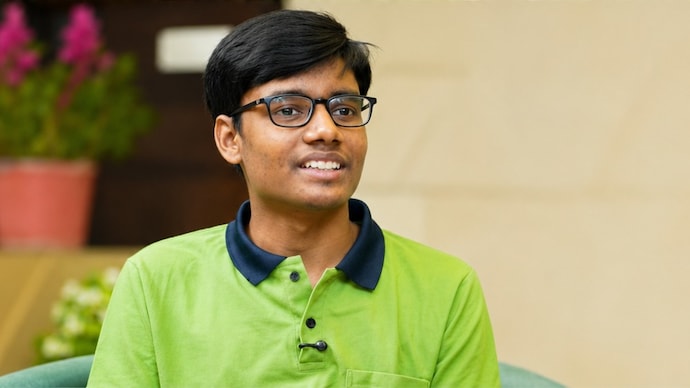
When the JEE Advanced 2026 results were announced shortly after midnight on May 31, Bihar's Shubham Kumar found himself at the top of one of India's toughest examinations.
The student from Gaya, whose father Shivkumar runs a hardware business and whose mother Kanchan Devi is a homemaker, spent the last two years preparing in Kota.
Earlier this year, he had already secured AIR 6 in JEE Main with a 100 percentile score. JEE Advanced, however, was the bigger target.
Securing All India Rank 1 with 330 marks out of 360, Shubham says his journey to the top had little to do with marathon study sessions.
No, he did not study 16 or 18 hours a day.
No, he did not spend every waking minute buried in books.
And yes, he made time to play sports.
Instead, the formula was far simpler: consistency, concept clarity and a routine he followed almost every day for two years.
A NOTEBOOK HABIT THAT KEPT HIM GOING
One unique habit stood out during his preparation. Shubham would write "JEE Advanced Topper" on his notebooks.
He firmly believes that visualisation and self-confidence prevent a person from losing their way, and stay focused through the ups and downs of preparation.
Shubham says his family's support and his teachers' guidance were the pillars behind his success.
"The biggest reason for my success was the trust of my teachers and the sacrifice of my family," he said.
His IIT dream started at home. His elder sister is currently pursuing Computer Science Engineering at IIT Patna, and in an earlier interview uploaded online, Shubham recalled that watching her journey inspired him to follow the same path.
He often turned to her for advice whenever scores dipped or preparation felt overwhelming. From maintaining notes to solving modules effectively, many of his study habits were shaped by her guidance.
NO 16-HOUR STUDY DAYS
Among JEE aspirants, one myth refuses to die: toppers study endlessly.
Shubham disagrees.
"Nobody can study for 18 hours a day," he said in an earlier online interaction.
Instead, he focused on six to eight hours of self-study every day, apart from classes. Revising topics taught in class on the same day was a fixed rule. He practised questions regularly, reviewed mistakes and worked consistently on weak areas.
"Preparing for JEE often brings pressure, but I never let it become a weakness. I turned every challenge into motivation," he said.
His philosophy was simple. Quality mattered more than quantity.
Whenever a topic felt difficult, he kept asking questions until the concept became clear. Understanding the subject mattered more than merely completing chapters.
THE ROUTINE BEHIND AIR 1
Shubham's preparation was built around discipline rather than extremes.
He slept at around 10:30 pm and woke up at 6:30 am. His body clock became so consistent that he eventually stopped relying on alarm clocks.
His mornings usually began with sprouted moong and fruits instead of a heavy breakfast. He stayed away from social media and movies during preparation and tried to minimise distractions wherever possible.
Another unusual habit reflected how seriously he approached exam readiness. He deliberately avoided becoming dependent on air conditioning so that exam-day conditions would never affect his performance.
At the same time, he made sure life did not become all about studies.
Sports remained an important part of his routine. In fact, one of the most fascinating stories from this year's JEE Advanced results involves Shubham and AIR 2 Kabeer Chhillar.
The two friends lived in the same hostel in Kota. Shubham stayed on the fourth floor while Kabeer lived on the seventh. After studying all day, they would often play badminton together in the evenings to refresh their minds before getting back to work.
Their friendship eventually produced India's top two ranks, separated by just one mark – while Shubham scored 320/360, Kabeer scored 319/360.
CONCEPTS OVER CRAMMING
If there is one lesson Shubham wants students to take away from his journey, it is this: understand concepts instead of memorising facts.
In his earlier interviews, he repeatedly stressed the importance of clearing doubts, discussing problems with teachers and friends, analysing mistakes and revisiting weak areas.
He believes understanding logic and concepts, rather than relying on rote learning, is the real key to success.
That approach carried him all the way to AIR 1.
Now, Shubham hopes to pursue Computer Science Engineering at IIT Bombay.
For the millions of students beginning their own JEE journey this year, his story offers a reassuring reminder.
You do not have to study the longest.
You have to study with purpose.
When the JEE Advanced 2026 results were announced shortly after midnight on May 31, Bihar's Shubham Kumar found himself at the top of one of India's toughest examinations.
The student from Gaya, whose father Shivkumar runs a hardware business and whose mother Kanchan Devi is a homemaker, spent the last two years preparing in Kota.
Earlier this year, he had already secured AIR 6 in JEE Main with a 100 percentile score. JEE Advanced, however, was the bigger target.
Securing All India Rank 1 with 330 marks out of 360, Shubham says his journey to the top had little to do with marathon study sessions.
No, he did not study 16 or 18 hours a day.
No, he did not spend every waking minute buried in books.
And yes, he made time to play sports.
Instead, the formula was far simpler: consistency, concept clarity and a routine he followed almost every day for two years.
A NOTEBOOK HABIT THAT KEPT HIM GOING
One unique habit stood out during his preparation. Shubham would write "JEE Advanced Topper" on his notebooks.
He firmly believes that visualisation and self-confidence prevent a person from losing their way, and stay focused through the ups and downs of preparation.
Shubham says his family's support and his teachers' guidance were the pillars behind his success.
"The biggest reason for my success was the trust of my teachers and the sacrifice of my family," he said.
His IIT dream started at home. His elder sister is currently pursuing Computer Science Engineering at IIT Patna, and in an earlier interview uploaded online, Shubham recalled that watching her journey inspired him to follow the same path.
He often turned to her for advice whenever scores dipped or preparation felt overwhelming. From maintaining notes to solving modules effectively, many of his study habits were shaped by her guidance.
NO 16-HOUR STUDY DAYS
Among JEE aspirants, one myth refuses to die: toppers study endlessly.
Shubham disagrees.
"Nobody can study for 18 hours a day," he said in an earlier online interaction.
Instead, he focused on six to eight hours of self-study every day, apart from classes. Revising topics taught in class on the same day was a fixed rule. He practised questions regularly, reviewed mistakes and worked consistently on weak areas.
"Preparing for JEE often brings pressure, but I never let it become a weakness. I turned every challenge into motivation," he said.
His philosophy was simple. Quality mattered more than quantity.
Whenever a topic felt difficult, he kept asking questions until the concept became clear. Understanding the subject mattered more than merely completing chapters.
THE ROUTINE BEHIND AIR 1
Shubham's preparation was built around discipline rather than extremes.
He slept at around 10:30 pm and woke up at 6:30 am. His body clock became so consistent that he eventually stopped relying on alarm clocks.
His mornings usually began with sprouted moong and fruits instead of a heavy breakfast. He stayed away from social media and movies during preparation and tried to minimise distractions wherever possible.
Another unusual habit reflected how seriously he approached exam readiness. He deliberately avoided becoming dependent on air conditioning so that exam-day conditions would never affect his performance.
At the same time, he made sure life did not become all about studies.
Sports remained an important part of his routine. In fact, one of the most fascinating stories from this year's JEE Advanced results involves Shubham and AIR 2 Kabeer Chhillar.
The two friends lived in the same hostel in Kota. Shubham stayed on the fourth floor while Kabeer lived on the seventh. After studying all day, they would often play badminton together in the evenings to refresh their minds before getting back to work.
Their friendship eventually produced India's top two ranks, separated by just one mark – while Shubham scored 320/360, Kabeer scored 319/360.
CONCEPTS OVER CRAMMING
If there is one lesson Shubham wants students to take away from his journey, it is this: understand concepts instead of memorising facts.
In his earlier interviews, he repeatedly stressed the importance of clearing doubts, discussing problems with teachers and friends, analysing mistakes and revisiting weak areas.
He believes understanding logic and concepts, rather than relying on rote learning, is the real key to success.
That approach carried him all the way to AIR 1.
Now, Shubham hopes to pursue Computer Science Engineering at IIT Bombay.
For the millions of students beginning their own JEE journey this year, his story offers a reassuring reminder.
You do not have to study the longest.
You have to study with purpose.

