From Isro chief to ex-IB director: Meet 6 members of exam reform task force
Prime Minister Narendra Modi has announced a six-member task force, led by Nandan Nilekani, to revamp India's examination system. The panel includes former Isro chairman S Somnath, former Intelligence Bureau director Tapan Deka, and senior bureaucrats. The team has been tasked with recommending examination reforms and integrating technology.
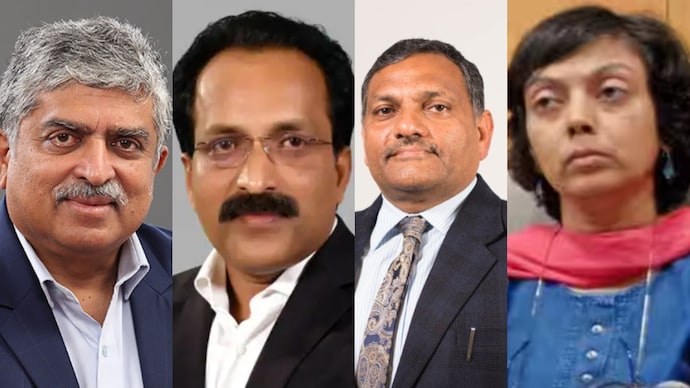
Prime Minister Narendra Modi announced the formation of a high-powered task force on Sunday to overhaul India's examination system and curb recurring paper leaks, with technology expert Nandan Nilekani appointed as its chairman. The six-member panel brings together experts from technology, space, security, education, academia and logistics to recommend structural and technology-driven reforms for public examinations.
In a video message to students, the Prime Minister said the government has already taken steps such as setting up fast-track courts and introducing stricter legal provisions against examination fraud. However, he stressed that strengthening the examination system itself is essential to restore public confidence.
NANDAN NILEKANI TO LEAD TECHNOLOGY-DRIVEN REFORMS
Nilekani was born on June 2, 1955 in Bengaluru, Karnataka although his family originally belonged to Sirsi. He studied at the Bishop Cotton Boys' School (Bengaluru) and St. Joseph's High School (Dharwad) before earning a B.Tech. in Electrical Engineering from IIT Bombay.
Technology entrepreneur and Infosys co-founder, Nilekani will chair the task force. Widely regarded as the architect of India's Aadhaar digital identity programme, he is expected to spearhead the panel's recommendations on using advanced technology to make examinations more secure, transparent and efficient.
The government has tasked the panel with examining digital solutions that can strengthen every stage of the examination process, from question paper security to candidate verification and result processing.
S SOMNATH BRINGS EXPERTISE IN LARGE-SCALE TECHNOLOGY SYSTEMS
Born in Thuravoor, Alappuzha district, Kerala in 1963, he completed B.Tech. in Mechanical Engineering from T.K.M. College of Engineering, Kollam, and completed his MTech. in Aerospace Engineering from the Indian Institute of Science (IISc), Bengaluru.
Dr Somnath later earned a PhD from IIT Madras. He served as the Chairman of ISRO and Secretary, Department of Space from 2022 to 2025. A distinguished space scientist with nearly 40 years of experience, he is renowned for his contributions to launch vehicle technology and space systems engineering.
TAPAN DEKA TO STRENGTHEN SECURITY FRAMEWORK
Deka was born on February 25, 1963 in Sarthebari, Barpeta district, Assam. He completed a Master's degree in Physics from the University of Delhi before joining the 1988 batch of the Indian Police Service (IPS).
Tapan Kumar Deka, an IPS officer of the Himachal Pradesh cadre, served as the Director of the Intelligence Bureau from June 2022 to June 2026, with his tenure extended twice by the Centre.
A veteran intelligence officer, he played a key role in counter-terrorism operations, including the 26/11 Mumbai attacks, the crackdown on the Indian Mujahideen, and security operations in Jammu & Kashmir and the Northeast.
IIT MADRAS DIRECTOR V KAMAKOTI TO PROVIDE ACADEMIC AND TECHNICHAL INPUTS
Born in Chennai, Tamil Nadu in 1968, he obtained a B.E. in Computer Science and Engineering from Sri Venkateswara College of Engineering (University of Madras), followed by an M.S. (Research) and Ph.D. in Computer Science and Engineering from IIT Madras.
V Kamakoti, Director of IIT Madras, will represent the academic and research community on the task force.
He has been serving as the director of IIT Madras since January 2022. Kamakoti is a computer scientist specialising in computer architecture, information security, and VLSI design.
He leads key national programmes in microprocessor development and cybersecurity, is a member of the National Security Advisory Board, and has also chaired the AI Task Force constituted by the Ministry of Commerce and Industry.
ANITA KARWAL TO OFFER EDUCATION POLICY EXPERIENCE
She is an alumna of Lady Shri Ram College, University of Delhi, where she studied Economics before joining the civil services.
Anita Karwal, a 1988-batch IAS officer of the Gujarat cadre, has over 36 years of experience in public administration, with a focus on school education.
She served as Chairperson of CBSE (2017–2021) and later as Secretary, Department of School Education and Literacy, playing a key role in shaping the National Education Policy (NEP) 2020 and the National Curriculum Framework.
AMRIT LAL MEENA TO FOCUS ON OPERATIONAL EFFICIENCY
Born in Rajasthan (1965), Amrit Lal Meena is a 1989-batch IAS officer of the Bihar cadre. He completed his higher education before joining the IAS.
Meena has over 36 years of administrative experience, including 25 years in Bihar and 11 years with the Government of India.
He served as Chief Secretary of Bihar (2024–2025) and Secretary, Ministry of Coal (2022–2024), and is widely recognised for his expertise in administration and logistics.
PANEL TO RECOMMEND STRUCTURAL AND TECHNOLOGY REFORMS
The multidisciplinary task force will examine ways to make India's examination system more reliable, transparent and technology-driven. Its recommendations will focus on strengthening the National Testing Agency (NTA) and improving the credibility of competitive examinations through structural changes and greater use of technology.
The Centre has indicated that the task force's recommendations will guide future reforms aimed at preventing paper leaks and restoring confidence in high-stakes public examinations.
The announcement comes amid the government's broader push to tighten laws against examination malpractice through amendments that propose faster investigations, expedited trials and tougher penalties for organised examination fraud.
Prime Minister Narendra Modi announced the formation of a high-powered task force on Sunday to overhaul India's examination system and curb recurring paper leaks, with technology expert Nandan Nilekani appointed as its chairman. The six-member panel brings together experts from technology, space, security, education, academia and logistics to recommend structural and technology-driven reforms for public examinations.
In a video message to students, the Prime Minister said the government has already taken steps such as setting up fast-track courts and introducing stricter legal provisions against examination fraud. However, he stressed that strengthening the examination system itself is essential to restore public confidence.
NANDAN NILEKANI TO LEAD TECHNOLOGY-DRIVEN REFORMS
Nilekani was born on June 2, 1955 in Bengaluru, Karnataka although his family originally belonged to Sirsi. He studied at the Bishop Cotton Boys' School (Bengaluru) and St. Joseph's High School (Dharwad) before earning a B.Tech. in Electrical Engineering from IIT Bombay.
Technology entrepreneur and Infosys co-founder, Nilekani will chair the task force. Widely regarded as the architect of India's Aadhaar digital identity programme, he is expected to spearhead the panel's recommendations on using advanced technology to make examinations more secure, transparent and efficient.
The government has tasked the panel with examining digital solutions that can strengthen every stage of the examination process, from question paper security to candidate verification and result processing.
S SOMNATH BRINGS EXPERTISE IN LARGE-SCALE TECHNOLOGY SYSTEMS
Born in Thuravoor, Alappuzha district, Kerala in 1963, he completed B.Tech. in Mechanical Engineering from T.K.M. College of Engineering, Kollam, and completed his MTech. in Aerospace Engineering from the Indian Institute of Science (IISc), Bengaluru.
Dr Somnath later earned a PhD from IIT Madras. He served as the Chairman of ISRO and Secretary, Department of Space from 2022 to 2025. A distinguished space scientist with nearly 40 years of experience, he is renowned for his contributions to launch vehicle technology and space systems engineering.
TAPAN DEKA TO STRENGTHEN SECURITY FRAMEWORK
Deka was born on February 25, 1963 in Sarthebari, Barpeta district, Assam. He completed a Master's degree in Physics from the University of Delhi before joining the 1988 batch of the Indian Police Service (IPS).
Tapan Kumar Deka, an IPS officer of the Himachal Pradesh cadre, served as the Director of the Intelligence Bureau from June 2022 to June 2026, with his tenure extended twice by the Centre.
A veteran intelligence officer, he played a key role in counter-terrorism operations, including the 26/11 Mumbai attacks, the crackdown on the Indian Mujahideen, and security operations in Jammu & Kashmir and the Northeast.
IIT MADRAS DIRECTOR V KAMAKOTI TO PROVIDE ACADEMIC AND TECHNICHAL INPUTS
Born in Chennai, Tamil Nadu in 1968, he obtained a B.E. in Computer Science and Engineering from Sri Venkateswara College of Engineering (University of Madras), followed by an M.S. (Research) and Ph.D. in Computer Science and Engineering from IIT Madras.
V Kamakoti, Director of IIT Madras, will represent the academic and research community on the task force.
He has been serving as the director of IIT Madras since January 2022. Kamakoti is a computer scientist specialising in computer architecture, information security, and VLSI design.
He leads key national programmes in microprocessor development and cybersecurity, is a member of the National Security Advisory Board, and has also chaired the AI Task Force constituted by the Ministry of Commerce and Industry.
ANITA KARWAL TO OFFER EDUCATION POLICY EXPERIENCE
She is an alumna of Lady Shri Ram College, University of Delhi, where she studied Economics before joining the civil services.
Anita Karwal, a 1988-batch IAS officer of the Gujarat cadre, has over 36 years of experience in public administration, with a focus on school education.
She served as Chairperson of CBSE (2017–2021) and later as Secretary, Department of School Education and Literacy, playing a key role in shaping the National Education Policy (NEP) 2020 and the National Curriculum Framework.
AMRIT LAL MEENA TO FOCUS ON OPERATIONAL EFFICIENCY
Born in Rajasthan (1965), Amrit Lal Meena is a 1989-batch IAS officer of the Bihar cadre. He completed his higher education before joining the IAS.
Meena has over 36 years of administrative experience, including 25 years in Bihar and 11 years with the Government of India.
He served as Chief Secretary of Bihar (2024–2025) and Secretary, Ministry of Coal (2022–2024), and is widely recognised for his expertise in administration and logistics.
PANEL TO RECOMMEND STRUCTURAL AND TECHNOLOGY REFORMS
The multidisciplinary task force will examine ways to make India's examination system more reliable, transparent and technology-driven. Its recommendations will focus on strengthening the National Testing Agency (NTA) and improving the credibility of competitive examinations through structural changes and greater use of technology.
The Centre has indicated that the task force's recommendations will guide future reforms aimed at preventing paper leaks and restoring confidence in high-stakes public examinations.
The announcement comes amid the government's broader push to tighten laws against examination malpractice through amendments that propose faster investigations, expedited trials and tougher penalties for organised examination fraud.
Prime Minister Narendra Modi announced the formation of a high-powered task force on Sunday to overhaul India's examination system and curb recurring paper leaks, with technology expert Nandan Nilekani appointed as its chairman. The six-member panel brings together experts from technology, space, security, education, academia and logistics to recommend structural and technology-driven reforms for public examinations.
In a video message to students, the Prime Minister said the government has already taken steps such as setting up fast-track courts and introducing stricter legal provisions against examination fraud. However, he stressed that strengthening the examination system itself is essential to restore public confidence.
NANDAN NILEKANI TO LEAD TECHNOLOGY-DRIVEN REFORMS
Nilekani was born on June 2, 1955 in Bengaluru, Karnataka although his family originally belonged to Sirsi. He studied at the Bishop Cotton Boys' School (Bengaluru) and St. Joseph's High School (Dharwad) before earning a B.Tech. in Electrical Engineering from IIT Bombay.
Technology entrepreneur and Infosys co-founder, Nilekani will chair the task force. Widely regarded as the architect of India's Aadhaar digital identity programme, he is expected to spearhead the panel's recommendations on using advanced technology to make examinations more secure, transparent and efficient.
The government has tasked the panel with examining digital solutions that can strengthen every stage of the examination process, from question paper security to candidate verification and result processing.
S SOMNATH BRINGS EXPERTISE IN LARGE-SCALE TECHNOLOGY SYSTEMS
Born in Thuravoor, Alappuzha district, Kerala in 1963, he completed B.Tech. in Mechanical Engineering from T.K.M. College of Engineering, Kollam, and completed his MTech. in Aerospace Engineering from the Indian Institute of Science (IISc), Bengaluru.
Dr Somnath later earned a PhD from IIT Madras. He served as the Chairman of ISRO and Secretary, Department of Space from 2022 to 2025. A distinguished space scientist with nearly 40 years of experience, he is renowned for his contributions to launch vehicle technology and space systems engineering.
TAPAN DEKA TO STRENGTHEN SECURITY FRAMEWORK
Deka was born on February 25, 1963 in Sarthebari, Barpeta district, Assam. He completed a Master's degree in Physics from the University of Delhi before joining the 1988 batch of the Indian Police Service (IPS).
Tapan Kumar Deka, an IPS officer of the Himachal Pradesh cadre, served as the Director of the Intelligence Bureau from June 2022 to June 2026, with his tenure extended twice by the Centre.
A veteran intelligence officer, he played a key role in counter-terrorism operations, including the 26/11 Mumbai attacks, the crackdown on the Indian Mujahideen, and security operations in Jammu & Kashmir and the Northeast.
IIT MADRAS DIRECTOR V KAMAKOTI TO PROVIDE ACADEMIC AND TECHNICHAL INPUTS
Born in Chennai, Tamil Nadu in 1968, he obtained a B.E. in Computer Science and Engineering from Sri Venkateswara College of Engineering (University of Madras), followed by an M.S. (Research) and Ph.D. in Computer Science and Engineering from IIT Madras.
V Kamakoti, Director of IIT Madras, will represent the academic and research community on the task force.
He has been serving as the director of IIT Madras since January 2022. Kamakoti is a computer scientist specialising in computer architecture, information security, and VLSI design.
He leads key national programmes in microprocessor development and cybersecurity, is a member of the National Security Advisory Board, and has also chaired the AI Task Force constituted by the Ministry of Commerce and Industry.
ANITA KARWAL TO OFFER EDUCATION POLICY EXPERIENCE
She is an alumna of Lady Shri Ram College, University of Delhi, where she studied Economics before joining the civil services.
Anita Karwal, a 1988-batch IAS officer of the Gujarat cadre, has over 36 years of experience in public administration, with a focus on school education.
She served as Chairperson of CBSE (2017–2021) and later as Secretary, Department of School Education and Literacy, playing a key role in shaping the National Education Policy (NEP) 2020 and the National Curriculum Framework.
AMRIT LAL MEENA TO FOCUS ON OPERATIONAL EFFICIENCY
Born in Rajasthan (1965), Amrit Lal Meena is a 1989-batch IAS officer of the Bihar cadre. He completed his higher education before joining the IAS.
Meena has over 36 years of administrative experience, including 25 years in Bihar and 11 years with the Government of India.
He served as Chief Secretary of Bihar (2024–2025) and Secretary, Ministry of Coal (2022–2024), and is widely recognised for his expertise in administration and logistics.
PANEL TO RECOMMEND STRUCTURAL AND TECHNOLOGY REFORMS
The multidisciplinary task force will examine ways to make India's examination system more reliable, transparent and technology-driven. Its recommendations will focus on strengthening the National Testing Agency (NTA) and improving the credibility of competitive examinations through structural changes and greater use of technology.
The Centre has indicated that the task force's recommendations will guide future reforms aimed at preventing paper leaks and restoring confidence in high-stakes public examinations.
The announcement comes amid the government's broader push to tighten laws against examination malpractice through amendments that propose faster investigations, expedited trials and tougher penalties for organised examination fraud.

