NEET re-test tougher than before? Students flag difficult physics, easier biology
Many of the students across India who appeared for the NEET-UG re-test described physics as tougher and lengthier than before. Biology was largely seen as easy and NCERT-based, while chemistry remained moderate. Feedback from Delhi, Chandigarh, Chennai, Mumbai, Pune, Bhopal and Srinagar revealed varied reactions.
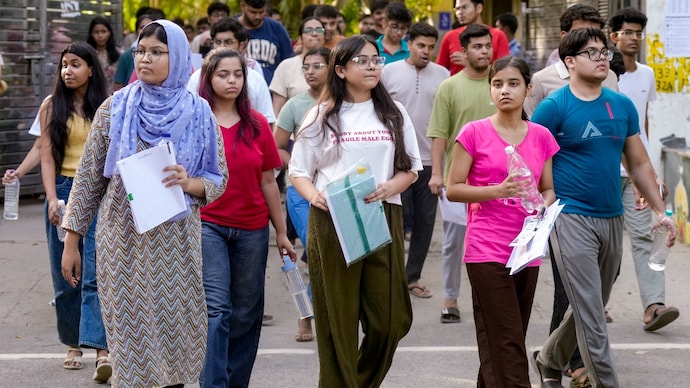
The NEET-UG re-test held on June 21 from 2 pm to 5:15 pm brought an end to weeks of uncertainty for nearly 22.75 lakh registered candidates who appeared across around 5,400 examination centres nationwide.
As students walked out of examination centres, a common trend emerged from cities including Delhi, Chennai, Chandigarh, Mumbai, Hyderabad, Pune, Bhopal, Indore and Srinagar. Most candidates agreed that Physics was the toughest section of the paper, Biology was the easiest, while Chemistry fell somewhere in between.
Initial feedback suggests that Re-NEET 2026 was a moderate paper overall and largely aligned with the NCERT curriculum. According to Ujjwal Singh, Founding CEO of Infinity Learn by Sri Chaitanya, Biology offered strong scoring opportunities, Chemistry remained balanced, and Physics acted as the key differentiator through numerical and concept-based questions.
Many students described the paper as tougher than the original May 3 examination. In Delhi, candidates called Physics lengthy and more difficult than the previous attempt, while Biology was largely considered straightforward. Similar reactions were reported from Chandigarh, Hyderabad and Chennai, where students said the paper demanded greater conceptual understanding.
Subject experts noted that Physics was the toughest and lengthiest section, with questions focused on Mechanics, Electrodynamics, Modern Physics and Thermodynamics. Numerical and application-based problems increased the time pressure on candidates.
Chemistry was seen as more challenging than the May exam. Physical Chemistry involved lengthy calculations, while Organic Chemistry tested understanding of reaction mechanisms rather than direct recall.
Biology remained the most scoring section, with questions closely following NCERT. Genetics, Physiology, Reproduction and Ecology carried significant weightage. However, some students flagged ambiguity in a few Zoology questions.
Experts believe the re-test placed greater emphasis on conceptual clarity and analytical thinking than memorisation. Students familiar with mock tests and application-based questions reported feeling more comfortable with the pattern.
Based on the initial assessment, experts expect the cutoff to settle between the NEET 2025 and NEET 2026 (May) levels. Some estimates place the All India Quota cutoff for General category government medical seats around 590–600 marks.
Overall, Re-NEET 2026 rewarded strong fundamentals and problem-solving skills. While Biology helped candidates secure marks, performance in Physics and Chemistry is likely to play a major role in determining ranks.
The NEET-UG re-test held on June 21 from 2 pm to 5:15 pm brought an end to weeks of uncertainty for nearly 22.75 lakh registered candidates who appeared across around 5,400 examination centres nationwide.
As students walked out of examination centres, a common trend emerged from cities including Delhi, Chennai, Chandigarh, Mumbai, Hyderabad, Pune, Bhopal, Indore and Srinagar. Most candidates agreed that Physics was the toughest section of the paper, Biology was the easiest, while Chemistry fell somewhere in between.
Initial feedback suggests that Re-NEET 2026 was a moderate paper overall and largely aligned with the NCERT curriculum. According to Ujjwal Singh, Founding CEO of Infinity Learn by Sri Chaitanya, Biology offered strong scoring opportunities, Chemistry remained balanced, and Physics acted as the key differentiator through numerical and concept-based questions.
Many students described the paper as tougher than the original May 3 examination. In Delhi, candidates called Physics lengthy and more difficult than the previous attempt, while Biology was largely considered straightforward. Similar reactions were reported from Chandigarh, Hyderabad and Chennai, where students said the paper demanded greater conceptual understanding.
Subject experts noted that Physics was the toughest and lengthiest section, with questions focused on Mechanics, Electrodynamics, Modern Physics and Thermodynamics. Numerical and application-based problems increased the time pressure on candidates.
Chemistry was seen as more challenging than the May exam. Physical Chemistry involved lengthy calculations, while Organic Chemistry tested understanding of reaction mechanisms rather than direct recall.
Biology remained the most scoring section, with questions closely following NCERT. Genetics, Physiology, Reproduction and Ecology carried significant weightage. However, some students flagged ambiguity in a few Zoology questions.
Experts believe the re-test placed greater emphasis on conceptual clarity and analytical thinking than memorisation. Students familiar with mock tests and application-based questions reported feeling more comfortable with the pattern.
Based on the initial assessment, experts expect the cutoff to settle between the NEET 2025 and NEET 2026 (May) levels. Some estimates place the All India Quota cutoff for General category government medical seats around 590–600 marks.
Overall, Re-NEET 2026 rewarded strong fundamentals and problem-solving skills. While Biology helped candidates secure marks, performance in Physics and Chemistry is likely to play a major role in determining ranks.

