What's next after Class 12th? At 17, certainty is overrated
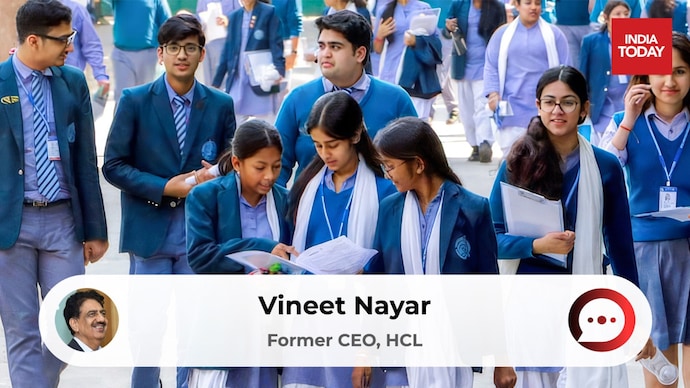
With CBSE results now out, students and families are once again asking: what comes next? Vineet Nayar, Founder-Chairman, Sampark Foundation and Former CEO, HCL Technologies, reflects on how a system that values early certainty over self-discovery often pushes students into life-shaping career choices too soon.
The CBSE results are out.
Across millions of Indian homes, one kind of tension has ended and another has quietly begun. Parents have exhaled. WhatsApp groups are overflowing. Relatives who have not called in months suddenly sound emotionally invested in your future.
And somewhere in the middle of all this sits a 17-year-old being asked to answer a question many adults themselves cannot answer honestly: What should I do with my life?
India becomes strangely confident after board results. The neighbour’s son already knows he wants to become an investment banker. Someone else has discovered a passion for artificial intelligence after watching a few YouTube videos. Coaching centres speak with the certainty of astrologers.
Every family gathering quietly turns into a career counselling session.
We put enormous pressure on children to sound certain very early in life. Yet if you observe enough careers closely, you notice something uncomfortable. Most successful lives were not built in straight lines. Neither was mine.
At 17, I thought I would become a doctor. Instead, I landed in mechanical engineering largely because a cousin had chosen it, and it sounded like the sensible thing to do. Years later, after my MBA, I discovered my real interest in technology and business.
Looking back, none of the important turns in my life arrived when I expected them to. Which is why I struggle when young people are expected to describe their future before they have even discovered themselves.
Some of the finest leaders I have met did not know what they wanted at 17. I have seen engineers become writers, commerce graduates build technology firms and history students become outstanding business leaders. Real life keeps refusing the neat career charts we force onto children. But our education system still rewards one thing heavily: early certainty.
The child who confidently says “I want to become this” is admired. The child who says “I am still figuring it out” is treated as if something is wrong. I increasingly believe the opposite is often true. At 17, certainty is overrated.
Confusion often means you are still exploring instead of performing with certainty for the comfort of others. One of the most underrated qualities I have seen in high-performing people is the ability to say: “I don’t know yet.”
The trouble is that young people are trying to discover themselves in an environment where everybody else seems desperate to decide for them. Parents worry. Society compares. Students panic. And slowly, something dangerous happens.
Young people start choosing prestige over self-awareness. A course becomes attractive not because it fits who they are, but because it sounds safe, fashionable or impressive at weddings.
Many parents are less worried about their child’s future than about social comparison disguised as concern. This is how thousands of students quietly enter careers they disconnected from years earlier.
Some of the worst career decisions are made under the pressure to appear certain. At 17, you may not know what you love yet. But you probably know what drains you. That may actually be more important.
You may know that coding leaves you cold. Or that pure mathematics exhausts you. Or that you cannot imagine spending years preparing for examinations that leave you emotionally empty. Those signals matter.
Another thing families underestimate is how much college shapes personality outside the classroom. Indian parents discuss colleges as if life is decided entirely by rankings and placements.
But years later, very few people will remember thermodynamics equations or trigonometric formulas. What remains is something else. Confidence. Communication. Friendships. Exposure. Curiosity. The ability to work with people unlike yourself.
College is not only an academic choice. It is also a social environment that slowly shapes how you see yourself and the world. A student who thrives in the energy of cities may feel emotionally trapped in an isolated campus no matter how prestigious the institution is. Another may flourish in exactly that environment. Yet we continue discussing education as if children are software being installed into careers.
Many years ago, a Harvard professor told me something I did not fully understand at the time. He said students should ideally study in an institution where they are likely to remain within the top 25 percent academically. At first, it sounded completely wrong to me. Surely the most prestigious institution must always be the best choice?
Over time, I understood what he meant. Confidence matters enormously. Spending years constantly feeling inadequate can quietly damage self-belief. And self-belief shapes careers far more deeply than most technical skills do.
Technology changes rapidly now. Entire industries reinvent themselves every decade. Skills are becoming outdated continuously. But confidence in yourself, once weakened repeatedly, takes much longer to rebuild.
Which is why I increasingly feel we are asking children to decide their future before they have discovered themselves. You do not need to figure out your entire life at 17. You are choosing a direction, not signing a lifelong contract for the future.
The tragedy is not that children are confused at 17. The tragedy is that we expect them not to be.
The CBSE results are out.
Across millions of Indian homes, one kind of tension has ended and another has quietly begun. Parents have exhaled. WhatsApp groups are overflowing. Relatives who have not called in months suddenly sound emotionally invested in your future.
And somewhere in the middle of all this sits a 17-year-old being asked to answer a question many adults themselves cannot answer honestly: What should I do with my life?
India becomes strangely confident after board results. The neighbour’s son already knows he wants to become an investment banker. Someone else has discovered a passion for artificial intelligence after watching a few YouTube videos. Coaching centres speak with the certainty of astrologers.
Every family gathering quietly turns into a career counselling session.
We put enormous pressure on children to sound certain very early in life. Yet if you observe enough careers closely, you notice something uncomfortable. Most successful lives were not built in straight lines. Neither was mine.
At 17, I thought I would become a doctor. Instead, I landed in mechanical engineering largely because a cousin had chosen it, and it sounded like the sensible thing to do. Years later, after my MBA, I discovered my real interest in technology and business.
Looking back, none of the important turns in my life arrived when I expected them to. Which is why I struggle when young people are expected to describe their future before they have even discovered themselves.
Some of the finest leaders I have met did not know what they wanted at 17. I have seen engineers become writers, commerce graduates build technology firms and history students become outstanding business leaders. Real life keeps refusing the neat career charts we force onto children. But our education system still rewards one thing heavily: early certainty.
The child who confidently says “I want to become this” is admired. The child who says “I am still figuring it out” is treated as if something is wrong. I increasingly believe the opposite is often true. At 17, certainty is overrated.
Confusion often means you are still exploring instead of performing with certainty for the comfort of others. One of the most underrated qualities I have seen in high-performing people is the ability to say: “I don’t know yet.”
The trouble is that young people are trying to discover themselves in an environment where everybody else seems desperate to decide for them. Parents worry. Society compares. Students panic. And slowly, something dangerous happens.
Young people start choosing prestige over self-awareness. A course becomes attractive not because it fits who they are, but because it sounds safe, fashionable or impressive at weddings.
Many parents are less worried about their child’s future than about social comparison disguised as concern. This is how thousands of students quietly enter careers they disconnected from years earlier.
Some of the worst career decisions are made under the pressure to appear certain. At 17, you may not know what you love yet. But you probably know what drains you. That may actually be more important.
You may know that coding leaves you cold. Or that pure mathematics exhausts you. Or that you cannot imagine spending years preparing for examinations that leave you emotionally empty. Those signals matter.
Another thing families underestimate is how much college shapes personality outside the classroom. Indian parents discuss colleges as if life is decided entirely by rankings and placements.
But years later, very few people will remember thermodynamics equations or trigonometric formulas. What remains is something else. Confidence. Communication. Friendships. Exposure. Curiosity. The ability to work with people unlike yourself.
College is not only an academic choice. It is also a social environment that slowly shapes how you see yourself and the world. A student who thrives in the energy of cities may feel emotionally trapped in an isolated campus no matter how prestigious the institution is. Another may flourish in exactly that environment. Yet we continue discussing education as if children are software being installed into careers.
Many years ago, a Harvard professor told me something I did not fully understand at the time. He said students should ideally study in an institution where they are likely to remain within the top 25 percent academically. At first, it sounded completely wrong to me. Surely the most prestigious institution must always be the best choice?
Over time, I understood what he meant. Confidence matters enormously. Spending years constantly feeling inadequate can quietly damage self-belief. And self-belief shapes careers far more deeply than most technical skills do.
Technology changes rapidly now. Entire industries reinvent themselves every decade. Skills are becoming outdated continuously. But confidence in yourself, once weakened repeatedly, takes much longer to rebuild.
Which is why I increasingly feel we are asking children to decide their future before they have discovered themselves. You do not need to figure out your entire life at 17. You are choosing a direction, not signing a lifelong contract for the future.
The tragedy is not that children are confused at 17. The tragedy is that we expect them not to be.

