Indian schools don't teach how to be happy: IAS officer with IIT, IIM degrees shares post
IAS officer Divya Mittal's post on X about what education had failed to teach her despite studying at elite institutions like IIT and IIM triggered a wider debate. The discussion expanded into questions around emotional health, life skills, examination culture and access to opportunities.
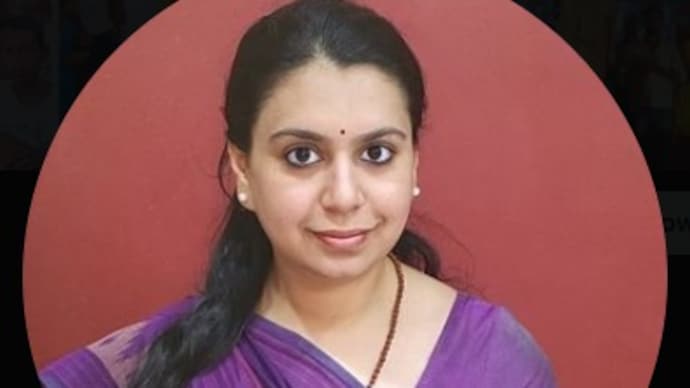
“IIT Delhi to IIM Bangalore to IAS. I got the best education my country had to offer. It taught me how to crack tough exams and manage big responsibilities. But it never taught me how to quiet my own mind or handle loneliness.”
With these words, IAS officer Divya Mittal started a discussion on X that soon moved beyond her personal journey and turned into a wider debate on what India’s education system teaches, and what it leaves out.
Mittal, who studied at IIT Delhi and IIM Bangalore before joining the civil services, wrote that years of education prepared her for competitive examinations and professional responsibilities, but not for emotional struggles, loneliness or understanding herself.
“We spend many years learning how to achieve, but not a single day learning how to be happy,” she wrote.
Her post received a large number of comments, with users debating whether schools and colleges in India focus too heavily on marks, rankings and entrance examinations while giving little attention to emotional health, financial understanding and life skills.
‘We memorised the periodic table, but not how to deal with pain’
In the post, Mittal listed several areas she believes are missing from formal education.
On emotional regulation, she wrote that students learn academic concepts but are rarely taught how to process grief, stress or failure. “We memorised the periodic table, but no one explained the chemistry of a broken heart,” she wrote.
She argued that students are often encouraged to suppress emotions instead of understanding them, which later affects how adults handle pressure.
Mittal also pointed to communication skills, saying people are taught to write essays and score marks but not how to express discomfort, set boundaries or say “no” in difficult situations.
QUESTIONS RAISED OVER CRITICAL THINKING AND FINANCIAL LITERACY
The IAS officer said schools reward answers, while life often demands questioning assumptions.
“In school, the person with the most answers won. In life, the person with the most questions survives,” she wrote while discussing critical thinking.
She also highlighted financial literacy, arguing that years spent learning mathematics do not necessarily prepare people to manage debt, spending habits or financial stress.
According to her, education often focuses on earning money but not on managing it.
DISCUSSION SHIFTS TO ELITE INSTITUTIONS AND OPPORETUNITIES
As the post gained attention, some users questioned whether individuals studying in institutions such as IITs and IIMs before entering civil services occupy opportunities that could have gone to others.
One user suggested a discussion around a “one person, one seat” approach.
Responding, Mittal wrote: “I did graduation from IIT Delhi. Post grad from IIM Bangalore. Let’s call IAS my job. Both the educations have helped me serve.”
Another user commented on talent and privilege, saying success can sometimes depend on circumstances beyond individual control.
Mittal replied: “Even talent can be called luck We should focus on what is in our hands. That is hard work.”
The conversation later widened to include student pressure, competitive examinations and mental health.
Some users agreed with Mittal’s view that the education system prepares students to succeed academically but not always emotionally. Others argued that schools alone cannot be expected to teach every life skill.
The debate also touched upon India’s exam culture, where performance in entrance tests for IITs, IIMs and UPSC often shapes career paths.
Mittal’s post did not question the value of academic education. Instead, it raised another question, whether education should prepare students only for careers, or also for uncertainty, failure, relationships and adulthood.
“IIT Delhi to IIM Bangalore to IAS. I got the best education my country had to offer. It taught me how to crack tough exams and manage big responsibilities. But it never taught me how to quiet my own mind or handle loneliness.”
With these words, IAS officer Divya Mittal started a discussion on X that soon moved beyond her personal journey and turned into a wider debate on what India’s education system teaches, and what it leaves out.
Mittal, who studied at IIT Delhi and IIM Bangalore before joining the civil services, wrote that years of education prepared her for competitive examinations and professional responsibilities, but not for emotional struggles, loneliness or understanding herself.
“We spend many years learning how to achieve, but not a single day learning how to be happy,” she wrote.
Her post received a large number of comments, with users debating whether schools and colleges in India focus too heavily on marks, rankings and entrance examinations while giving little attention to emotional health, financial understanding and life skills.
‘We memorised the periodic table, but not how to deal with pain’
In the post, Mittal listed several areas she believes are missing from formal education.
On emotional regulation, she wrote that students learn academic concepts but are rarely taught how to process grief, stress or failure. “We memorised the periodic table, but no one explained the chemistry of a broken heart,” she wrote.
She argued that students are often encouraged to suppress emotions instead of understanding them, which later affects how adults handle pressure.
Mittal also pointed to communication skills, saying people are taught to write essays and score marks but not how to express discomfort, set boundaries or say “no” in difficult situations.
QUESTIONS RAISED OVER CRITICAL THINKING AND FINANCIAL LITERACY
The IAS officer said schools reward answers, while life often demands questioning assumptions.
“In school, the person with the most answers won. In life, the person with the most questions survives,” she wrote while discussing critical thinking.
She also highlighted financial literacy, arguing that years spent learning mathematics do not necessarily prepare people to manage debt, spending habits or financial stress.
According to her, education often focuses on earning money but not on managing it.
DISCUSSION SHIFTS TO ELITE INSTITUTIONS AND OPPORETUNITIES
As the post gained attention, some users questioned whether individuals studying in institutions such as IITs and IIMs before entering civil services occupy opportunities that could have gone to others.
One user suggested a discussion around a “one person, one seat” approach.
Responding, Mittal wrote: “I did graduation from IIT Delhi. Post grad from IIM Bangalore. Let’s call IAS my job. Both the educations have helped me serve.”
Another user commented on talent and privilege, saying success can sometimes depend on circumstances beyond individual control.
Mittal replied: “Even talent can be called luck We should focus on what is in our hands. That is hard work.”
The conversation later widened to include student pressure, competitive examinations and mental health.
Some users agreed with Mittal’s view that the education system prepares students to succeed academically but not always emotionally. Others argued that schools alone cannot be expected to teach every life skill.
The debate also touched upon India’s exam culture, where performance in entrance tests for IITs, IIMs and UPSC often shapes career paths.
Mittal’s post did not question the value of academic education. Instead, it raised another question, whether education should prepare students only for careers, or also for uncertainty, failure, relationships and adulthood.

