NEET UG isn't the only NTA blunder, it has failed on six occasions
Allegations that 135 questions from a circulated guess paper matched the NEET UG 2026 exam have once again put the National Testing Agency under scrutiny, marking its sixth major controversy. The row has revived concerns over the integrity of high-stakes entrance examinations following a series of earlier controversies.
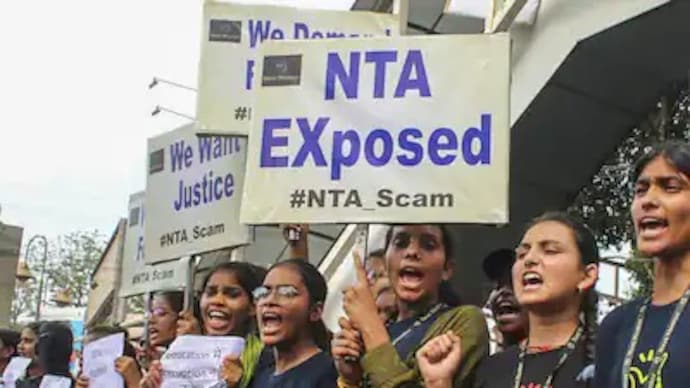
NEET, JEE, CUET — India’s biggest entrance examinations have shaped the future of millions of students over the years. In these examinations, students may have scored full marks, but the NTA appears to have scored a big zero, and many argue it has done so repeatedly.
It was the evening of June 4, 2024.
As the sun dipped and students across India refreshed their screens waiting for the NEET UG 2024 results, the National Testing Agency (NTA) tacitly released one of India's most important examination scores.
But within minutes, celebration gave way to suspicion.
Questions were raised over unusual marks, inflated ranks, grace marks and alleged discrepancies that many students claimed did not add up.
Soon, the matter reached the Supreme Court of India.
The court later ordered a re-examination at select centres after concerns over the integrity of the process surfaced.
Two years later, the shadow has returned. In 2026, another NEET storm erupted, this time with allegations that nearly 135 questions appearing in circulated “guess papers” closely matched those in the actual NEET UG examination conducted on May 3.
Investigations in Sikar, Rajasthan led to multiple arrests.
45 have been detained so far, exposing what authorities suspect could be a larger organised paper leak network operating around one of India’s biggest entrance examinations.
Now, with nearly 22 lakh students caught in uncertainty, the spotlight is once again on the NTA, the body entrusted with conducting some of India’s most critical higher education entrance examinations.
And the larger question emerging is difficult to ignore: if repeated controversies continue to surface around the country’s most competitive examinations, is the NTA losing the trust or has it lost it already for which it was originally created to protect?
Out of the 14 major examinations conducted by the NTA, at least six have faced allegations of paper leaks or some form of discrepancy.
This raises serious questions about the commitment of the Ministry of Education itself, which had promised after the NEET UG 2024 controversy to ensure fairness and maintain the integrity of future examinations.
Let's go back to why NTA was created and what the objective was.
WHAT IS NTA, AND WHY DOES IT MATTER?
The idea of the NTA goes back to the National Policy on Education era. It gained momentum in 2010 when a group of IIT directors suggested creating an independent agency for large-scale entrance exams.
The National Testing Agency was finally set up in 2017 under the Ministry of Education. Its aim was simple, to make entrance examinations more transparent and efficient in which it failed terribly.
Since 2018, the NTA has been conducting some of India’s biggest exams, including NEET-UG, JEE Main, CUET, UGC NET and several university entrance tests.
"India’s entrance examination ecosystem has increasingly become dependent on a single agency. When one institution conducts multiple high-stakes examinations continuously through the year, the risk of administrative fatigue, coordination failures, cybersecurity vulnerabilities, and outsourcing-related irregularities naturally increases," says Shobha Shekhar, an educationist who has worked with ministry officials for years.
A PATTERN OF CONTROVERSIES
The NEET UG 2026 controversy is not the first storm the NTA has faced.
Over the past few years, the agency has repeatedly come under scrutiny over allegations of paper leaks, grace marks, technical glitches, disputed answer keys and poor exam centre management.
NEET was not the only concern.
JEE Main candidates reported server crashes, login failures, and inconsistencies across different shifts. The Common University Entrance Test (CUET), too, witnessed repeated technical disruptions, delayed schedules, and rescheduled examinations.
Here is how NTA has come under scrutiny on multiple occasions.
1. JEE Main 2021: Paper leak and impersonation scandal
The examination came under scrutiny after cases of alleged paper leaks and candidate impersonation were reported, leading to arrests and concerns over the security of online testing systems.
2. CUET UG 2022: Technical glitches and exam chaos
The first edition of the Common University Entrance Test witnessed server crashes, delayed examinations, sudden cancellations, and repeated rescheduling at multiple centres across the country.
3. NEET UG: Dress code and security violations controversy
NEET faced criticism over strict dress code enforcement, invasive frisking procedures, and reports of security lapses at several examination centres, triggering protests from students and parents.
4. NEET UG 2024: Question paper leak and grace marks controversy
Allegations of a question paper leak, along with the awarding of grace marks to certain candidates, sparked nationwide outrage and raised serious concerns about fairness and transparency.
5. UGC NET June 2024: Exam cancellation
The UGC NET June 2024 examination was cancelled by the government a day after it was conducted following inputs suggesting possible compromise of exam integrity.
6. NEET UG 2026: Alleged paper leak and exam cancellation
Claims that questions from a circulated guess paper matched the examination triggered fresh controversy, eventually leading to the cancellation of the exam and renewed criticism of the National Testing Agency.
Gradually, the criticism surrounding the National Testing Agency stopped appearing as isolated lapses.
As questions over the functioning of the NTA intensified, a parallel debate started taking shape online and within academic circles, the comparison between the NTA and the Union Public Service Commission.
Several experts pointed to UPSC’s long-standing examination system as an example of administrative consistency and operational credibility.
Explaining the scale-related challenges behind examinations such as NEET, education mentor Shekhar Dutt of Sleepy Classes IAS said the sheer size of the operation creates multiple points of vulnerability.
“So, what happens when the scale becomes very high is that the system can break at many points. If UPSC conducts an exam at 100 centres and NEET is being conducted across nearly 10,000 centres, then the complexity increases enormously. That is why there are many points where NEET can break,” he said.
At the same time, critics argue that the broader examination ecosystem itself has become deeply commercialised.
As one educationist told India Today, “The race to secure an MBBS seat in top government colleges is extremely brutal. A large number of parents try to ensure admission for their children to avoid the high fees charged by private institutes. The real game begins in the coaching hubs, where the exam setters come into play.”
THE 2026 QUESTION: HOW DID 135 QUESTIONS MATCH?
The latest controversy has raised even deeper concerns.
Investigators in Sikar, Rajasthan, reportedly found that over 135 questions in a circulated “guess paper” closely matched those that appeared in the actual NEET UG 2026 examination.
What has intensified the debate further is the spotlight on Sikar itself, now often referred to as “Mini Kota”. Over the years, the town has emerged as one of India’s biggest coaching hubs for NEET and JEE preparation, consistently recording success rates reportedly far above the national average.
But this time, the coaching capital is facing uncomfortable questions.
Multiple arrests have been made in connection with the alleged leak network. According to sources, investigators suspect the leak may have originated from the printing press or another original source linked to the examination paper.
It is alleged that all 90 Biology questions and all 45 Chemistry questions reached a select group even before the exam began.
Sources also said the SOG has detained and questioned the owner of a coaching institute in Sikar.
For students and parents, the controversy has reopened old fears about the security of India’s biggest entrance examinations.
CAN NTA FIX THIS?
"NEP 2020 promotes testing understanding over memorisation, reducing the value of shortcuts like leaked papers by focusing on deeper conceptual learning rather than rote answers," says Venkat Phani Kiran - Chief Academic Officer, Extramarks.
As the debate over the credibility of the National Testing Agency intensifies, a bigger question emerges: can the NTA fix this? Experts are highlighting several key aspects that could be taken into consideration.
“India’s examination system now needs structural reforms rather than temporary damage control,” said education expert Shekhar.
According to her, there must be greater transparency in exam processes, answer key systems, grievance handling and post-exam audits.
She also argued that the country may need an independent oversight authority to regularly audit agencies conducting national-level entrance tests.
Shekhar added that a more decentralised or hybrid examination model, with stronger university participation and multiple layers of verification, could help reduce systemic risks in the future.
In Kiran's words, there is a possibility.
He adds: Two changes could make this workable at a national scale.
One challenge in multi-session exams is maintaining equal difficulty across shifts, especially in subjects like Biology. This can be addressed through dynamic questions where the concept remains the same but details vary for each candidate.
Combined with AI-based evaluation of reasoning-based answers, the system could rely more on student understanding than on the secrecy of a single paper.
The future of many in India is in the hands of the National Testing Agency.
If the organisation ensures the fair conduct of NEET, it will help produce doctors whom millions of patients can trust.
For now, NTA has the responsibility of not only conducting NEET UG 2026 again but to build trust amongst students and parents.
Leaking of NEET UG paper twice in three years is a big reason to worry for India.
NEET, JEE, CUET — India’s biggest entrance examinations have shaped the future of millions of students over the years. In these examinations, students may have scored full marks, but the NTA appears to have scored a big zero, and many argue it has done so repeatedly.
It was the evening of June 4, 2024.
As the sun dipped and students across India refreshed their screens waiting for the NEET UG 2024 results, the National Testing Agency (NTA) tacitly released one of India's most important examination scores.
But within minutes, celebration gave way to suspicion.
Questions were raised over unusual marks, inflated ranks, grace marks and alleged discrepancies that many students claimed did not add up.
Soon, the matter reached the Supreme Court of India.
The court later ordered a re-examination at select centres after concerns over the integrity of the process surfaced.
Two years later, the shadow has returned. In 2026, another NEET storm erupted, this time with allegations that nearly 135 questions appearing in circulated “guess papers” closely matched those in the actual NEET UG examination conducted on May 3.
Investigations in Sikar, Rajasthan led to multiple arrests.
45 have been detained so far, exposing what authorities suspect could be a larger organised paper leak network operating around one of India’s biggest entrance examinations.
Now, with nearly 22 lakh students caught in uncertainty, the spotlight is once again on the NTA, the body entrusted with conducting some of India’s most critical higher education entrance examinations.
And the larger question emerging is difficult to ignore: if repeated controversies continue to surface around the country’s most competitive examinations, is the NTA losing the trust or has it lost it already for which it was originally created to protect?
Out of the 14 major examinations conducted by the NTA, at least six have faced allegations of paper leaks or some form of discrepancy.
This raises serious questions about the commitment of the Ministry of Education itself, which had promised after the NEET UG 2024 controversy to ensure fairness and maintain the integrity of future examinations.
Let's go back to why NTA was created and what the objective was.
WHAT IS NTA, AND WHY DOES IT MATTER?
The idea of the NTA goes back to the National Policy on Education era. It gained momentum in 2010 when a group of IIT directors suggested creating an independent agency for large-scale entrance exams.
The National Testing Agency was finally set up in 2017 under the Ministry of Education. Its aim was simple, to make entrance examinations more transparent and efficient in which it failed terribly.
Since 2018, the NTA has been conducting some of India’s biggest exams, including NEET-UG, JEE Main, CUET, UGC NET and several university entrance tests.
"India’s entrance examination ecosystem has increasingly become dependent on a single agency. When one institution conducts multiple high-stakes examinations continuously through the year, the risk of administrative fatigue, coordination failures, cybersecurity vulnerabilities, and outsourcing-related irregularities naturally increases," says Shobha Shekhar, an educationist who has worked with ministry officials for years.
A PATTERN OF CONTROVERSIES
The NEET UG 2026 controversy is not the first storm the NTA has faced.
Over the past few years, the agency has repeatedly come under scrutiny over allegations of paper leaks, grace marks, technical glitches, disputed answer keys and poor exam centre management.
NEET was not the only concern.
JEE Main candidates reported server crashes, login failures, and inconsistencies across different shifts. The Common University Entrance Test (CUET), too, witnessed repeated technical disruptions, delayed schedules, and rescheduled examinations.
Here is how NTA has come under scrutiny on multiple occasions.
1. JEE Main 2021: Paper leak and impersonation scandal
The examination came under scrutiny after cases of alleged paper leaks and candidate impersonation were reported, leading to arrests and concerns over the security of online testing systems.
2. CUET UG 2022: Technical glitches and exam chaos
The first edition of the Common University Entrance Test witnessed server crashes, delayed examinations, sudden cancellations, and repeated rescheduling at multiple centres across the country.
3. NEET UG: Dress code and security violations controversy
NEET faced criticism over strict dress code enforcement, invasive frisking procedures, and reports of security lapses at several examination centres, triggering protests from students and parents.
4. NEET UG 2024: Question paper leak and grace marks controversy
Allegations of a question paper leak, along with the awarding of grace marks to certain candidates, sparked nationwide outrage and raised serious concerns about fairness and transparency.
5. UGC NET June 2024: Exam cancellation
The UGC NET June 2024 examination was cancelled by the government a day after it was conducted following inputs suggesting possible compromise of exam integrity.
6. NEET UG 2026: Alleged paper leak and exam cancellation
Claims that questions from a circulated guess paper matched the examination triggered fresh controversy, eventually leading to the cancellation of the exam and renewed criticism of the National Testing Agency.
Gradually, the criticism surrounding the National Testing Agency stopped appearing as isolated lapses.
As questions over the functioning of the NTA intensified, a parallel debate started taking shape online and within academic circles, the comparison between the NTA and the Union Public Service Commission.
Several experts pointed to UPSC’s long-standing examination system as an example of administrative consistency and operational credibility.
Explaining the scale-related challenges behind examinations such as NEET, education mentor Shekhar Dutt of Sleepy Classes IAS said the sheer size of the operation creates multiple points of vulnerability.
“So, what happens when the scale becomes very high is that the system can break at many points. If UPSC conducts an exam at 100 centres and NEET is being conducted across nearly 10,000 centres, then the complexity increases enormously. That is why there are many points where NEET can break,” he said.
At the same time, critics argue that the broader examination ecosystem itself has become deeply commercialised.
As one educationist told India Today, “The race to secure an MBBS seat in top government colleges is extremely brutal. A large number of parents try to ensure admission for their children to avoid the high fees charged by private institutes. The real game begins in the coaching hubs, where the exam setters come into play.”
THE 2026 QUESTION: HOW DID 135 QUESTIONS MATCH?
The latest controversy has raised even deeper concerns.
Investigators in Sikar, Rajasthan, reportedly found that over 135 questions in a circulated “guess paper” closely matched those that appeared in the actual NEET UG 2026 examination.
What has intensified the debate further is the spotlight on Sikar itself, now often referred to as “Mini Kota”. Over the years, the town has emerged as one of India’s biggest coaching hubs for NEET and JEE preparation, consistently recording success rates reportedly far above the national average.
But this time, the coaching capital is facing uncomfortable questions.
Multiple arrests have been made in connection with the alleged leak network. According to sources, investigators suspect the leak may have originated from the printing press or another original source linked to the examination paper.
It is alleged that all 90 Biology questions and all 45 Chemistry questions reached a select group even before the exam began.
Sources also said the SOG has detained and questioned the owner of a coaching institute in Sikar.
For students and parents, the controversy has reopened old fears about the security of India’s biggest entrance examinations.
CAN NTA FIX THIS?
"NEP 2020 promotes testing understanding over memorisation, reducing the value of shortcuts like leaked papers by focusing on deeper conceptual learning rather than rote answers," says Venkat Phani Kiran - Chief Academic Officer, Extramarks.
As the debate over the credibility of the National Testing Agency intensifies, a bigger question emerges: can the NTA fix this? Experts are highlighting several key aspects that could be taken into consideration.
“India’s examination system now needs structural reforms rather than temporary damage control,” said education expert Shekhar.
According to her, there must be greater transparency in exam processes, answer key systems, grievance handling and post-exam audits.
She also argued that the country may need an independent oversight authority to regularly audit agencies conducting national-level entrance tests.
Shekhar added that a more decentralised or hybrid examination model, with stronger university participation and multiple layers of verification, could help reduce systemic risks in the future.
In Kiran's words, there is a possibility.
He adds: Two changes could make this workable at a national scale.
One challenge in multi-session exams is maintaining equal difficulty across shifts, especially in subjects like Biology. This can be addressed through dynamic questions where the concept remains the same but details vary for each candidate.
Combined with AI-based evaluation of reasoning-based answers, the system could rely more on student understanding than on the secrecy of a single paper.
The future of many in India is in the hands of the National Testing Agency.
If the organisation ensures the fair conduct of NEET, it will help produce doctors whom millions of patients can trust.
For now, NTA has the responsibility of not only conducting NEET UG 2026 again but to build trust amongst students and parents.
Leaking of NEET UG paper twice in three years is a big reason to worry for India.

