Trump's $100,000 H-1B plan is dead. Indians are breathing easier
A US federal court has struck down Donald Trump's proposed $100,000 H-1B visa fee, offering major relief to Indian students, professionals and employers. The ruling preserves a crucial pathway from education to employment in America and restores confidence in a system that many feared was becoming unpredictable.
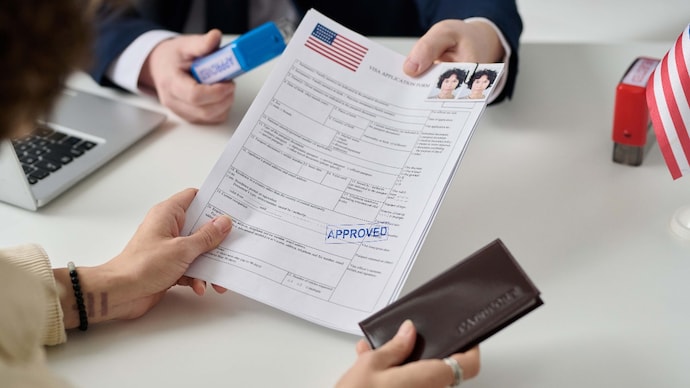
For lakhs of Indians dreaming of a US career, one number had become impossible to ignore -- $100,000.
Imagine spending years preparing for a US degree, securing admission, taking an education loan, moving across the world and finally landing a job offer, only to discover that your employer may have to pay $100,000 a year to keep you on board.
That was the proposed annual fee per H-1B worker under a policy pushed by US President Donald Trump. When the news dropped on September 19, it triggered intense anxiety among international students, skilled professionals, employers and universities alike. Thousands cancelled their US-India flights and forsook a festive season home to digest the upheaval.
Now, a federal judge has put a stop to it.
US District Court Judge Leo Sorokin ruled that the fee was unlawful, stating that the policy effectively imposed a tax on H-1B petitions without congressional approval.
The decision has been welcomed by Indian diaspora groups and immigration advocates who argue that the fee would have severely disrupted America's ability to attract global talent. But its biggest impact may be felt by the lakhs of Indian students and professionals who view the H-1B programme as the gateway to a career in America.
For Indians, who receive more than 70% of H-1B approvals, the verdict is far more than a legal technicality. It could directly influence career plans, study-abroad decisions and future job opportunities.
WHY INDIANS HAD THE MOST TO LOSE
Few countries are as closely tied to the H-1B system as India.
Indian nationals have accounted for more than 70% of H-1B approvals in recent years. At the same time, India has become the largest source of international students in the US, with more than 330,000 students enrolled across American universities.
For many of them, the H-1B visa is not just another immigration category. It is the bridge between education and employment.
Saurabh Arora, Founder and CEO of University Living, says a fee of this magnitude would have changed hiring decisions almost overnight.
"A proposed fee of $100,000 would have made sponsorship prohibitively expensive for most employers, particularly for early-career hires who are often the first to lose out when hiring economics shift,” he says.
THE TALENT GAP MANY PEOPLE FORGET
The H-1B debate is often framed around immigration. Employers tend to see it differently.
According to Arora, industries such as technology, engineering, healthcare, finance and research continue to face shortages of specialised talent.
"There is not enough domestic talent supply to meet current demand," he says, adding that international professionals are not on the sidelines of these industries. "They are central to how they function."
That reality is becoming even more visible as sectors like artificial intelligence, cybersecurity, advanced manufacturing and life sciences race to find skilled workers.
The court ruling effectively preserves an important talent pipeline that many employers rely on to fill critical roles.
WHAT WOULD HAVE HAPPENED TO HIRING?
The consequences would likely have stretched far beyond visa applicants.
Existing H-1B filing and legal costs are only a fraction of $100,000. A sudden increase of that scale could have forced companies to rethink entire hiring strategies.
"A fee at that level would not have merely adjusted hiring economics, it would have upended them," Arora says.
Experts believe employers would have responded in predictable ways. Sponsorships would have fallen. H-1B hiring could have been limited to only the most senior or indispensable positions. Some companies may have shifted more work overseas rather than absorb the additional costs.
Startups, research institutions, healthcare providers and mid-sized businesses would have been among the hardest hit because they typically lack the resources of large multinational corporations.
Truth be told the impact of the H1-B fee hike was already making itself known in the past few months
For Indian graduates entering the US workforce each year, that could have translated into fewer opportunities at the very moment they needed them most.
WHY STUDENTS ARE WATCHING VISA POLICIES MORE CLOSELY THAN EVER
A decade ago, many Indian students focused heavily on university rankings. Today, the conversation looks very different.
Arora says families are increasingly asking questions about employability, post-study work rights, sponsorship prospects and return on investment.
"As the cost of studying abroad rises, families are paying far closer attention to career outcomes and return on investment,” he says.
That shift is reshaping global student mobility. Countries such as the UK, Germany, Australia, Ireland and France are actively positioning themselves as alternatives for international talent.
The US remains one of the world's most attractive education destinations, but students are increasingly comparing not just universities, but entire career ecosystems.
THE GLOBAL BATTLE FOR TALENT
Perhaps the biggest lesson from this episode is that countries are no longer competing only for students.
They are competing for the skilled professionals those students eventually become.
Across advanced economies, talent shortages are emerging in fields ranging from healthcare and engineering to AI and scientific research. Labour market projections suggest demand for skilled international workers is likely to remain strong for years.
International students are also a major economic force. According to NAFSA, they contributed nearly $44 billion to the US economy during the 2023-24 academic year while supporting hundreds of thousands of jobs.
The demand for skilled talent is not going away," Arora says.
For Indian students and professionals, the court ruling does not remove every uncertainty surrounding US immigration.
But it sends an important message -- policies that affect talent mobility carry real economic consequences and will face scrutiny when they threaten the broader innovation ecosystem.
For now, at least, one of the biggest fears hanging over the H-1B pathway has been taken off the table. And for thousands of Indians planning their future, that is no small relief.
For lakhs of Indians dreaming of a US career, one number had become impossible to ignore -- $100,000.
Imagine spending years preparing for a US degree, securing admission, taking an education loan, moving across the world and finally landing a job offer, only to discover that your employer may have to pay $100,000 a year to keep you on board.
That was the proposed annual fee per H-1B worker under a policy pushed by US President Donald Trump. When the news dropped on September 19, it triggered intense anxiety among international students, skilled professionals, employers and universities alike. Thousands cancelled their US-India flights and forsook a festive season home to digest the upheaval.
Now, a federal judge has put a stop to it.
US District Court Judge Leo Sorokin ruled that the fee was unlawful, stating that the policy effectively imposed a tax on H-1B petitions without congressional approval.
The decision has been welcomed by Indian diaspora groups and immigration advocates who argue that the fee would have severely disrupted America's ability to attract global talent. But its biggest impact may be felt by the lakhs of Indian students and professionals who view the H-1B programme as the gateway to a career in America.
For Indians, who receive more than 70% of H-1B approvals, the verdict is far more than a legal technicality. It could directly influence career plans, study-abroad decisions and future job opportunities.
WHY INDIANS HAD THE MOST TO LOSE
Few countries are as closely tied to the H-1B system as India.
Indian nationals have accounted for more than 70% of H-1B approvals in recent years. At the same time, India has become the largest source of international students in the US, with more than 330,000 students enrolled across American universities.
For many of them, the H-1B visa is not just another immigration category. It is the bridge between education and employment.
Saurabh Arora, Founder and CEO of University Living, says a fee of this magnitude would have changed hiring decisions almost overnight.
"A proposed fee of $100,000 would have made sponsorship prohibitively expensive for most employers, particularly for early-career hires who are often the first to lose out when hiring economics shift,” he says.
THE TALENT GAP MANY PEOPLE FORGET
The H-1B debate is often framed around immigration. Employers tend to see it differently.
According to Arora, industries such as technology, engineering, healthcare, finance and research continue to face shortages of specialised talent.
"There is not enough domestic talent supply to meet current demand," he says, adding that international professionals are not on the sidelines of these industries. "They are central to how they function."
That reality is becoming even more visible as sectors like artificial intelligence, cybersecurity, advanced manufacturing and life sciences race to find skilled workers.
The court ruling effectively preserves an important talent pipeline that many employers rely on to fill critical roles.
WHAT WOULD HAVE HAPPENED TO HIRING?
The consequences would likely have stretched far beyond visa applicants.
Existing H-1B filing and legal costs are only a fraction of $100,000. A sudden increase of that scale could have forced companies to rethink entire hiring strategies.
"A fee at that level would not have merely adjusted hiring economics, it would have upended them," Arora says.
Experts believe employers would have responded in predictable ways. Sponsorships would have fallen. H-1B hiring could have been limited to only the most senior or indispensable positions. Some companies may have shifted more work overseas rather than absorb the additional costs.
Startups, research institutions, healthcare providers and mid-sized businesses would have been among the hardest hit because they typically lack the resources of large multinational corporations.
Truth be told the impact of the H1-B fee hike was already making itself known in the past few months
For Indian graduates entering the US workforce each year, that could have translated into fewer opportunities at the very moment they needed them most.
WHY STUDENTS ARE WATCHING VISA POLICIES MORE CLOSELY THAN EVER
A decade ago, many Indian students focused heavily on university rankings. Today, the conversation looks very different.
Arora says families are increasingly asking questions about employability, post-study work rights, sponsorship prospects and return on investment.
"As the cost of studying abroad rises, families are paying far closer attention to career outcomes and return on investment,” he says.
That shift is reshaping global student mobility. Countries such as the UK, Germany, Australia, Ireland and France are actively positioning themselves as alternatives for international talent.
The US remains one of the world's most attractive education destinations, but students are increasingly comparing not just universities, but entire career ecosystems.
THE GLOBAL BATTLE FOR TALENT
Perhaps the biggest lesson from this episode is that countries are no longer competing only for students.
They are competing for the skilled professionals those students eventually become.
Across advanced economies, talent shortages are emerging in fields ranging from healthcare and engineering to AI and scientific research. Labour market projections suggest demand for skilled international workers is likely to remain strong for years.
International students are also a major economic force. According to NAFSA, they contributed nearly $44 billion to the US economy during the 2023-24 academic year while supporting hundreds of thousands of jobs.
The demand for skilled talent is not going away," Arora says.
For Indian students and professionals, the court ruling does not remove every uncertainty surrounding US immigration.
But it sends an important message -- policies that affect talent mobility carry real economic consequences and will face scrutiny when they threaten the broader innovation ecosystem.
For now, at least, one of the biggest fears hanging over the H-1B pathway has been taken off the table. And for thousands of Indians planning their future, that is no small relief.

