Sona Mohapatra says Bollywood gives heartbreak songs to men, cites Arijit's Zaalima
Singer Sona Mohapatra has criticised Bollywood's music industry, claiming that heartbreak and romantic songs are largely reserved for male singers. Citing Arijit Singh's Zaalima as an example, she questioned why female voices are often sidelined even in duets.
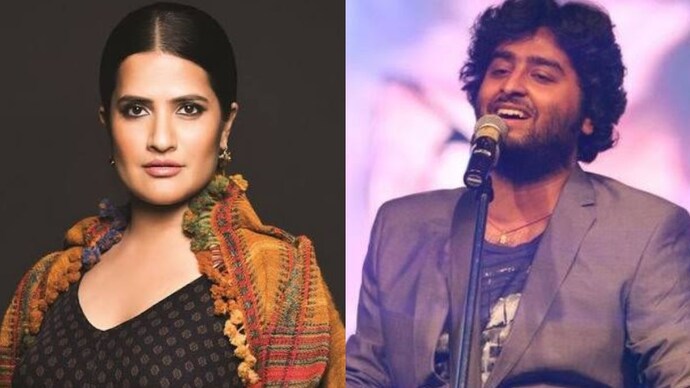
Singer Sona Mohapatra has sparked a conversation about gender imbalance in Bollywood music, saying heartbreak songs are often reserved for male singers while women are pushed to the sidelines. Citing Arijit Singh's popular track Zaalima as an example, the singer questioned why female vocalists frequently get limited space in duets and argued that the trend reflects a larger issue of representation in the industry.
Sharing her experience at the MBI Festival of Letters, Sona said, "All those heartbreak songs in Bollywood are reserved for the men. Men have heartbreak; men in current times feel love. Because every time I was called to sing a duet, I somehow had the ending chorus. You must hear this song called Zaalima. It is Arijit (Singh)'s song, and I was called to sing that, and I was flabbergasted."
The 50-year-old singer went on to question why female voices are often given limited space in songs that are promoted as duets.
"Because the mukhra, antara, mukhra, antara... all of them were taken up by the man. It is not Arijit's fault; he is a great artist. But why does the female come in at the end? My question to Pritam was, 'Is the man making love to himself? What kind of a duet is this? Why do I come in at the end?' This is a literature festival, and freedom of speech is something Kerala has protected so widely, so I am taking my chances here. The thing is, it is nobody's fault, but the system of music in the industry has become so risk-averse," she said.
Sona later continued the discussion in the comments section of her social media post. She argued that the issue was bigger than individual songs and centred on representation within the industry.
According to the singer, if Bollywood stops creating iconic female narratives, it could eventually stop producing iconic female stars as well. She also encouraged people to look at the reactions in the comment section of her reel.
Sona further pointed to what she described as a long-term industry trend. She said the problem was not that women never sang heartbreak songs, but that Bollywood gradually stopped writing enough of them.
The singer argued that when 80-90 per cent of the industry's biggest romantic and heartbreak narratives are assigned to male voices over nearly two decades, it becomes difficult to create female music stars with a similar cultural impact.
She maintained that the debate was about systemic issues rather than individual artists and urged people to examine the numbers before drawing conclusions.
Zaalima, which Sona referenced during the discussion, was sung by Arijit Singh and Harshdeep Kaur for the 2017 film Raees. The song featured actors Shah Rukh Khan and Mahira Khan and went on to become one of the film's most popular tracks.
Singer Sona Mohapatra has sparked a conversation about gender imbalance in Bollywood music, saying heartbreak songs are often reserved for male singers while women are pushed to the sidelines. Citing Arijit Singh's popular track Zaalima as an example, the singer questioned why female vocalists frequently get limited space in duets and argued that the trend reflects a larger issue of representation in the industry.
Sharing her experience at the MBI Festival of Letters, Sona said, "All those heartbreak songs in Bollywood are reserved for the men. Men have heartbreak; men in current times feel love. Because every time I was called to sing a duet, I somehow had the ending chorus. You must hear this song called Zaalima. It is Arijit (Singh)'s song, and I was called to sing that, and I was flabbergasted."
The 50-year-old singer went on to question why female voices are often given limited space in songs that are promoted as duets.
"Because the mukhra, antara, mukhra, antara... all of them were taken up by the man. It is not Arijit's fault; he is a great artist. But why does the female come in at the end? My question to Pritam was, 'Is the man making love to himself? What kind of a duet is this? Why do I come in at the end?' This is a literature festival, and freedom of speech is something Kerala has protected so widely, so I am taking my chances here. The thing is, it is nobody's fault, but the system of music in the industry has become so risk-averse," she said.
Sona later continued the discussion in the comments section of her social media post. She argued that the issue was bigger than individual songs and centred on representation within the industry.
According to the singer, if Bollywood stops creating iconic female narratives, it could eventually stop producing iconic female stars as well. She also encouraged people to look at the reactions in the comment section of her reel.
Sona further pointed to what she described as a long-term industry trend. She said the problem was not that women never sang heartbreak songs, but that Bollywood gradually stopped writing enough of them.
The singer argued that when 80-90 per cent of the industry's biggest romantic and heartbreak narratives are assigned to male voices over nearly two decades, it becomes difficult to create female music stars with a similar cultural impact.
She maintained that the debate was about systemic issues rather than individual artists and urged people to examine the numbers before drawing conclusions.
Zaalima, which Sona referenced during the discussion, was sung by Arijit Singh and Harshdeep Kaur for the 2017 film Raees. The song featured actors Shah Rukh Khan and Mahira Khan and went on to become one of the film's most popular tracks.

