India's pop girl band era returns as VIVA's music hits streaming platforms
VIVA's iconic music catalogue is finally back on streaming platforms after two decades, bringing renewed attention to India's first all-girl pop band and the era that shaped millennial pop culture.
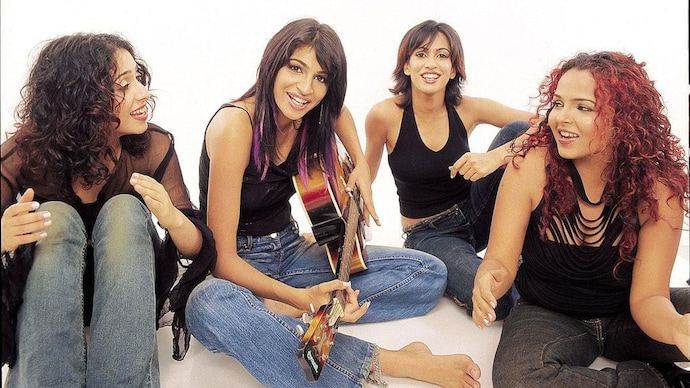
India’s first all-girl pop group, VIVA, comprised of Neha Bhasin, Anushka Manchanda, Pratichee Mohapatra and Mahua Kamat is making a comeback to streaming platforms more than two decades after defining the country’s early 2000s pop culture scene. The group’s iconic music catalogue is now available again through JioStar’s youth-focused music platform KaanPhod, along with major audio streaming services.
The return marks a nostalgic revival of India’s original girl band era at a time when younger audiences are rediscovering Y2K music and pop culture trends online. For millennials who grew up with VIVA’s chartbusters, the re-release brings back a defining chapter of Indian pop music that celebrated individuality, female representation and self-expression long before such conversations became mainstream in entertainment.
Why is VIVA’s return significant?
Launched in the early 2000s, VIVA broke new ground as India’s first all-female pop band. At a time when Bollywood soundtracks dominated the music landscape, the group carved out space for independent pop music led by women with distinct personalities and musical identities.
The group’s songs quickly became cultural staples for a generation, but much of its catalogue gradually disappeared from digital platforms as music consumption shifted from CDs and television to streaming services. The restoration and release of the music catalogue now allows both older listeners and younger audiences to rediscover the band’s legacy.
What did the band members say?
Singer Anushka Manchanda described VIVA as “a powerful moment in time” that helped shape the members into “strong, independent women”.
Neha Bhasin said the band had become “a feeling, a memory and an entire era” for audiences who grew up with the music. She added that the return of the songs and videos would allow a new generation to experience the group’s work.
Meanwhile, Pratichee Mohapatra called the comeback “emotional, nostalgic and surreal”, while Mahua Kamat said the music was finally returning “to where it has always belonged — with the listeners”.
How did VIVA shape Indian pop culture?
Long before female-led pop acts became common in India, VIVA represented confidence, inclusivity and modern femininity in mainstream music. The group’s success helped pave the way for future women-led acts while offering young listeners a new form of representation in Indian entertainment.
As nostalgia-driven music consumption continues to grow, the return of VIVA’s catalogue signals renewed interest in the era that helped define India’s independent pop movement.
India’s first all-girl pop group, VIVA, comprised of Neha Bhasin, Anushka Manchanda, Pratichee Mohapatra and Mahua Kamat is making a comeback to streaming platforms more than two decades after defining the country’s early 2000s pop culture scene. The group’s iconic music catalogue is now available again through JioStar’s youth-focused music platform KaanPhod, along with major audio streaming services.
The return marks a nostalgic revival of India’s original girl band era at a time when younger audiences are rediscovering Y2K music and pop culture trends online. For millennials who grew up with VIVA’s chartbusters, the re-release brings back a defining chapter of Indian pop music that celebrated individuality, female representation and self-expression long before such conversations became mainstream in entertainment.
Why is VIVA’s return significant?
Launched in the early 2000s, VIVA broke new ground as India’s first all-female pop band. At a time when Bollywood soundtracks dominated the music landscape, the group carved out space for independent pop music led by women with distinct personalities and musical identities.
The group’s songs quickly became cultural staples for a generation, but much of its catalogue gradually disappeared from digital platforms as music consumption shifted from CDs and television to streaming services. The restoration and release of the music catalogue now allows both older listeners and younger audiences to rediscover the band’s legacy.
What did the band members say?
Singer Anushka Manchanda described VIVA as “a powerful moment in time” that helped shape the members into “strong, independent women”.
Neha Bhasin said the band had become “a feeling, a memory and an entire era” for audiences who grew up with the music. She added that the return of the songs and videos would allow a new generation to experience the group’s work.
Meanwhile, Pratichee Mohapatra called the comeback “emotional, nostalgic and surreal”, while Mahua Kamat said the music was finally returning “to where it has always belonged — with the listeners”.
How did VIVA shape Indian pop culture?
Long before female-led pop acts became common in India, VIVA represented confidence, inclusivity and modern femininity in mainstream music. The group’s success helped pave the way for future women-led acts while offering young listeners a new form of representation in Indian entertainment.
As nostalgia-driven music consumption continues to grow, the return of VIVA’s catalogue signals renewed interest in the era that helped define India’s independent pop movement.

