Maximum Pleasure Guaranteed review: Bad decisions never looked this bingeable
Maximum Pleasure Guaranteed review: Tatiana Maslany stars as Paula, a divorced mother drawn into an online attack, blackmail and murder. The Apple TV series uses that spiral to explore loneliness, desperation and digital-age distrust.
There are specific kinds of series that begin with one bad decision and then spend the next eight episodes (in this case: ten) aggressively making things worse for everyone involved. Maximum Pleasure Guaranteed proudly belongs to that category.
Apple TV’s dark comedy-thriller stars Tatiana Maslany as Paula, a recently divorced mother already juggling custody battles, emotional burnout and the general exhaustion of modern adulthood. Naturally, this is also the exact moment she finds herself pulled into a bizarre rabbit hole involving online cam work, blackmail, murder, shady men and enough emotional chaos to make therapy sound like a survival necessity.
The series kicks off when Paula witnesses what appears to be a violent attack during an online interaction with Trevor, a cam performer (aka webcam model) played by Brandon Flynn. The police dismiss it as a scam. Paula, however, refuses to let it go.
One questionable decision later, she is suddenly investigating crimes while simultaneously trying to function like a normal suburban mother. Which, to be fair, is already a full-time job.
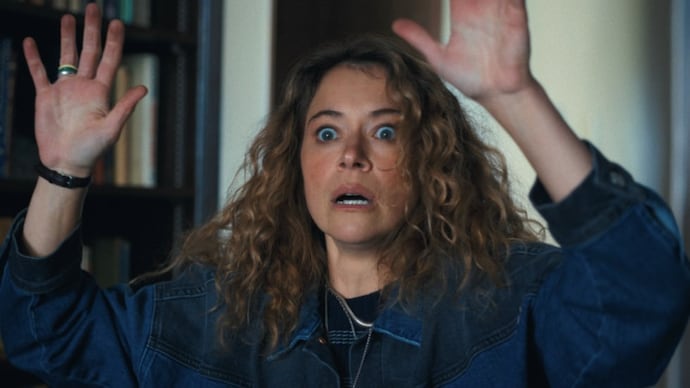
What makes Maximum Pleasure Guaranteed work is that it never portrays Paula as a flawless crime-solving hero. She is overwhelmed, impulsive and constantly operating at the edge of emotional collapse. Tatiana Maslany plays her with the exact mix of panic, vulnerability and dry humour needed to keep the show grounded even when the plot spirals into complete absurdity.
And honestly, Maslany is the heart of this series.
Even when the writing occasionally becomes overcrowded with twists, conspiracies and suspiciously dramatic people lurking in dimly lit rooms, she keeps the emotional centre intact. Paula’s desperation feels believable because Maslany never overplays her. She makes even the dumbest decisions feel strangely understandable.
Opposite her, Jake Johnson brings a quieter tension as Karl, Paula’s ex-husband. He is caught somewhere between concern, frustration and exhaustion watching his former partner unravel in real time. Their dynamic feels painfully real in places – two people trying to co-parent while also carrying years of unresolved resentment.
Then comes Jessy Hodges as Mallory, who quickly becomes one of the more compelling sources of conflict in the show. Mallory walks into scenes carrying the exact kind of energy that makes one instantly suspicious. The tension she brings, especially within Paula’s increasingly chaotic personal life, adds another layer to the story’s already unstable emotional ecosystem.
Together, Jake Johnson and Jessy Hodges create the kind of conflict that quietly powers the show beneath all the thriller mechanics. While the murders and conspiracies keep the plot moving, it is the interpersonal messiness that keeps things interesting.
The supporting cast also ends up becoming one of the show’s strongest assets. Charlie Hall and Kiarra Hamagami Goldberg bring surprising charm as Paula’s younger co-workers, Geri and Rudy. Their constant bickering – whether about sandwich ratios or Paula’s increasingly terrible investigative instincts – adds much-needed humour relief to the series. Even when the plot becomes chaotic, the duo keeps the energy light and entertaining.
Then there is Dolly de Leon as Detective Gonzalez, who steals scenes with her dry deadpan delivery and permanently exhausted energy. Murray Bartlett also leaves an impression as one of Trevor’s mysterious associates. Bartlett plays the role with unpredictable ease, shifting between charming, unsettling, vulnerable and manipulative, often within the same scene.
The series often feels like it is juggling five different genres at the same time. One moment it is a suburban comedy about divorced parenting. The next, it becomes a noir thriller involving blackmail and surveillance. Then suddenly somebody is delivering deeply emotional monologues in a parking lot at midnight. Oddly enough, the tonal inconsistency becomes part of the charm.
Director David Gordon Green and writer David J Rosen lean fully into the chaos instead of trying to smooth it out. The pacing moves fast, the humour stays dark, and the show constantly gives off the energy of people making terrible decisions under pressure. Sometimes it works brilliantly. Sometimes it feels slightly overstuffed.
The writing also occasionally struggles under the weight of its own ambition. There are moments where the series introduces one twist too many. The mystery itself can become convoluted, especially once the show starts juggling blackmail schemes, scams and criminal conspiracies simultaneously.
But Maximum Pleasure Guaranteed remains consistently watchable because, despite the narrative chaos, the characters are entertaining enough to keep binging.
Visually, the show captures a very specific modern anxiety - lonely people trapped inside digital lives, constantly searching for connection while also distrusting everyone around them. There is something both funny and deeply uncomfortable about how quickly Paula’s ordinary suburban existence collapses after one online interaction.
The series also smartly avoids turning sex work into moral commentary. Instead, it treats the digital underworld surrounding Trevor with curiosity rather than judgment, allowing the story to focus more on loneliness, desperation and manipulation in the internet age.
Maximum Pleasure Guaranteed is not always elegant, but as a darkly funny thriller, the series manages to stay entertaining even when it threatens to lose control.
Sometimes, all a thriller really needs is one woman, one terrible decision and absolutely no exit strategy.
Maximum Pleasure Guaranteed premiered on May 20 on Apple TV, with its first two episodes. The remaining eight episodes of the 10-episode season will release weekly on Wednesdays until the finale on July 15, 2026.
There are specific kinds of series that begin with one bad decision and then spend the next eight episodes (in this case: ten) aggressively making things worse for everyone involved. Maximum Pleasure Guaranteed proudly belongs to that category.
Apple TV’s dark comedy-thriller stars Tatiana Maslany as Paula, a recently divorced mother already juggling custody battles, emotional burnout and the general exhaustion of modern adulthood. Naturally, this is also the exact moment she finds herself pulled into a bizarre rabbit hole involving online cam work, blackmail, murder, shady men and enough emotional chaos to make therapy sound like a survival necessity.
The series kicks off when Paula witnesses what appears to be a violent attack during an online interaction with Trevor, a cam performer (aka webcam model) played by Brandon Flynn. The police dismiss it as a scam. Paula, however, refuses to let it go.
One questionable decision later, she is suddenly investigating crimes while simultaneously trying to function like a normal suburban mother. Which, to be fair, is already a full-time job.
What makes Maximum Pleasure Guaranteed work is that it never portrays Paula as a flawless crime-solving hero. She is overwhelmed, impulsive and constantly operating at the edge of emotional collapse. Tatiana Maslany plays her with the exact mix of panic, vulnerability and dry humour needed to keep the show grounded even when the plot spirals into complete absurdity.
And honestly, Maslany is the heart of this series.
Even when the writing occasionally becomes overcrowded with twists, conspiracies and suspiciously dramatic people lurking in dimly lit rooms, she keeps the emotional centre intact. Paula’s desperation feels believable because Maslany never overplays her. She makes even the dumbest decisions feel strangely understandable.
Opposite her, Jake Johnson brings a quieter tension as Karl, Paula’s ex-husband. He is caught somewhere between concern, frustration and exhaustion watching his former partner unravel in real time. Their dynamic feels painfully real in places – two people trying to co-parent while also carrying years of unresolved resentment.
Then comes Jessy Hodges as Mallory, who quickly becomes one of the more compelling sources of conflict in the show. Mallory walks into scenes carrying the exact kind of energy that makes one instantly suspicious. The tension she brings, especially within Paula’s increasingly chaotic personal life, adds another layer to the story’s already unstable emotional ecosystem.
Together, Jake Johnson and Jessy Hodges create the kind of conflict that quietly powers the show beneath all the thriller mechanics. While the murders and conspiracies keep the plot moving, it is the interpersonal messiness that keeps things interesting.
The supporting cast also ends up becoming one of the show’s strongest assets. Charlie Hall and Kiarra Hamagami Goldberg bring surprising charm as Paula’s younger co-workers, Geri and Rudy. Their constant bickering – whether about sandwich ratios or Paula’s increasingly terrible investigative instincts – adds much-needed humour relief to the series. Even when the plot becomes chaotic, the duo keeps the energy light and entertaining.
Then there is Dolly de Leon as Detective Gonzalez, who steals scenes with her dry deadpan delivery and permanently exhausted energy. Murray Bartlett also leaves an impression as one of Trevor’s mysterious associates. Bartlett plays the role with unpredictable ease, shifting between charming, unsettling, vulnerable and manipulative, often within the same scene.
The series often feels like it is juggling five different genres at the same time. One moment it is a suburban comedy about divorced parenting. The next, it becomes a noir thriller involving blackmail and surveillance. Then suddenly somebody is delivering deeply emotional monologues in a parking lot at midnight. Oddly enough, the tonal inconsistency becomes part of the charm.
Director David Gordon Green and writer David J Rosen lean fully into the chaos instead of trying to smooth it out. The pacing moves fast, the humour stays dark, and the show constantly gives off the energy of people making terrible decisions under pressure. Sometimes it works brilliantly. Sometimes it feels slightly overstuffed.
The writing also occasionally struggles under the weight of its own ambition. There are moments where the series introduces one twist too many. The mystery itself can become convoluted, especially once the show starts juggling blackmail schemes, scams and criminal conspiracies simultaneously.
But Maximum Pleasure Guaranteed remains consistently watchable because, despite the narrative chaos, the characters are entertaining enough to keep binging.
Visually, the show captures a very specific modern anxiety - lonely people trapped inside digital lives, constantly searching for connection while also distrusting everyone around them. There is something both funny and deeply uncomfortable about how quickly Paula’s ordinary suburban existence collapses after one online interaction.
The series also smartly avoids turning sex work into moral commentary. Instead, it treats the digital underworld surrounding Trevor with curiosity rather than judgment, allowing the story to focus more on loneliness, desperation and manipulation in the internet age.
Maximum Pleasure Guaranteed is not always elegant, but as a darkly funny thriller, the series manages to stay entertaining even when it threatens to lose control.
Sometimes, all a thriller really needs is one woman, one terrible decision and absolutely no exit strategy.
Maximum Pleasure Guaranteed premiered on May 20 on Apple TV, with its first two episodes. The remaining eight episodes of the 10-episode season will release weekly on Wednesdays until the finale on July 15, 2026.

