Gram Chikitsalay Season 2 review: TVF's most underrated gem just got better
Gram Chikitsalay Season 2 review: Dr Prabhat Sinha returns to Bhatkandi as his underused health centre battles the local quack's popularity. Season 2 uses humour and chaos to explore rural healthcare, superstition and small-town dignity.
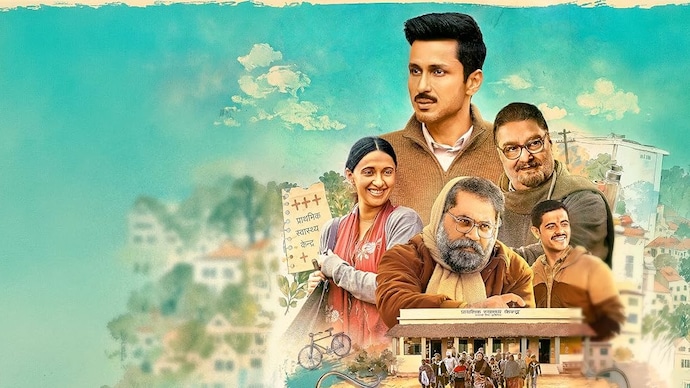
There is a scene in Gram Chikitsalay Season 2 where a woman goes into labour and the local quack's expert medical advice is — a havan. She is then bundled into a cart and rushed to the Primary Health Centre (PHC). It is absurd, might be funny to some, but it is uncomfortably close to the truth. That, in a nutshell, is what this show does best.
Season 2 starts off with Dr Prabhat Sinha (Amol Parashar) still striving to solve issues while running a PHC in Bhatkandi, TVF's fictional Jharkhand village. Season 1 ended with a small but significant win — he had earned his first real patient. Season 2 picks up with the PHC's teething problems more or less sorted, except for one stubborn issue: in a village of 5,000 people, Prabhat is lucky if he sees 10 to 15 patients a day. Meanwhile, across the lane, Chetak Kumar (Vinay Pathak) has a waiting room so full it would make a Delhi specialist envious. And his prescription pad includes toddy (a fermented local drink) for kidney stones and rituals for everything else.
That contrast powers the season. Prabhat, the idealistic doctor who chose this life willingly, is still stubborn about doing things the right way. This time, the adarsh doctor's goal is to win the Adarsh PHC award, which, as his neighbour Dr Gargi Singh (Akansha Ranjan) points out, would also ensure a steady medicine supply from the Chief Minister's Office (CMO). In other words, it is less ambition and more survival dressed up as recognition.
The writing by Vaibhav-Shreya, under the creation of Deepak Kumar Mishra and Arunabh Kumar, keeps the humour rooted. Ramavtar, the man who last season threatened to swallow sulfa poison (a form of pesticide) if Prabhat dared touch his crops, shuffles into Chetak's clinic with back pain. Unable to pay the fees, he half-heartedly leaves behind his bottle of toddy as collateral. That's how rural economics work at times.
Amol Parashar holds the show together with conviction. He brings a sincerity to Prabhat that sometimes tips into self-righteousness. He won't abandon his core principles just to fit in, please a CMO or some Bada Babu to get his work done.
Vinay Pathak is quite convincing as the local quack Chetak. He is the kind of performer who can make you laugh and wince in the same breath. Anandeshwar Dwivedi as the quirky compounder Bhutani, continues to be a scene-stealer with his one-liners.
And Akash Makhija — yes, the one who genuinely unsettled you in Raakh as Babu — returns as Govind — and delivers a performance completely different from the previous one. Govind is navigating his own crisis this season: his 11-month contract is up, he needs a recommendation letter from the CMO, and he wants Rs 1.5 lakh as a bribe. It's a subplot that could easily have been a sidebar but lands as something more affecting.
Akansha Ranjan gets considerably more to do this season as Gargi. Whether she is sourcing a medicine Prabhat's dispensary doesn't stock or helping set up a newly-painted clinic when Prabhat is busy with a snake-bite patient, she is a steady, engaging presence. There is no romantic arc yet, but the bickering has begun. Make of that what you will.
The show also earns bonus points for its cameos. Popular Bhojpuri star Dinesh Lal Yadav aka Nirhaua, who was recently seen in Netflix's Maamla Legal Hai -- shows up as the CMO Babu Sahab. And Panchayat fans will catch Binod (Ashok Pathak) and Banrakas aka Bhushan (Durgesh Kumar) in special appearances. There is even a "Dekh Raha Hai Binod" moment, neatly repurposed for a Bhatkandi twist. It lands exactly as well as you'd hope.
Directed by Lalitam Anand, the show looks the part. The cinematography captures rural India without romanticising or mocking it. The fictional Jharkhand village (shot in Madhya Pradesh) continues to feel completely lived-in. The show leans into local detail this season - the dialect, the customs, the gupchup (that's pani puri or golgappas to the rest of you), and the particular chaos of a midnight wedding where children fall asleep mid-ceremony. There's a pakadwa vivaah (groom-kidnapping) subplot too, refreshingly free of guns and gangsters, which gives the show one of its more entertaining twists.
One small drawback is that Prabhat Sinha does occasionally remind you a little too much of Abhishek Tripathi, our very own Sachiv Ji from Panchayat — the outsider who can't quite crack the unwritten rules of village life. Since both shows come from the same creators, they share a similar tone. However, while Panchayat focusses on bureaucracy and politics, Gram Chikitsalay has its own lane: healthcare, superstition and the everyday struggles of people who deserve better systems and support.
Even with its many strengths, Gram Chikitsalay Season 2 occasionally struggles with pacing. The story spends a lot of time exploring certain plot points, which slows the momentum and can make some parts feel less engaging. While the show's nuanced portrayal of village life and social issues remains one of its greatest strengths, a few scenes either linger longer than necessary or fail to justify the screen time they occupy. As a result, some moments lose their emotional weight. The season also lacks truly standout highs.
Gram Chikitsalay Season 2 is warm and funny — a show that knows exactly what it is and does it well. It won't rattle your world, but it will occasionally make you smile, occasionally wince, and will make you think a little harder about what it actually means to fix a broken system from the inside. Prabhat Sinha is still at it, and honestly, that's enough.
Gram Chikitsalay Season 2 is currently streaming on Prime Video.
There is a scene in Gram Chikitsalay Season 2 where a woman goes into labour and the local quack's expert medical advice is — a havan. She is then bundled into a cart and rushed to the Primary Health Centre (PHC). It is absurd, might be funny to some, but it is uncomfortably close to the truth. That, in a nutshell, is what this show does best.
Season 2 starts off with Dr Prabhat Sinha (Amol Parashar) still striving to solve issues while running a PHC in Bhatkandi, TVF's fictional Jharkhand village. Season 1 ended with a small but significant win — he had earned his first real patient. Season 2 picks up with the PHC's teething problems more or less sorted, except for one stubborn issue: in a village of 5,000 people, Prabhat is lucky if he sees 10 to 15 patients a day. Meanwhile, across the lane, Chetak Kumar (Vinay Pathak) has a waiting room so full it would make a Delhi specialist envious. And his prescription pad includes toddy (a fermented local drink) for kidney stones and rituals for everything else.
That contrast powers the season. Prabhat, the idealistic doctor who chose this life willingly, is still stubborn about doing things the right way. This time, the adarsh doctor's goal is to win the Adarsh PHC award, which, as his neighbour Dr Gargi Singh (Akansha Ranjan) points out, would also ensure a steady medicine supply from the Chief Minister's Office (CMO). In other words, it is less ambition and more survival dressed up as recognition.
The writing by Vaibhav-Shreya, under the creation of Deepak Kumar Mishra and Arunabh Kumar, keeps the humour rooted. Ramavtar, the man who last season threatened to swallow sulfa poison (a form of pesticide) if Prabhat dared touch his crops, shuffles into Chetak's clinic with back pain. Unable to pay the fees, he half-heartedly leaves behind his bottle of toddy as collateral. That's how rural economics work at times.
Amol Parashar holds the show together with conviction. He brings a sincerity to Prabhat that sometimes tips into self-righteousness. He won't abandon his core principles just to fit in, please a CMO or some Bada Babu to get his work done.
Vinay Pathak is quite convincing as the local quack Chetak. He is the kind of performer who can make you laugh and wince in the same breath. Anandeshwar Dwivedi as the quirky compounder Bhutani, continues to be a scene-stealer with his one-liners.
And Akash Makhija — yes, the one who genuinely unsettled you in Raakh as Babu — returns as Govind — and delivers a performance completely different from the previous one. Govind is navigating his own crisis this season: his 11-month contract is up, he needs a recommendation letter from the CMO, and he wants Rs 1.5 lakh as a bribe. It's a subplot that could easily have been a sidebar but lands as something more affecting.
Akansha Ranjan gets considerably more to do this season as Gargi. Whether she is sourcing a medicine Prabhat's dispensary doesn't stock or helping set up a newly-painted clinic when Prabhat is busy with a snake-bite patient, she is a steady, engaging presence. There is no romantic arc yet, but the bickering has begun. Make of that what you will.
The show also earns bonus points for its cameos. Popular Bhojpuri star Dinesh Lal Yadav aka Nirhaua, who was recently seen in Netflix's Maamla Legal Hai -- shows up as the CMO Babu Sahab. And Panchayat fans will catch Binod (Ashok Pathak) and Banrakas aka Bhushan (Durgesh Kumar) in special appearances. There is even a "Dekh Raha Hai Binod" moment, neatly repurposed for a Bhatkandi twist. It lands exactly as well as you'd hope.
Directed by Lalitam Anand, the show looks the part. The cinematography captures rural India without romanticising or mocking it. The fictional Jharkhand village (shot in Madhya Pradesh) continues to feel completely lived-in. The show leans into local detail this season - the dialect, the customs, the gupchup (that's pani puri or golgappas to the rest of you), and the particular chaos of a midnight wedding where children fall asleep mid-ceremony. There's a pakadwa vivaah (groom-kidnapping) subplot too, refreshingly free of guns and gangsters, which gives the show one of its more entertaining twists.
One small drawback is that Prabhat Sinha does occasionally remind you a little too much of Abhishek Tripathi, our very own Sachiv Ji from Panchayat — the outsider who can't quite crack the unwritten rules of village life. Since both shows come from the same creators, they share a similar tone. However, while Panchayat focusses on bureaucracy and politics, Gram Chikitsalay has its own lane: healthcare, superstition and the everyday struggles of people who deserve better systems and support.
Even with its many strengths, Gram Chikitsalay Season 2 occasionally struggles with pacing. The story spends a lot of time exploring certain plot points, which slows the momentum and can make some parts feel less engaging. While the show's nuanced portrayal of village life and social issues remains one of its greatest strengths, a few scenes either linger longer than necessary or fail to justify the screen time they occupy. As a result, some moments lose their emotional weight. The season also lacks truly standout highs.
Gram Chikitsalay Season 2 is warm and funny — a show that knows exactly what it is and does it well. It won't rattle your world, but it will occasionally make you smile, occasionally wince, and will make you think a little harder about what it actually means to fix a broken system from the inside. Prabhat Sinha is still at it, and honestly, that's enough.
Gram Chikitsalay Season 2 is currently streaming on Prime Video.

