Super Subbu review: Bold subject, good laughs, but an underwhelming finish
Super Subbu series review: Director Mallik Ram's Super Subbu, Netflix's first Telugu original series, stars Sundeep Kishan as a sex education officer posted to a remote Telangana village. The seven-episode drama is funny, warm and says something real - until the second half starts asking questions it has no intention of answering.
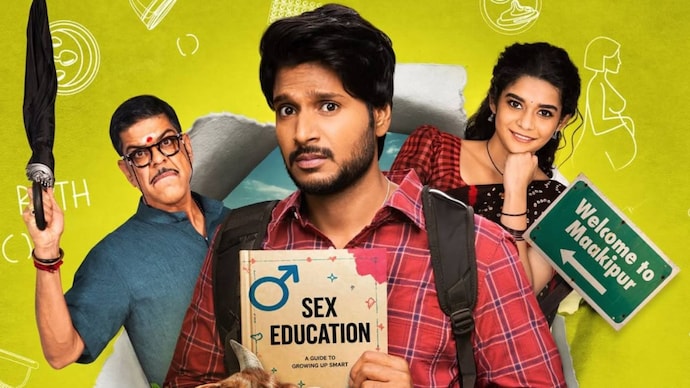
There are very few mainstream Indian shows willing to build an entire story around sex education without reducing it to awkward jokes or moral sermons. Super Subbu, Netflix's first Telugu original series, deserves credit for attempting exactly that. Directed by Mallik Ram, the seven-episode dramedy takes an inherently uncomfortable subject and wraps it in humour, family dynamics and small-town eccentricities. For a while, it works beautifully. But just when it seems ready to say something meaningful, the series retreats into safe territory, leaving several of its strongest ideas hanging.
Subramanyam "Subbu" Chillukuri (Sundeep Kishan) is appointed as a government Sex Education Officer and transferred to Maakipur, a conservative Telangana village where discussing intimacy is considered more scandalous than the ignorance surrounding it. Every awareness session turns into a battle, every conversation is met with suspicion, and Subbu quickly discovers that changing mindsets is far more difficult than distributing government pamphlets.
Rather than treating the village as a caricature, Mallik Ram fills it with people who feel lived-in. The humour grows naturally from everyday interactions instead of exaggerated slapstick, making the show's early episodes consistently engaging. Whether it is the awkward public meetings, the whispers among villagers or Subbu's repeated failed attempts to explain basic concepts, the comedy rarely feels forced.
At the heart of the series, however, is not the government assignment but the relationship between Subbu and his father, Kukkuteshwar Rao, played with remarkable restraint by Murali Sharma. A strict schoolteacher shaped by deeply conservative values, he represents an entire generation that refuses to acknowledge conversations around sex despite being responsible for educating children. Murali Sharma never exaggerates the character into a stereotypical authoritarian father. His quiet conviction makes the emotional distance between father and son all the more believable.
Sundeep Kishan complements him with one of his most understated performances in recent years. Instead of playing Subbu as an overconfident reformer, he allows the character's uncertainty to surface. He stumbles, hesitates and constantly questions whether he is the right person for the job. That vulnerability keeps the audience invested throughout.
The supporting cast further strengthens the series. Getup Srinu delivers several of the show's funniest moments without trying too hard, while Brahmanandam and Sampoornesh Babu make effective appearances that blend seamlessly into the narrative. Mithila Palkar, as Swathi, brings a quiet sincerity to her role. One of her conversations about women's agency stands out precisely because the show resists melodrama and allows the emotion to emerge organically.
What also deserves appreciation is the show's willingness to occasionally abandon comedy altogether. Certain scenes discussing menstruation, reproductive health and societal shame are handled with surprising maturity. They avoid becoming preachy while acknowledging how deeply misinformation has shaped generations.
Unfortunately, the confidence that defines the first half slowly fades. The narrative introduces emotional conflicts and social questions that promise satisfying pay-offs but rarely delivers them. The father-son relationship, arguably the strongest thread in the series, reaches a resolution that feels incomplete rather than earned. Likewise, the impact of Subbu's work on the village remains frustratingly vague. For a show centred on transformation, it offers very little evidence that anyone has actually changed.
The latter episodes also begin to drift into unrelated subplots that dilute the central narrative. Instead of deepening the themes already in place, they create diversions that never fully justify their presence. By the time the finale arrives, it becomes evident that the creators are preserving several threads for another season. While there is nothing wrong with planning ahead, the first season struggles to provide emotional closure on its own.
Super Subbu is admirable for choosing a subject Indian entertainment has largely avoided and for treating it with empathy rather than sensationalism. Its performances are consistently strong, the humour is rooted in character, and its social observations often feel authentic. Yet, a hesitant second half prevents it from becoming the memorable series it had the potential to be. It starts an important conversation with confidence but leaves before finishing it.
There are very few mainstream Indian shows willing to build an entire story around sex education without reducing it to awkward jokes or moral sermons. Super Subbu, Netflix's first Telugu original series, deserves credit for attempting exactly that. Directed by Mallik Ram, the seven-episode dramedy takes an inherently uncomfortable subject and wraps it in humour, family dynamics and small-town eccentricities. For a while, it works beautifully. But just when it seems ready to say something meaningful, the series retreats into safe territory, leaving several of its strongest ideas hanging.
Subramanyam "Subbu" Chillukuri (Sundeep Kishan) is appointed as a government Sex Education Officer and transferred to Maakipur, a conservative Telangana village where discussing intimacy is considered more scandalous than the ignorance surrounding it. Every awareness session turns into a battle, every conversation is met with suspicion, and Subbu quickly discovers that changing mindsets is far more difficult than distributing government pamphlets.
Rather than treating the village as a caricature, Mallik Ram fills it with people who feel lived-in. The humour grows naturally from everyday interactions instead of exaggerated slapstick, making the show's early episodes consistently engaging. Whether it is the awkward public meetings, the whispers among villagers or Subbu's repeated failed attempts to explain basic concepts, the comedy rarely feels forced.
At the heart of the series, however, is not the government assignment but the relationship between Subbu and his father, Kukkuteshwar Rao, played with remarkable restraint by Murali Sharma. A strict schoolteacher shaped by deeply conservative values, he represents an entire generation that refuses to acknowledge conversations around sex despite being responsible for educating children. Murali Sharma never exaggerates the character into a stereotypical authoritarian father. His quiet conviction makes the emotional distance between father and son all the more believable.
Sundeep Kishan complements him with one of his most understated performances in recent years. Instead of playing Subbu as an overconfident reformer, he allows the character's uncertainty to surface. He stumbles, hesitates and constantly questions whether he is the right person for the job. That vulnerability keeps the audience invested throughout.
The supporting cast further strengthens the series. Getup Srinu delivers several of the show's funniest moments without trying too hard, while Brahmanandam and Sampoornesh Babu make effective appearances that blend seamlessly into the narrative. Mithila Palkar, as Swathi, brings a quiet sincerity to her role. One of her conversations about women's agency stands out precisely because the show resists melodrama and allows the emotion to emerge organically.
What also deserves appreciation is the show's willingness to occasionally abandon comedy altogether. Certain scenes discussing menstruation, reproductive health and societal shame are handled with surprising maturity. They avoid becoming preachy while acknowledging how deeply misinformation has shaped generations.
Unfortunately, the confidence that defines the first half slowly fades. The narrative introduces emotional conflicts and social questions that promise satisfying pay-offs but rarely delivers them. The father-son relationship, arguably the strongest thread in the series, reaches a resolution that feels incomplete rather than earned. Likewise, the impact of Subbu's work on the village remains frustratingly vague. For a show centred on transformation, it offers very little evidence that anyone has actually changed.
The latter episodes also begin to drift into unrelated subplots that dilute the central narrative. Instead of deepening the themes already in place, they create diversions that never fully justify their presence. By the time the finale arrives, it becomes evident that the creators are preserving several threads for another season. While there is nothing wrong with planning ahead, the first season struggles to provide emotional closure on its own.
Super Subbu is admirable for choosing a subject Indian entertainment has largely avoided and for treating it with empathy rather than sensationalism. Its performances are consistently strong, the humour is rooted in character, and its social observations often feel authentic. Yet, a hesitant second half prevents it from becoming the memorable series it had the potential to be. It starts an important conversation with confidence but leaves before finishing it.

