The East Palace review: Nam Joo-hyuk's comeback deserves a stronger story
Netflix's The East Palace is an atmospheric supernatural drama with striking visuals and rich Korean folklore. Nam Joo-hyuk impresses in his comeback. However, the series falls short of delivering an emotional payoff.
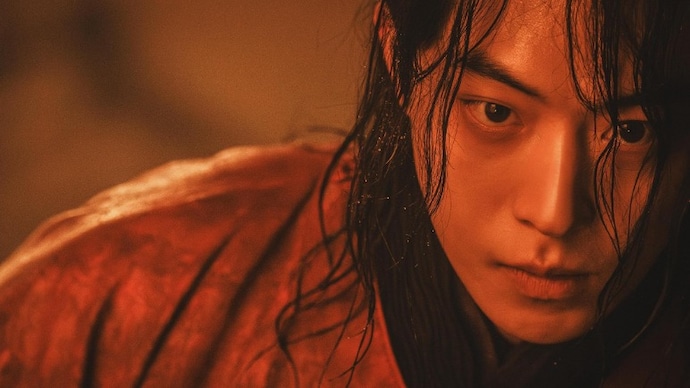
A palace is only as compelling as the secrets it keeps. New K-drama The East Palace certainly has plenty of them. Cursed corridors, restless spirits, forgotten rituals and political conspiracies seep into almost every frame of Netflix’s latest Korean supernatural period drama. It is visually rich, steeped in Korean folklore and mounted with the kind of cinematic ambition that immediately sets it apart from the usual palace sageuk.
Yet for all its ghosts, The East Palace struggles with a surprisingly common problem. It never quite tells us who we’re supposed to root for.
Much of the anticipation surrounding the series rests on Nam Joo-hyuk’s return to acting following his military service, and the actor slips back into leading-man territory with admirable ease. Playing Gu-cheon, a royal archivist drawn into a string of unexplained deaths and supernatural disturbances inside the palace, Nam brings the quiet restraint that has long defined his performances. He isn’t interested in playing another swaggering fantasy hero. Instead, Gu-cheon observes, questions, and slowly pieces together a mystery far bigger than himself.
It is a measured performance. One that deserved a stronger screenplay.
The series pairs him with Roh Yoon-seo’s Saeng-gang, a court maid with an uncanny ability to communicate with spirits. Their partnership has all the ingredients of a compelling supernatural mystery. She trusts instinct where he relies on logic. Together, they navigate haunted chambers, royal secrets and ancient curses that refuse to stay buried. Roh, in particular, gives Saeng-gang an emotional openness that makes her instantly engaging, while Cho Seung-woo lends gravitas to the royal court, reminding viewers how effortlessly he can command a scene.
The performances are rarely the issue. The writing, however, is.
The East Palace spends so much time expanding its mythology that it forgets to deepen its characters. Every few episodes introduce another ghost, another curse or another revelation about the palace’s past. Individually, these twists are intriguing. Together, they begin to feel like pieces of an elaborate puzzle that never quite forms an emotional picture.
The mystery keeps growing even as the emotional stakes don’t. That’s what ultimately keeps the series at arm’s length. The best fantasy dramas understand that mythology is only as powerful as the people trapped inside it. The East Palace has plenty of beautifully imagined spirits, but very few moments that allow its characters to sit with fear, grief or loss before the story rushes to its next revelation.
There are glimpses of what the series could have been. Several exchanges between Gu-cheon and Saeng-gang after another supernatural encounter says more about their growing trust than several episodes of exposition. Moments where the palace falls silent, allowing its haunting atmosphere to do the storytelling, are often far more effective than lengthy explanations about curses and rituals.
The irony is that the series works best whenever it stops explaining itself.
Visually, however, there is very little to complain about. Director Choi Jung-kyu transforms the palace into a living presence, where every corridor feels heavy with history and every flickering lantern hints at another unseen visitor. The production design, costume work and visual effects never overwhelm the folklore; they complement it. Instead of relying on cheap scares, the horror grows from atmosphere, silence and the unsettling feeling that the palace remembers everything that happened within its walls.
It’s an impressive world to step into. It’s just one that remains emotionally distant.
Nam Joo-hyuk’s return is likely to be one of the series’ biggest talking points, and deservedly so. He delivers a mature, understated performance that marks a confident comeback after his hiatus. But Gu-cheon often feels more like our guide through the mystery than its emotional centre. That’s where The East Palace misses an opportunity.
Had the screenplay traded some of its increasingly convoluted lore for actual character building, the revelations might have carried genuine weight. Instead, the series keeps demanding one to admire its world more than invest in the people inhabiting it. And that’s a difficult balance to sustain.
The East Palace is never less than visually striking. Its folklore is fascinating, its atmosphere consistently eerie, and its cast fully committed to the material. But beneath the beautiful production and intricate mythology lies a story that never quite finds its emotional heartbeat.
Sometimes, the most memorable ghost stories aren’t the ones that frighten us.They’re the ones that give us someone worth mourning.
All eight episodes of The East Palace are now streaming on Netflix.
A palace is only as compelling as the secrets it keeps. New K-drama The East Palace certainly has plenty of them. Cursed corridors, restless spirits, forgotten rituals and political conspiracies seep into almost every frame of Netflix’s latest Korean supernatural period drama. It is visually rich, steeped in Korean folklore and mounted with the kind of cinematic ambition that immediately sets it apart from the usual palace sageuk.
Yet for all its ghosts, The East Palace struggles with a surprisingly common problem. It never quite tells us who we’re supposed to root for.
Much of the anticipation surrounding the series rests on Nam Joo-hyuk’s return to acting following his military service, and the actor slips back into leading-man territory with admirable ease. Playing Gu-cheon, a royal archivist drawn into a string of unexplained deaths and supernatural disturbances inside the palace, Nam brings the quiet restraint that has long defined his performances. He isn’t interested in playing another swaggering fantasy hero. Instead, Gu-cheon observes, questions, and slowly pieces together a mystery far bigger than himself.
It is a measured performance. One that deserved a stronger screenplay.
The series pairs him with Roh Yoon-seo’s Saeng-gang, a court maid with an uncanny ability to communicate with spirits. Their partnership has all the ingredients of a compelling supernatural mystery. She trusts instinct where he relies on logic. Together, they navigate haunted chambers, royal secrets and ancient curses that refuse to stay buried. Roh, in particular, gives Saeng-gang an emotional openness that makes her instantly engaging, while Cho Seung-woo lends gravitas to the royal court, reminding viewers how effortlessly he can command a scene.
The performances are rarely the issue. The writing, however, is.
The East Palace spends so much time expanding its mythology that it forgets to deepen its characters. Every few episodes introduce another ghost, another curse or another revelation about the palace’s past. Individually, these twists are intriguing. Together, they begin to feel like pieces of an elaborate puzzle that never quite forms an emotional picture.
The mystery keeps growing even as the emotional stakes don’t. That’s what ultimately keeps the series at arm’s length. The best fantasy dramas understand that mythology is only as powerful as the people trapped inside it. The East Palace has plenty of beautifully imagined spirits, but very few moments that allow its characters to sit with fear, grief or loss before the story rushes to its next revelation.
There are glimpses of what the series could have been. Several exchanges between Gu-cheon and Saeng-gang after another supernatural encounter says more about their growing trust than several episodes of exposition. Moments where the palace falls silent, allowing its haunting atmosphere to do the storytelling, are often far more effective than lengthy explanations about curses and rituals.
The irony is that the series works best whenever it stops explaining itself.
Visually, however, there is very little to complain about. Director Choi Jung-kyu transforms the palace into a living presence, where every corridor feels heavy with history and every flickering lantern hints at another unseen visitor. The production design, costume work and visual effects never overwhelm the folklore; they complement it. Instead of relying on cheap scares, the horror grows from atmosphere, silence and the unsettling feeling that the palace remembers everything that happened within its walls.
It’s an impressive world to step into. It’s just one that remains emotionally distant.
Nam Joo-hyuk’s return is likely to be one of the series’ biggest talking points, and deservedly so. He delivers a mature, understated performance that marks a confident comeback after his hiatus. But Gu-cheon often feels more like our guide through the mystery than its emotional centre. That’s where The East Palace misses an opportunity.
Had the screenplay traded some of its increasingly convoluted lore for actual character building, the revelations might have carried genuine weight. Instead, the series keeps demanding one to admire its world more than invest in the people inhabiting it. And that’s a difficult balance to sustain.
The East Palace is never less than visually striking. Its folklore is fascinating, its atmosphere consistently eerie, and its cast fully committed to the material. But beneath the beautiful production and intricate mythology lies a story that never quite finds its emotional heartbeat.
Sometimes, the most memorable ghost stories aren’t the ones that frighten us.They’re the ones that give us someone worth mourning.
All eight episodes of The East Palace are now streaming on Netflix.
A palace is only as compelling as the secrets it keeps. New K-drama The East Palace certainly has plenty of them. Cursed corridors, restless spirits, forgotten rituals and political conspiracies seep into almost every frame of Netflix’s latest Korean supernatural period drama. It is visually rich, steeped in Korean folklore and mounted with the kind of cinematic ambition that immediately sets it apart from the usual palace sageuk.
Yet for all its ghosts, The East Palace struggles with a surprisingly common problem. It never quite tells us who we’re supposed to root for.
Much of the anticipation surrounding the series rests on Nam Joo-hyuk’s return to acting following his military service, and the actor slips back into leading-man territory with admirable ease. Playing Gu-cheon, a royal archivist drawn into a string of unexplained deaths and supernatural disturbances inside the palace, Nam brings the quiet restraint that has long defined his performances. He isn’t interested in playing another swaggering fantasy hero. Instead, Gu-cheon observes, questions, and slowly pieces together a mystery far bigger than himself.
It is a measured performance. One that deserved a stronger screenplay.
The series pairs him with Roh Yoon-seo’s Saeng-gang, a court maid with an uncanny ability to communicate with spirits. Their partnership has all the ingredients of a compelling supernatural mystery. She trusts instinct where he relies on logic. Together, they navigate haunted chambers, royal secrets and ancient curses that refuse to stay buried. Roh, in particular, gives Saeng-gang an emotional openness that makes her instantly engaging, while Cho Seung-woo lends gravitas to the royal court, reminding viewers how effortlessly he can command a scene.
The performances are rarely the issue. The writing, however, is.
The East Palace spends so much time expanding its mythology that it forgets to deepen its characters. Every few episodes introduce another ghost, another curse or another revelation about the palace’s past. Individually, these twists are intriguing. Together, they begin to feel like pieces of an elaborate puzzle that never quite forms an emotional picture.
The mystery keeps growing even as the emotional stakes don’t. That’s what ultimately keeps the series at arm’s length. The best fantasy dramas understand that mythology is only as powerful as the people trapped inside it. The East Palace has plenty of beautifully imagined spirits, but very few moments that allow its characters to sit with fear, grief or loss before the story rushes to its next revelation.
There are glimpses of what the series could have been. Several exchanges between Gu-cheon and Saeng-gang after another supernatural encounter says more about their growing trust than several episodes of exposition. Moments where the palace falls silent, allowing its haunting atmosphere to do the storytelling, are often far more effective than lengthy explanations about curses and rituals.
The irony is that the series works best whenever it stops explaining itself.
Visually, however, there is very little to complain about. Director Choi Jung-kyu transforms the palace into a living presence, where every corridor feels heavy with history and every flickering lantern hints at another unseen visitor. The production design, costume work and visual effects never overwhelm the folklore; they complement it. Instead of relying on cheap scares, the horror grows from atmosphere, silence and the unsettling feeling that the palace remembers everything that happened within its walls.
It’s an impressive world to step into. It’s just one that remains emotionally distant.
Nam Joo-hyuk’s return is likely to be one of the series’ biggest talking points, and deservedly so. He delivers a mature, understated performance that marks a confident comeback after his hiatus. But Gu-cheon often feels more like our guide through the mystery than its emotional centre. That’s where The East Palace misses an opportunity.
Had the screenplay traded some of its increasingly convoluted lore for actual character building, the revelations might have carried genuine weight. Instead, the series keeps demanding one to admire its world more than invest in the people inhabiting it. And that’s a difficult balance to sustain.
The East Palace is never less than visually striking. Its folklore is fascinating, its atmosphere consistently eerie, and its cast fully committed to the material. But beneath the beautiful production and intricate mythology lies a story that never quite finds its emotional heartbeat.
Sometimes, the most memorable ghost stories aren’t the ones that frighten us.They’re the ones that give us someone worth mourning.
All eight episodes of The East Palace are now streaming on Netflix.

