The Four Seasons 2 review: A moving reminder that friendship needs boundaries too
In the messy aftermath of loss, The Four Seasons Season 2 finds beauty in letting go — proving that even the strongest bonds sometimes heal best with a little distance.
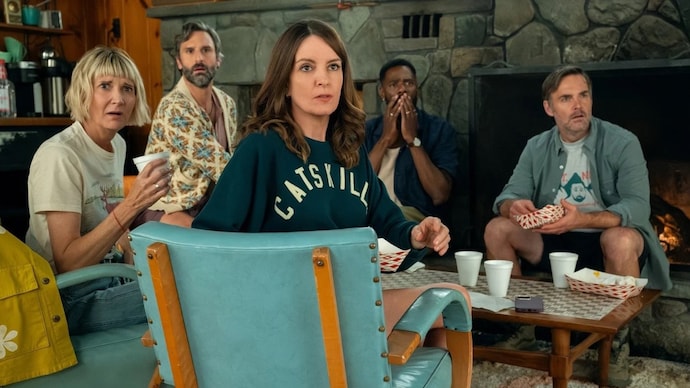
The Four Seasons Season 2 picks up roughly nine months after the sudden death of Nick and dives deeper into the lives of the surviving friends as they navigate grief, shifting dynamics, and the realisation that closeness can sometimes suffocate growth. Tina Fey’s sharp writing continues to anchor this ensemble comedy-drama, blending humour with raw emotional honesty in a way that feels refreshingly adult.
Season 2 explores ego, grief, and human vulnerabilities
What stands out most in the Netflix show is its satirical yet compassionate take on human relations in the modern age. Where many series romanticise unbreakable friendships, Season 2 bravely explores how egos, self-interest, past hurts, and individual vulnerabilities test even the deepest bonds.
In Season 1, the group’s long-standing tradition of seasonal trips unravels when Nick (Steve Carell) drops the bombshell that he’s divorcing Anne at their anniversary getaway. Tensions, secrets, and midlife reckonings follow across the year, culminating in Nick’s tragic car accident death. The finale leaves Ginny pregnant with his child, setting up the complicated new reality for everyone.
The group — Kate (Tina Fey) and Jack (Will Forte), Anne (Kerri Kenney-Silver), Danny (Colman Domingo) and Claude (Marco Calvani), along with Ginny (Erika Henningsen) and baby Gino — embarks on another cycle of seasonal trips, but this time the gatherings feel heavier, more fragile. From scattering Nick’s ashes amid logistical chaos to tense reunions in Italy, every interaction reveals cracks that grief has widened.
A modern take on boundaries and lifelong friendships
The series excels in showing how healing is rarely linear or collective. Anne’s arc, in particular, emerges as the emotional core. Still processing her unfinished divorce from Nick, she clashes with Ginny over inheritance and space, only to eventually form an unlikely co-parenting arrangement that turns codependent.
Her eventual decision to seek independence — asking Ginny to move out and choosing to stay in Italy — lands her with quiet power. It’s a modern perspective rarely seen on screen: genuine love for friends doesn’t always mean constant proximity. Sometimes the kindest thing is granting distance, so everyone can grow.
Moving forward without forced optimism
Kate and Jack’s marriage remains a source of grounded friction. Jack’s spiral into grief-fuelled depression and secret habits clashes with Kate’s attempts to push him forward, leading to honest confrontations during an impromptu marathon.
Danny and Claude’s move to Italy and subsequent pull back to family responsibilities in America further underline the theme — dreams of reinvention often bend under real-life duties. The show never tips into melodrama or forced optimism. Instead, it finds a mature middle ground between aspiration and contentment, acknowledging that life after loss is messy, repetitive at times, yet worth continuing together in new ways.
A talented ensemble delivers nuanced performances
Performances across the board feel lived-in and nuanced. Tina Fey and Will Forte bring their signature timing to marital weariness without caricature. Colman Domingo and Marco Calvani handle cultural and health-related tensions with subtlety, while the addition of Steven Pasquale and David Tennant in supporting roles adds fresh texture.
Erika Henningsen as Ginny grows impressively from awkward outsider to a young mother finding her footing. The chemistry among the core group remains the real backbone — their banter crackles even in sorrow, making the quieter moments of reflection hit harder.
That said, a few sequences of emotional confrontation do feel repetitive, echoing similar beats from Season 1 without always adding new layers. The pacing in the middle episodes stretches slightly as the show processes collective grief. Yet these are minor quibbles in a season that prioritises emotional authenticity over spectacle. The unconventional closure — friends adapting traditions, Anne embracing a solo chapter with a hint of new romance — feels closer to real life than tidy resolutions.
The Four Seasons Season 2 is not just about surviving loss; it’s about redefining what friendship means when everyone is changing. It unabashedly suggests that the closest bonds sometimes crave space, boundaries, and time apart — without diminishing care or history. In doing so, it offers a light-hearted yet profound reflection on vulnerabilities, healing, and the quiet strength found in letting go.
For anyone navigating midlife friendships, shifting priorities, or the long shadow of grief, this season resonates deeply. It maintains the soul of the original while evolving into something more mature and realistic.
Imperfect but heartfelt, it’s an engaging watch that lingers because it mirrors life’s untidy truths.
The Four Seasons Season 2 picks up roughly nine months after the sudden death of Nick and dives deeper into the lives of the surviving friends as they navigate grief, shifting dynamics, and the realisation that closeness can sometimes suffocate growth. Tina Fey’s sharp writing continues to anchor this ensemble comedy-drama, blending humour with raw emotional honesty in a way that feels refreshingly adult.
Season 2 explores ego, grief, and human vulnerabilities
What stands out most in the Netflix show is its satirical yet compassionate take on human relations in the modern age. Where many series romanticise unbreakable friendships, Season 2 bravely explores how egos, self-interest, past hurts, and individual vulnerabilities test even the deepest bonds.
In Season 1, the group’s long-standing tradition of seasonal trips unravels when Nick (Steve Carell) drops the bombshell that he’s divorcing Anne at their anniversary getaway. Tensions, secrets, and midlife reckonings follow across the year, culminating in Nick’s tragic car accident death. The finale leaves Ginny pregnant with his child, setting up the complicated new reality for everyone.
The group — Kate (Tina Fey) and Jack (Will Forte), Anne (Kerri Kenney-Silver), Danny (Colman Domingo) and Claude (Marco Calvani), along with Ginny (Erika Henningsen) and baby Gino — embarks on another cycle of seasonal trips, but this time the gatherings feel heavier, more fragile. From scattering Nick’s ashes amid logistical chaos to tense reunions in Italy, every interaction reveals cracks that grief has widened.
A modern take on boundaries and lifelong friendships
The series excels in showing how healing is rarely linear or collective. Anne’s arc, in particular, emerges as the emotional core. Still processing her unfinished divorce from Nick, she clashes with Ginny over inheritance and space, only to eventually form an unlikely co-parenting arrangement that turns codependent.
Her eventual decision to seek independence — asking Ginny to move out and choosing to stay in Italy — lands her with quiet power. It’s a modern perspective rarely seen on screen: genuine love for friends doesn’t always mean constant proximity. Sometimes the kindest thing is granting distance, so everyone can grow.
Moving forward without forced optimism
Kate and Jack’s marriage remains a source of grounded friction. Jack’s spiral into grief-fuelled depression and secret habits clashes with Kate’s attempts to push him forward, leading to honest confrontations during an impromptu marathon.
Danny and Claude’s move to Italy and subsequent pull back to family responsibilities in America further underline the theme — dreams of reinvention often bend under real-life duties. The show never tips into melodrama or forced optimism. Instead, it finds a mature middle ground between aspiration and contentment, acknowledging that life after loss is messy, repetitive at times, yet worth continuing together in new ways.
A talented ensemble delivers nuanced performances
Performances across the board feel lived-in and nuanced. Tina Fey and Will Forte bring their signature timing to marital weariness without caricature. Colman Domingo and Marco Calvani handle cultural and health-related tensions with subtlety, while the addition of Steven Pasquale and David Tennant in supporting roles adds fresh texture.
Erika Henningsen as Ginny grows impressively from awkward outsider to a young mother finding her footing. The chemistry among the core group remains the real backbone — their banter crackles even in sorrow, making the quieter moments of reflection hit harder.
That said, a few sequences of emotional confrontation do feel repetitive, echoing similar beats from Season 1 without always adding new layers. The pacing in the middle episodes stretches slightly as the show processes collective grief. Yet these are minor quibbles in a season that prioritises emotional authenticity over spectacle. The unconventional closure — friends adapting traditions, Anne embracing a solo chapter with a hint of new romance — feels closer to real life than tidy resolutions.
The Four Seasons Season 2 is not just about surviving loss; it’s about redefining what friendship means when everyone is changing. It unabashedly suggests that the closest bonds sometimes crave space, boundaries, and time apart — without diminishing care or history. In doing so, it offers a light-hearted yet profound reflection on vulnerabilities, healing, and the quiet strength found in letting go.
For anyone navigating midlife friendships, shifting priorities, or the long shadow of grief, this season resonates deeply. It maintains the soul of the original while evolving into something more mature and realistic.
Imperfect but heartfelt, it’s an engaging watch that lingers because it mirrors life’s untidy truths.

