How TVF cracked the code of middle-class storytelling
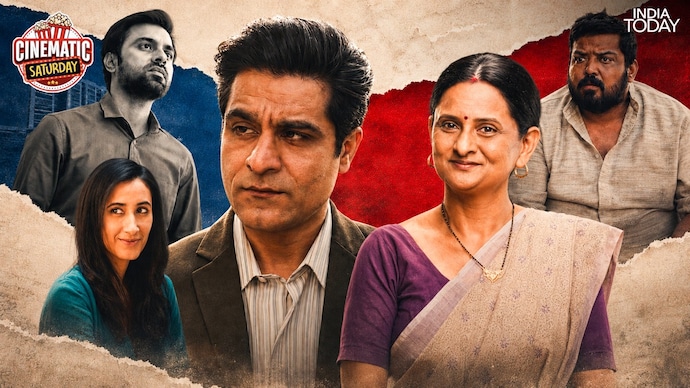
TVF built its success by telling honest, relatable stories of middle-class India instead of chasing escapist drama. In this weeks' Cinematic Saturday TVF founder Arunabh Kumar, actors, Namita Dubey and Sunny Hinduja, and writer Nitin Tiwari talk about how TVF shows made ordinary lives feel extraordinary.
There is a moment from a recent interview with Bobby Deol that has been doing the rounds, and it tells you everything you need to know about where TVF stands in Indian pop culture right now.
Bobby asks the journalist sitting across from him, "Have you seen TVF shows?" She shakes her head in denial. He doesn't miss a beat. "You should check out. You have seen Panchayat?" She nods. "That's TVF," he says simply.
And there it is. The journalist had seen Panchayat. One of the most loved web shows. She just had no idea who made it. Which is perhaps the most revealing thing about TVF's relationship with its audience. Their shows are so deeply woven into everyday conversation that people are binge-watching them, recommending them to family group chats, without necessarily knowing the name of the studio responsible.
Bobby then went on to praise TVF's Prime Video series Sapne vs Everyone with the kind of warmth that most actors reserve for their own films.
If that doesn't tell you that TVF has crossed over from cult favourite to genuine cultural institution, I don't know what will.
And TVF has not exactly been resting on past glory. We're not even halfway through the year, and the banner has already rolled out Gullak Season 5, Aspirants Season 3, The Pyramid Scheme and Sapne vs Everyone Season 2, among others. That's an enormous output for a studio that, on paper, makes shows about nothing very dramatic at all -- a government office, a coaching hub, a cramped middle-class living room.
While the rest of OTT chased bigger budgets, bigger twists and increasingly larger-than-life premises, TVF stayed put in the world of ordinary people. Aspirants, Panchayat, Kota Factory, Sandeep Bhaiya, Gullak -- these shows don't sell escape. They sell recognition. Exam pressure, job insecurity, family expectations, the constant struggle of figuring out your own worth -- this is the emotional territory TVF has made its own. We spoke to the people behind these stories -- founder Arunabh Kumar, writer Nitin Tiwari, and actors Namita Dubey and Sunny Hinduja -- to understand how a studio built an empire on lives that, on the surface, look entirely unremarkable.
What makes this especially interesting is that TVF's rise wasn't built on spotting a trend. If anything, it arrived before the market had fully realised there was an audience hungry for these stories. The company began making shows about engineers, students and jobseekers long before "relatable content" became a buzzword.
It started with a belief, not a strategy
When we asked Arunabh whether TVF's focus on the ordinary was a deliberate creative choice from day one, he didn't hesitate. "It stems from a fundamental belief that everyday lives contain extraordinary stories. When TVF started, much of mainstream entertainment was focused on larger-than-life narratives, while the experiences of students, young professionals, families, and people from small towns were often under-represented. We saw an opportunity to tell stories that felt authentic to the realities many Indians were living every day," he said.
"Whether it is Naveen (Naveen Kasturia) in Pitchers, or Dhairya (Namita Dubey) in Aspirants, we always try to reflect aspirational spirit of Indians.," he added.
Why the middle class feels "seen"
A lot of viewers say something similar about TVF: that it understands middle-class India in a way mainstream cinema rarely has. Arunabh's explanation is that despite how vast and varied India's middle class actually is, certain experiences cut across geography and language.
What makes the connection work, he believes, is specificity. "Whether it's the coaching lanes of Rajinder Nagar in Aspirants, the government office in Panchayat, the Mishra household in Gullak, or the classrooms of Kota Factory, or a clinic in Who’s your Gynac the details feel familiar because they are drawn from real observations and lived experiences," said the TVF founder.
And it shows in how people talk about the shows. "Viewers often tell us that they don't just watch these characters -- they know them. They see their friends, siblings, parents, teachers, or even themselves on screen," said the 43-year-old
So has TVF actually cracked some sort of code? Arunabh resists the framing.
Crediting much of this to his showrunners, he said, "We have a dedicated team of show runners/ creators like Deepak Kumar Mishra from Panchayat, Khushbu from Half CA, Vaibhav and Shalini in Very Parivarik who deep dive into the world of stories they work on and draw from personal experiences making it well crafted."
If anything, he insists, this isn't really about cracking a code at all. "TVF's success is less about cracking a code and more about recognising an audience that had long been underserved." He added that the shift goes both ways: "The popularity of TVF’s slice-of-life dramas today also reflects a broader shift in audience preferences. We just happen to be the early storytellers to identify and invest in that shift.
No big speeches, just small truths
How does TVF keep its emotional beats from tipping into melodrama? Arunabh said TVF's stories began with character rather than plot. The goal, he explained, was not to manufacture emotion but to create situations that felt familiar and authentic. "Real life isn't built around dramatic speeches," he said. "It lives in small conversations."
There's something personal underneath all this too. Arunabh links some of it to his own upbringing – studying alongside people from wildly different backgrounds and regions, and noticing how many of them, despite their differences, shared the same core values. "Our stories validate the dreams, anxieties, friendships, failures, and small victories that define the lives of millions of people in India. Shows like Aspirants, Panchayat and Gullak, remind viewers that their journeys matter too," he added.
When the writer's life bleeds into the script
Arunabh was candid about how much of this is personal. "Many Indians like me come from small towns. I grew up in Muzaffarpur in Bihar. However, regardless of where we come from, we understand what it feels like to carry expectations, whether they come from family or society."
The example he returns to is uncertainty. "With TVF too there was a time during the pandemic we were not sure if we could stay afloat. The uncertainty, anxiety was a true emotion I felt and I shared with my family and loved ones. When we created Aspirants, these were emotions we translated into the show as well," he added.
What "realism" actually means in the writers' room
One of TVF's biggest strengths is how real its world feels. Instead of glamorous sets and larger-than-life lifestyles, its shows are rooted in familiar places and everyday experiences. Whether it is the dusty villages of Panchayat or the crowded coaching centres of Kota Factory, the settings feel lived-in and believable. The characters are equally relatable. Characters like Jeetu Bhaiya, Meena and Abhishek Tripathi feel less like fictional creations and more like people viewers know from their own lives.
For writer Nitin Tiwari of Sandeep Bhaiya fame, realism isn't about getting every detail technically accurate -- it's about emotional honesty. "TVF started in a garage. From day one Arunabh Kumar ensured that the writers' room was democratic, with each member working towards only improving the story we are working on. This culture of giving our all to the best script has continued these part 15 years. For each one of us working on the TVF show, we dedicate our energies to only deliver the best possible narrative and character arc that will translate into great stories for the audience," he said.
"For us, realism is about emotional truth. We want characters to feel like people you know in real life," Tiwari said. He believed authentic settings, language and conflicts helped audiences recognise their own lives on screen. Realism, he added, also meant allowing characters to be flawed and imperfect because "people are rarely one-dimensional."
Tiwari says realism comes from authentic settings, language and flawed characters rather than perfect heroes.
The biggest misconception about slice-of-life writing, he says, is that nothing actually happens in it. "One of the biggest misconceptions is that nothing happens in slice-of-life stories. In reality, emotional shifts can be just as dramatic as physical events. A rejection, a difficult conversation, a moment of self-realisation, or a small act of kindness can completely change a character’s journey and equally influence the story itself. Writing slice-of-life stories requires tremendous discipline because audiences instantly recognise anything that feels forced or artificial. The challenge lies in making it organic and finding depth that may appear ordinary on the surface," he admitted.
Failure, too, is a recurring thread in TVF's writing, and Tiwari believes it's because failure is such a universal experience -- particularly for young Indians navigating brutally competitive systems, whether that's an entrance exam, a job hunt or an audition. "Failure isn’t something that we discuss as a finality of a character’s journey in TVF. Failures are more often seen as the hard truths that most people around us, including us personally experience. And why do we often show them, because that’s life - you fail, and you get up and move on. You don’t stay stuck," he said.
What actors notice when audiences talk back
If writers build the emotional architecture of these shows, actors become the final test of authenticity. The audience can usually tell within minutes whether a character feels lived-in or manufactured.
For Aspirants actor Namita Dubey, the connection comes down to honesty. "I think the biggest reason is honesty. TVF characters feel like people you already know. They are not superheroes or flawless figures. They struggle with things most people have experienced at some point in their lives: career uncertainty, family expectations, financial issues, friendship, self-doubt, and the fear of not being good enough."
She said she's lost count of how often viewers have told her they saw themselves in a character she played. "I've had countless people come up to me and say, 'I remembered when I went through something similar as your character does' or 'I know someone exactly like this character.' That's always the most rewarding feedback," said the actor.
The quiet power of Sandeep Bhaiya
Few supporting characters in recent Indian OTT shows have generated the kind of attachment that Sandeep Bhaiya did. Actor Sunny Hinduja puts this down to recognisability. Sandeep Bhaiya is the kind of person almost everyone has met at some point: someone who quietly guides others and keeps showing up without expecting anything back.
"What makes him special is that he is not defined by success in the conventional sense. He carries his own disappointments, but instead of becoming bitter, he chooses to help others move forward. I think audiences saw a lot of hope in that. In a world where success is often measured by results, Sandeep Bhaiya reminded people that character matters just as much," he said.
The response, he admitted, genuinely surprised the team -- viewers didn't just enjoy Sandeep Bhaiya, they felt emotionally invested in him, with many telling Hinduja that the character reminded them of a teacher, an elder brother or a mentor who had helped them through a difficult patch in their own lives.
Perhaps that's why TVF has remained relevant even as the OTT landscape has become increasingly crowded. Trends have come and gone. Genres have risen and fallen. But aspiration, disappointment, hope and belonging remain timeless subjects and TVF has spent over a decade learning how to tell those stories with unusual patience.
Strip away the polish, and TVF's formula isn't really a formula at all. It's a refusal to look away from the ordinary – the coaching centre, the panchayat office, the cramped family kitchen -- and a willingness to sit inside those spaces long enough to find the extraordinary feeling hiding within them. No villains, no melodrama, no spectacle. Just people trying to get through their days with a little more dignity than the day before.
That, perhaps, is why a Bollywood star reaching for Panchayat as his reference point makes complete sense. TVF didn't invent the middle-class story. It simply decided to finally tell it properly.
There is a moment from a recent interview with Bobby Deol that has been doing the rounds, and it tells you everything you need to know about where TVF stands in Indian pop culture right now.
Bobby asks the journalist sitting across from him, "Have you seen TVF shows?" She shakes her head in denial. He doesn't miss a beat. "You should check out. You have seen Panchayat?" She nods. "That's TVF," he says simply.
And there it is. The journalist had seen Panchayat. One of the most loved web shows. She just had no idea who made it. Which is perhaps the most revealing thing about TVF's relationship with its audience. Their shows are so deeply woven into everyday conversation that people are binge-watching them, recommending them to family group chats, without necessarily knowing the name of the studio responsible.
Bobby then went on to praise TVF's Prime Video series Sapne vs Everyone with the kind of warmth that most actors reserve for their own films.
If that doesn't tell you that TVF has crossed over from cult favourite to genuine cultural institution, I don't know what will.
And TVF has not exactly been resting on past glory. We're not even halfway through the year, and the banner has already rolled out Gullak Season 5, Aspirants Season 3, The Pyramid Scheme and Sapne vs Everyone Season 2, among others. That's an enormous output for a studio that, on paper, makes shows about nothing very dramatic at all -- a government office, a coaching hub, a cramped middle-class living room.
While the rest of OTT chased bigger budgets, bigger twists and increasingly larger-than-life premises, TVF stayed put in the world of ordinary people. Aspirants, Panchayat, Kota Factory, Sandeep Bhaiya, Gullak -- these shows don't sell escape. They sell recognition. Exam pressure, job insecurity, family expectations, the constant struggle of figuring out your own worth -- this is the emotional territory TVF has made its own. We spoke to the people behind these stories -- founder Arunabh Kumar, writer Nitin Tiwari, and actors Namita Dubey and Sunny Hinduja -- to understand how a studio built an empire on lives that, on the surface, look entirely unremarkable.
What makes this especially interesting is that TVF's rise wasn't built on spotting a trend. If anything, it arrived before the market had fully realised there was an audience hungry for these stories. The company began making shows about engineers, students and jobseekers long before "relatable content" became a buzzword.
It started with a belief, not a strategy
When we asked Arunabh whether TVF's focus on the ordinary was a deliberate creative choice from day one, he didn't hesitate. "It stems from a fundamental belief that everyday lives contain extraordinary stories. When TVF started, much of mainstream entertainment was focused on larger-than-life narratives, while the experiences of students, young professionals, families, and people from small towns were often under-represented. We saw an opportunity to tell stories that felt authentic to the realities many Indians were living every day," he said.
"Whether it is Naveen (Naveen Kasturia) in Pitchers, or Dhairya (Namita Dubey) in Aspirants, we always try to reflect aspirational spirit of Indians.," he added.
Why the middle class feels "seen"
A lot of viewers say something similar about TVF: that it understands middle-class India in a way mainstream cinema rarely has. Arunabh's explanation is that despite how vast and varied India's middle class actually is, certain experiences cut across geography and language.
What makes the connection work, he believes, is specificity. "Whether it's the coaching lanes of Rajinder Nagar in Aspirants, the government office in Panchayat, the Mishra household in Gullak, or the classrooms of Kota Factory, or a clinic in Who’s your Gynac the details feel familiar because they are drawn from real observations and lived experiences," said the TVF founder.
And it shows in how people talk about the shows. "Viewers often tell us that they don't just watch these characters -- they know them. They see their friends, siblings, parents, teachers, or even themselves on screen," said the 43-year-old
So has TVF actually cracked some sort of code? Arunabh resists the framing.
Crediting much of this to his showrunners, he said, "We have a dedicated team of show runners/ creators like Deepak Kumar Mishra from Panchayat, Khushbu from Half CA, Vaibhav and Shalini in Very Parivarik who deep dive into the world of stories they work on and draw from personal experiences making it well crafted."
If anything, he insists, this isn't really about cracking a code at all. "TVF's success is less about cracking a code and more about recognising an audience that had long been underserved." He added that the shift goes both ways: "The popularity of TVF’s slice-of-life dramas today also reflects a broader shift in audience preferences. We just happen to be the early storytellers to identify and invest in that shift.
No big speeches, just small truths
How does TVF keep its emotional beats from tipping into melodrama? Arunabh said TVF's stories began with character rather than plot. The goal, he explained, was not to manufacture emotion but to create situations that felt familiar and authentic. "Real life isn't built around dramatic speeches," he said. "It lives in small conversations."
There's something personal underneath all this too. Arunabh links some of it to his own upbringing – studying alongside people from wildly different backgrounds and regions, and noticing how many of them, despite their differences, shared the same core values. "Our stories validate the dreams, anxieties, friendships, failures, and small victories that define the lives of millions of people in India. Shows like Aspirants, Panchayat and Gullak, remind viewers that their journeys matter too," he added.
When the writer's life bleeds into the script
Arunabh was candid about how much of this is personal. "Many Indians like me come from small towns. I grew up in Muzaffarpur in Bihar. However, regardless of where we come from, we understand what it feels like to carry expectations, whether they come from family or society."
The example he returns to is uncertainty. "With TVF too there was a time during the pandemic we were not sure if we could stay afloat. The uncertainty, anxiety was a true emotion I felt and I shared with my family and loved ones. When we created Aspirants, these were emotions we translated into the show as well," he added.
What "realism" actually means in the writers' room
One of TVF's biggest strengths is how real its world feels. Instead of glamorous sets and larger-than-life lifestyles, its shows are rooted in familiar places and everyday experiences. Whether it is the dusty villages of Panchayat or the crowded coaching centres of Kota Factory, the settings feel lived-in and believable. The characters are equally relatable. Characters like Jeetu Bhaiya, Meena and Abhishek Tripathi feel less like fictional creations and more like people viewers know from their own lives.
For writer Nitin Tiwari of Sandeep Bhaiya fame, realism isn't about getting every detail technically accurate -- it's about emotional honesty. "TVF started in a garage. From day one Arunabh Kumar ensured that the writers' room was democratic, with each member working towards only improving the story we are working on. This culture of giving our all to the best script has continued these part 15 years. For each one of us working on the TVF show, we dedicate our energies to only deliver the best possible narrative and character arc that will translate into great stories for the audience," he said.
"For us, realism is about emotional truth. We want characters to feel like people you know in real life," Tiwari said. He believed authentic settings, language and conflicts helped audiences recognise their own lives on screen. Realism, he added, also meant allowing characters to be flawed and imperfect because "people are rarely one-dimensional."
Tiwari says realism comes from authentic settings, language and flawed characters rather than perfect heroes.
The biggest misconception about slice-of-life writing, he says, is that nothing actually happens in it. "One of the biggest misconceptions is that nothing happens in slice-of-life stories. In reality, emotional shifts can be just as dramatic as physical events. A rejection, a difficult conversation, a moment of self-realisation, or a small act of kindness can completely change a character’s journey and equally influence the story itself. Writing slice-of-life stories requires tremendous discipline because audiences instantly recognise anything that feels forced or artificial. The challenge lies in making it organic and finding depth that may appear ordinary on the surface," he admitted.
Failure, too, is a recurring thread in TVF's writing, and Tiwari believes it's because failure is such a universal experience -- particularly for young Indians navigating brutally competitive systems, whether that's an entrance exam, a job hunt or an audition. "Failure isn’t something that we discuss as a finality of a character’s journey in TVF. Failures are more often seen as the hard truths that most people around us, including us personally experience. And why do we often show them, because that’s life - you fail, and you get up and move on. You don’t stay stuck," he said.
What actors notice when audiences talk back
If writers build the emotional architecture of these shows, actors become the final test of authenticity. The audience can usually tell within minutes whether a character feels lived-in or manufactured.
For Aspirants actor Namita Dubey, the connection comes down to honesty. "I think the biggest reason is honesty. TVF characters feel like people you already know. They are not superheroes or flawless figures. They struggle with things most people have experienced at some point in their lives: career uncertainty, family expectations, financial issues, friendship, self-doubt, and the fear of not being good enough."
She said she's lost count of how often viewers have told her they saw themselves in a character she played. "I've had countless people come up to me and say, 'I remembered when I went through something similar as your character does' or 'I know someone exactly like this character.' That's always the most rewarding feedback," said the actor.
The quiet power of Sandeep Bhaiya
Few supporting characters in recent Indian OTT shows have generated the kind of attachment that Sandeep Bhaiya did. Actor Sunny Hinduja puts this down to recognisability. Sandeep Bhaiya is the kind of person almost everyone has met at some point: someone who quietly guides others and keeps showing up without expecting anything back.
"What makes him special is that he is not defined by success in the conventional sense. He carries his own disappointments, but instead of becoming bitter, he chooses to help others move forward. I think audiences saw a lot of hope in that. In a world where success is often measured by results, Sandeep Bhaiya reminded people that character matters just as much," he said.
The response, he admitted, genuinely surprised the team -- viewers didn't just enjoy Sandeep Bhaiya, they felt emotionally invested in him, with many telling Hinduja that the character reminded them of a teacher, an elder brother or a mentor who had helped them through a difficult patch in their own lives.
Perhaps that's why TVF has remained relevant even as the OTT landscape has become increasingly crowded. Trends have come and gone. Genres have risen and fallen. But aspiration, disappointment, hope and belonging remain timeless subjects and TVF has spent over a decade learning how to tell those stories with unusual patience.
Strip away the polish, and TVF's formula isn't really a formula at all. It's a refusal to look away from the ordinary – the coaching centre, the panchayat office, the cramped family kitchen -- and a willingness to sit inside those spaces long enough to find the extraordinary feeling hiding within them. No villains, no melodrama, no spectacle. Just people trying to get through their days with a little more dignity than the day before.
That, perhaps, is why a Bollywood star reaching for Panchayat as his reference point makes complete sense. TVF didn't invent the middle-class story. It simply decided to finally tell it properly.

