Voicemails for Isabelle: Popular Netflix rom-com is really a love letter to sisters
Voicemails for Isabelle may be packaged as a Netflix romance, but its biggest love story belongs to sisters Jill and Isabelle. Here's why the film's emotional core has little to do with romance.
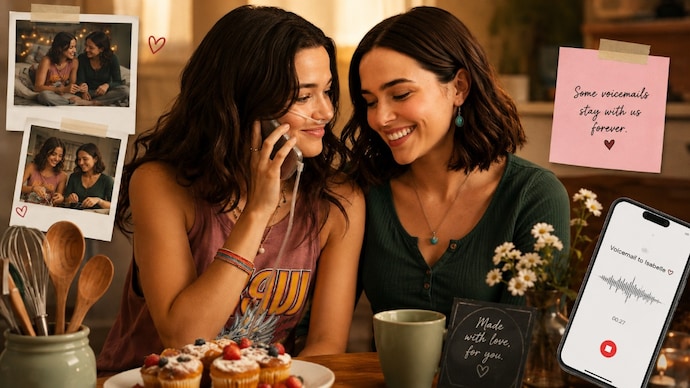
Let's imagine you're an ardent rom-com fan. You live for the slow burn, the rain-soaked confession, cosy cafe dates, playful banter, longing glances and that one declaration of love that melts you like a wax candle. Films like When Harry Met Sally, Notting Hill and even Netflix's own Nobody Wants This remind us why we keep returning to the genre. They make us feel lighter. They make us believe that love, in all its messy glory, is worth rooting for.
So, when a new rom-com lands on your Netflix homepage, chances are you'll press play without thinking twice. But here's the beautiful thing about love. It doesn't always belong to the people who kiss in the final act. Sometimes, the greatest love story isn't romantic at all. Sometimes, it's about two sisters who spend a lifetime finding new ways to love each other.
If you're still wondering where this is headed, let's stop being mysterious. We're talking about Voicemails for Isabelle, Netflix's latest romantic drama that follows the story of Jill (Zoey Deutch) as she copes with the heartbreaking loss of her sister, Izzy, aka Isabelle (Ciara Bravo), by continuing to leave her voicemails. It sounds devastating because it is.
Before we move forward, here's your official spoiler alert. If Voicemails for Isabelle is still sitting on your watchlist, now's the time to stop reading, grab a box of tissues and watch the film first. Come back once you've cried your eyes out. Trust us, it'll all hit differently.
Watch the trailer here:
Wes may be the love interest, but Izzy is the love story
On the surface, Voicemails for Isabelle follows a familiar rom-com blueprint. Jill's voicemails unexpectedly lead her to Wes (Nick Robinson), a charming stranger who slowly helps her open her heart again. But take Wes out of the story, and you'll realise the emotional foundation of the film barely changes.
Every meaningful moment traces back to Izzy. The film isn't really asking whether Jill will fall in love again. It's asking how you continue living after losing the person who knew you before you knew yourself. That becomes painfully clear during Jill's eulogy, where she says, "We didn't just get to be sisters. We got to be sisters together."
It's one of those rare movie lines that feels destined to live beyond the film itself. Much like Little Women reminded us that sisterhood could eclipse romance, or Frozen proved that true love could simply mean choosing your sister, Voicemails for Isabelle quietly tells us that the deepest relationships aren't always romantic.
The kitchen was where their love language began
One of the film's sweetest details is also one of its most heartbreaking. Jill didn't become a cook overnight. She learnt because she and Izzy spent years experimenting together in the kitchen, turning recipes into memories and ordinary afternoons into traditions.
Cooking wasn't simply a hobby. It became the language they spoke together. After Izzy's death, Jill's parents choose to use the college fund they had saved for Izzy to help Jill open her food truck. It's a decision born out of unimaginable grief, but it also becomes a reminder that Izzy continues helping her sister stand back up, even in her absence.
Every meal Jill serves feels like another conversation with her sister. Every recipe carries a memory.
The voicemails become more than conversations
Everyone grieves differently. Some people write letters. Some revisit old photographs. Jill leaves voicemails. Those messages become her way of holding on without refusing to move forward. Ironically, they are also what brings Wes into her life, proving that healing sometimes arrives through the most unexpected doors.
But even then, the romance never overshadows the relationship that sits at the centre of the film.
Without needing grand speeches or melodrama, it lands exactly where the film has been aiming all along. It reminds us that grief and love are often two sides of the same memory. That, sometimes the people who leave us never really leave. They simply become part of the voice inside our heads, the recipe we cook by instinct, the courage we borrow on difficult days.
Rom-coms have spent decades convincing us that love arrives holding flowers.
Voicemails for Isabelle gently argues that sometimes love arrives holding your hand in a childhood kitchen. Sometimes it lives inside an old voicemail you cannot bring yourself to delete. Sometimes it sounds like your sister laughing in another room, even when the room is empty.
Because romances may begin and end. People fall in love, fall apart and find each other again. But if Voicemails for Isabelle leaves you believing in anything, it is this: we don't just get to be sisters.
We get to be sisters together. And that, perhaps, is the greatest love story of them all.
Let's imagine you're an ardent rom-com fan. You live for the slow burn, the rain-soaked confession, cosy cafe dates, playful banter, longing glances and that one declaration of love that melts you like a wax candle. Films like When Harry Met Sally, Notting Hill and even Netflix's own Nobody Wants This remind us why we keep returning to the genre. They make us feel lighter. They make us believe that love, in all its messy glory, is worth rooting for.
So, when a new rom-com lands on your Netflix homepage, chances are you'll press play without thinking twice. But here's the beautiful thing about love. It doesn't always belong to the people who kiss in the final act. Sometimes, the greatest love story isn't romantic at all. Sometimes, it's about two sisters who spend a lifetime finding new ways to love each other.
If you're still wondering where this is headed, let's stop being mysterious. We're talking about Voicemails for Isabelle, Netflix's latest romantic drama that follows the story of Jill (Zoey Deutch) as she copes with the heartbreaking loss of her sister, Izzy, aka Isabelle (Ciara Bravo), by continuing to leave her voicemails. It sounds devastating because it is.
Before we move forward, here's your official spoiler alert. If Voicemails for Isabelle is still sitting on your watchlist, now's the time to stop reading, grab a box of tissues and watch the film first. Come back once you've cried your eyes out. Trust us, it'll all hit differently.
Watch the trailer here:
Wes may be the love interest, but Izzy is the love story
On the surface, Voicemails for Isabelle follows a familiar rom-com blueprint. Jill's voicemails unexpectedly lead her to Wes (Nick Robinson), a charming stranger who slowly helps her open her heart again. But take Wes out of the story, and you'll realise the emotional foundation of the film barely changes.
Every meaningful moment traces back to Izzy. The film isn't really asking whether Jill will fall in love again. It's asking how you continue living after losing the person who knew you before you knew yourself. That becomes painfully clear during Jill's eulogy, where she says, "We didn't just get to be sisters. We got to be sisters together."
It's one of those rare movie lines that feels destined to live beyond the film itself. Much like Little Women reminded us that sisterhood could eclipse romance, or Frozen proved that true love could simply mean choosing your sister, Voicemails for Isabelle quietly tells us that the deepest relationships aren't always romantic.
The kitchen was where their love language began
One of the film's sweetest details is also one of its most heartbreaking. Jill didn't become a cook overnight. She learnt because she and Izzy spent years experimenting together in the kitchen, turning recipes into memories and ordinary afternoons into traditions.
Cooking wasn't simply a hobby. It became the language they spoke together. After Izzy's death, Jill's parents choose to use the college fund they had saved for Izzy to help Jill open her food truck. It's a decision born out of unimaginable grief, but it also becomes a reminder that Izzy continues helping her sister stand back up, even in her absence.
Every meal Jill serves feels like another conversation with her sister. Every recipe carries a memory.
The voicemails become more than conversations
Everyone grieves differently. Some people write letters. Some revisit old photographs. Jill leaves voicemails. Those messages become her way of holding on without refusing to move forward. Ironically, they are also what brings Wes into her life, proving that healing sometimes arrives through the most unexpected doors.
But even then, the romance never overshadows the relationship that sits at the centre of the film.
Without needing grand speeches or melodrama, it lands exactly where the film has been aiming all along. It reminds us that grief and love are often two sides of the same memory. That, sometimes the people who leave us never really leave. They simply become part of the voice inside our heads, the recipe we cook by instinct, the courage we borrow on difficult days.
Rom-coms have spent decades convincing us that love arrives holding flowers.
Voicemails for Isabelle gently argues that sometimes love arrives holding your hand in a childhood kitchen. Sometimes it lives inside an old voicemail you cannot bring yourself to delete. Sometimes it sounds like your sister laughing in another room, even when the room is empty.
Because romances may begin and end. People fall in love, fall apart and find each other again. But if Voicemails for Isabelle leaves you believing in anything, it is this: we don't just get to be sisters.
We get to be sisters together. And that, perhaps, is the greatest love story of them all.

