Why Made in India: A Titan Story is a must-watch for anyone who deeply fears failure
The freedom of failure is the courage to try again, fail again, and fail better. That honest space turns hesitation into momentum and quiet dreams into enduring legacies. Made in India: A Titan Story addresses the fears of every dreamer scared of the first wrong tick.
Ever found yourself frozen before taking the first step - heart racing because one mistake could unravel the entire dream? That deep, familiar fear of failure is exactly what makes Made in India: A Titan Story feel essential. The series does not offer tidy motivational speeches. It draws viewers into the uncertain, deeply human process of building something meaningful, where the freedom to fail emerges as the real foundation of progress.
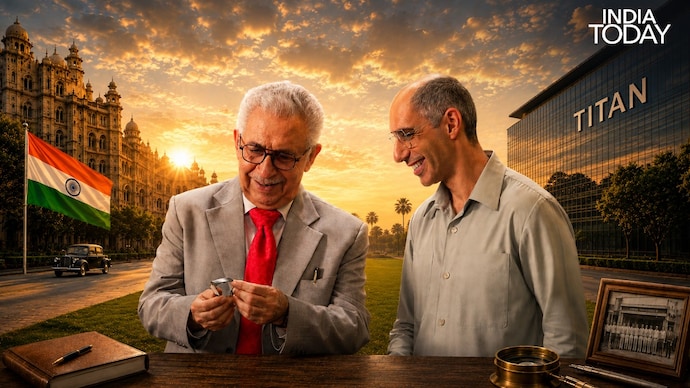
Jim Sarbh’s Xerxes Desai carries restless vision and warm Parsi charm, while Naseeruddin Shah’s JRD Tata brings calm authority and hard-earned wisdom. Together they portray Titan’s origin - not as a flawless corporate triumph but as a story shaped by visible stumbles, honest ownership, and the courage to persist.
At the heart of the series lies a powerful moment. Spoilers ahead, but this is one of those rare story beats where the context matters more than the surprise. It's a universal tale of hope, resilience and legacy-building, and one worth knowing.
The first prototype runs a full hour late. With no outsiders or regulations to blame, the fault rests entirely with the team. Xerxes gathers everyone and speaks with striking candour: "So far, all the obstacles that came in the way of Titan’s journey were all external — either there were some people or government regulations. But today, for the first time, we are the reason for our failure. I think that is worth celebrating. When we celebrate our failure, then we are able to own our mistakes. Moving on becomes easier and growth is much easier. And I think we should never stop trying. I think we all deserve the freedom of failure."
In another pivotal sequence, Rajni Desai gently reinforces this truth: "The biggest mistake in the world is not to learn from your mistakes. Unless you accept your mistake, how are you going to learn from it?" These exchanges emerge as lived conversations that strip failure of its shame and turn it into clear ground for growth.
Evoking the legacy of historic milestones
Later, when European markets deliver rejection and doubt sets in, JRD offers a grounded perspective: "The hunger for success is a very tricky thing. It demands a lot of investments with no return. You have to know the soil before you plant the seeds." In the lowest stretch comes the line that resonates strongest: "Try again, fail again. Fail better. Nothing wrong with failures. Doesn’t the MD of Titan deserve the freedom of failure?"
When Tata board members remain sceptical about investing in watches, Xerxes stands firm: “We are Tatas. Agar hum history create nahi karenge to phir kaun karega (If we are not going to create history, then who will)?” Gaurav adds fire to the moment, reminding the room of the group’s legacy — from Jamshedji Tata breathing life into the steel plant despite British ridicule, to Dorabji turning it profitable during World War I; from the humiliation at Watson Hotel (sign board which read: Dogs and Indians are not allowed) that inspired the grand Taj Mahal Palace with Asia’s first electric lift, to launching Tata Tea and Tata Salt when consumerism was unknown, waking up an entire nation with every cup.
This freedom of failure threads through the entire narrative like an undercurrent. It reframes internal setbacks as necessary space rather than sources of lasting regret. History echoes the same wisdom. Thomas Edison turned a thousand failed attempts into the light bulb that changed the world. James Dyson iterated through more than 5,000 prototypes before his bag-less vacuum cleaner revolutionised homes. Each breakthrough arrived only after they fully embraced the freedom to fail repeatedly and learn deeply from every misstep.
The series balances these insights with rich details — uniform pricing that keeps Titan watches equally accessible in Delhi showrooms or small Assam towns, idli-sambar hospitality that wins over global partners, and golden-era songs that wrap the struggles in warm nostalgia.
The team around Xerxes feels equally authentic: Vaibhav Tatwawadi’s steady Akash, Lakshvir Singh Saran’s Gaurav, and Kaveri Seth’s Megha, who balances ambition with societal expectations. Xerxes often returns to a central belief — people matter more than targets because they invest their blood, sweat, tears and time.
For millennials, balancing career shifts and Gen Z chasing bold aspirations, the series strikes a deeply familiar chord. Whether navigating uncertain studies, risking a first job move, building relationships that sometimes falter, or holding onto dreams that feel too big, the fear of early setbacks often clouds the path. Yet the story gently reveals how owning those stumbles brings fresh clarity in choices, deeper strength in connections, and renewed momentum toward the futures being imagined.
The cost of playing it safe
Made in India: A Titan Story never suggests the journey was smooth. It reveals the delays, doubts and honest internal failures, then shows what follows when those failures receive space instead of judgment. In life and careers, where the pressure for instant results often paralyses bold risks, this message hits home. The same holds for today’s cinema and OTT storytelling. Platforms and producers frequently cling to formulaic, safe content, terrified of audience rejection or subscriber drop. By denying themselves the freedom to experiment and fail, they rarely get the chance to fail better and craft stories that truly endure.
For anyone held back by a deep fear of failure, this series arrives as timely companionship. It does not erase the fear. It simply demonstrates how Titan itself began with a watch that could not keep time correctly — and turned that very failure into an Indian icon worn with pride across the country.
Made in India: A Titan Story is available for streaming on Amazon MX Player.
Ever found yourself frozen before taking the first step - heart racing because one mistake could unravel the entire dream? That deep, familiar fear of failure is exactly what makes Made in India: A Titan Story feel essential. The series does not offer tidy motivational speeches. It draws viewers into the uncertain, deeply human process of building something meaningful, where the freedom to fail emerges as the real foundation of progress.
Jim Sarbh’s Xerxes Desai carries restless vision and warm Parsi charm, while Naseeruddin Shah’s JRD Tata brings calm authority and hard-earned wisdom. Together they portray Titan’s origin - not as a flawless corporate triumph but as a story shaped by visible stumbles, honest ownership, and the courage to persist.
At the heart of the series lies a powerful moment. Spoilers ahead, but this is one of those rare story beats where the context matters more than the surprise. It's a universal tale of hope, resilience and legacy-building, and one worth knowing.
The first prototype runs a full hour late. With no outsiders or regulations to blame, the fault rests entirely with the team. Xerxes gathers everyone and speaks with striking candour: "So far, all the obstacles that came in the way of Titan’s journey were all external — either there were some people or government regulations. But today, for the first time, we are the reason for our failure. I think that is worth celebrating. When we celebrate our failure, then we are able to own our mistakes. Moving on becomes easier and growth is much easier. And I think we should never stop trying. I think we all deserve the freedom of failure."
In another pivotal sequence, Rajni Desai gently reinforces this truth: "The biggest mistake in the world is not to learn from your mistakes. Unless you accept your mistake, how are you going to learn from it?" These exchanges emerge as lived conversations that strip failure of its shame and turn it into clear ground for growth.
Evoking the legacy of historic milestones
Later, when European markets deliver rejection and doubt sets in, JRD offers a grounded perspective: "The hunger for success is a very tricky thing. It demands a lot of investments with no return. You have to know the soil before you plant the seeds." In the lowest stretch comes the line that resonates strongest: "Try again, fail again. Fail better. Nothing wrong with failures. Doesn’t the MD of Titan deserve the freedom of failure?"
When Tata board members remain sceptical about investing in watches, Xerxes stands firm: “We are Tatas. Agar hum history create nahi karenge to phir kaun karega (If we are not going to create history, then who will)?” Gaurav adds fire to the moment, reminding the room of the group’s legacy — from Jamshedji Tata breathing life into the steel plant despite British ridicule, to Dorabji turning it profitable during World War I; from the humiliation at Watson Hotel (sign board which read: Dogs and Indians are not allowed) that inspired the grand Taj Mahal Palace with Asia’s first electric lift, to launching Tata Tea and Tata Salt when consumerism was unknown, waking up an entire nation with every cup.
This freedom of failure threads through the entire narrative like an undercurrent. It reframes internal setbacks as necessary space rather than sources of lasting regret. History echoes the same wisdom. Thomas Edison turned a thousand failed attempts into the light bulb that changed the world. James Dyson iterated through more than 5,000 prototypes before his bag-less vacuum cleaner revolutionised homes. Each breakthrough arrived only after they fully embraced the freedom to fail repeatedly and learn deeply from every misstep.
The series balances these insights with rich details — uniform pricing that keeps Titan watches equally accessible in Delhi showrooms or small Assam towns, idli-sambar hospitality that wins over global partners, and golden-era songs that wrap the struggles in warm nostalgia.
The team around Xerxes feels equally authentic: Vaibhav Tatwawadi’s steady Akash, Lakshvir Singh Saran’s Gaurav, and Kaveri Seth’s Megha, who balances ambition with societal expectations. Xerxes often returns to a central belief — people matter more than targets because they invest their blood, sweat, tears and time.
For millennials, balancing career shifts and Gen Z chasing bold aspirations, the series strikes a deeply familiar chord. Whether navigating uncertain studies, risking a first job move, building relationships that sometimes falter, or holding onto dreams that feel too big, the fear of early setbacks often clouds the path. Yet the story gently reveals how owning those stumbles brings fresh clarity in choices, deeper strength in connections, and renewed momentum toward the futures being imagined.
The cost of playing it safe
Made in India: A Titan Story never suggests the journey was smooth. It reveals the delays, doubts and honest internal failures, then shows what follows when those failures receive space instead of judgment. In life and careers, where the pressure for instant results often paralyses bold risks, this message hits home. The same holds for today’s cinema and OTT storytelling. Platforms and producers frequently cling to formulaic, safe content, terrified of audience rejection or subscriber drop. By denying themselves the freedom to experiment and fail, they rarely get the chance to fail better and craft stories that truly endure.
For anyone held back by a deep fear of failure, this series arrives as timely companionship. It does not erase the fear. It simply demonstrates how Titan itself began with a watch that could not keep time correctly — and turned that very failure into an Indian icon worn with pride across the country.
Made in India: A Titan Story is available for streaming on Amazon MX Player.

