Ger-money troubles: Germans are no fans of the heat, and fan prices are soaring
From AC units to fans to sun-blocking curtains, beating the heat has never been this expensive in Germany.
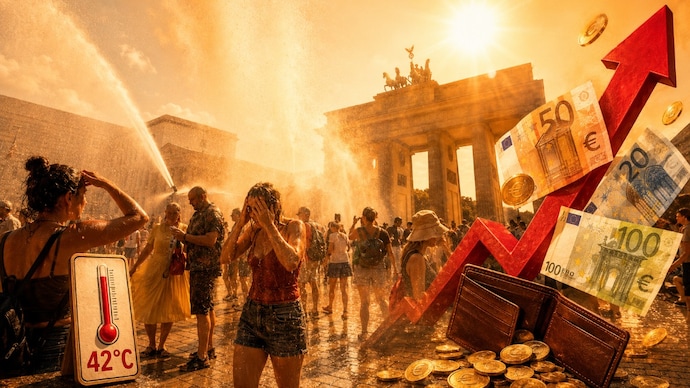
The heatwave across Europe is burning a hole in German pockets. If you think using air conditioners in India is becoming expensive, wait till you see how much they now have to pay for things like handheld fans, mobile ACs, and even sunscreen!
The Germans are used to pleasant weather this time of year, not a scorching heatwave that’s killing people across Europe. While the government is trying to keep it “chill” on the streets by spraying people with water, things change once they’re indoors. Only an estimated six per cent of German homes have AC units — and there’s only so much the country’s famous beers can do.
For Germans, this is uncharted territory.
‘OUT OF STOCK’, OUT OF BUDGET
Remember frantically searching for induction cooktops a couple of months ago, only to find them out of stock or absurdly overpriced? Or remember trying to buy air purifiers in Delhi-NCR’s choking winters? That’s what Germans are going through right now.
Appliances they never imagined buying are suddenly flying off shelves. The sellers know this. So, prices have subsequently shot through the roof.
Data from Keepa, a third-party tool that logs historical Amazon Germany pricing — something Amazon.de itself doesn't show — reveals just how steep the spike has been.
A mobile air conditioner priced at €129.99 (Rs 14,040) on June 18 rose to €149.99 (Rs 16,201) by June 26, as the heatwave peaked. A handheld battery fan — an uncommon item in the German market — cost €14.99 (Rs 1,619) in April. By June 26–27, it had nearly doubled to €28.99 (Rs 3,131). For comparison, in India, you can get one of these for as low as Rs 250 on Amazon. Maybe even lower.
The conversion rate for €1 is approximately Rs 108 as of July 1, 2026.
Prices of pedestal fans, an Indian household fixture, climbed from €32.9 (Rs 3,553) in April to €49.85 (Rs 5,384) by June 26. A Philips tower fan went from €60 (Rs 6,480) in the second week of June to €90 (Rs 9,721) last week — a 50 per cent jump!
Also Read: Fact Check: The heatwave DID NOT melt traffic lights in Italy and Germany
SCORCHING SUN & SEARING PRICES
Forget fans and ACs, sunscreen prices have surged too. A 200 ml Nivea sunscreen lotion priced at €6.94 (Rs 749) on June 11 rose to €8.95 (Rs 966) by June 28.
Houses in Germany — as in other cold European countries — are designed to retain heat in harsh winters. Renovating houses to install ACs is prohibitively expensive.
What is the next best thing when you can't fight the sun? You try to block it. Germans are desperately trying to turn their homes into fortresses against the sun with blackout curtains, window blinds, and even sun-protection window film. This is clearly reflected on Amazon.de’s “Best Sellers” for the past week. Even Google Trends shows searches for blackout curtains in Germany have spiked over the past month.
As climate changes across the globe, Germany is fast learning it isn’t insulated. Germans are now experiencing what Indians endure summer after summer. Maybe the path forward for them is to learn how to make Shikanji — so that they can remain “thanda thanda, cool cool”, without paying through their noses.
The heatwave across Europe is burning a hole in German pockets. If you think using air conditioners in India is becoming expensive, wait till you see how much they now have to pay for things like handheld fans, mobile ACs, and even sunscreen!
The Germans are used to pleasant weather this time of year, not a scorching heatwave that’s killing people across Europe. While the government is trying to keep it “chill” on the streets by spraying people with water, things change once they’re indoors. Only an estimated six per cent of German homes have AC units — and there’s only so much the country’s famous beers can do.
For Germans, this is uncharted territory.
‘OUT OF STOCK’, OUT OF BUDGET
Remember frantically searching for induction cooktops a couple of months ago, only to find them out of stock or absurdly overpriced? Or remember trying to buy air purifiers in Delhi-NCR’s choking winters? That’s what Germans are going through right now.
Appliances they never imagined buying are suddenly flying off shelves. The sellers know this. So, prices have subsequently shot through the roof.
Data from Keepa, a third-party tool that logs historical Amazon Germany pricing — something Amazon.de itself doesn't show — reveals just how steep the spike has been.
A mobile air conditioner priced at €129.99 (Rs 14,040) on June 18 rose to €149.99 (Rs 16,201) by June 26, as the heatwave peaked. A handheld battery fan — an uncommon item in the German market — cost €14.99 (Rs 1,619) in April. By June 26–27, it had nearly doubled to €28.99 (Rs 3,131). For comparison, in India, you can get one of these for as low as Rs 250 on Amazon. Maybe even lower.
The conversion rate for €1 is approximately Rs 108 as of July 1, 2026.
Prices of pedestal fans, an Indian household fixture, climbed from €32.9 (Rs 3,553) in April to €49.85 (Rs 5,384) by June 26. A Philips tower fan went from €60 (Rs 6,480) in the second week of June to €90 (Rs 9,721) last week — a 50 per cent jump!
Also Read: Fact Check: The heatwave DID NOT melt traffic lights in Italy and Germany
SCORCHING SUN & SEARING PRICES
Forget fans and ACs, sunscreen prices have surged too. A 200 ml Nivea sunscreen lotion priced at €6.94 (Rs 749) on June 11 rose to €8.95 (Rs 966) by June 28.
Houses in Germany — as in other cold European countries — are designed to retain heat in harsh winters. Renovating houses to install ACs is prohibitively expensive.
What is the next best thing when you can't fight the sun? You try to block it. Germans are desperately trying to turn their homes into fortresses against the sun with blackout curtains, window blinds, and even sun-protection window film. This is clearly reflected on Amazon.de’s “Best Sellers” for the past week. Even Google Trends shows searches for blackout curtains in Germany have spiked over the past month.
As climate changes across the globe, Germany is fast learning it isn’t insulated. Germans are now experiencing what Indians endure summer after summer. Maybe the path forward for them is to learn how to make Shikanji — so that they can remain “thanda thanda, cool cool”, without paying through their noses.

