Can cow urine fight chikungunya? IIT Roorkee study shows promising lab results
Researchers at IIT Roorkee have reported that an Ayurvedic cow urine distillate and a natural compound-based formulation significantly reduced the Chikungunya virus in laboratory experiments.
As India continues to face periodic outbreaks of mosquito-borne diseases such as chikungunya, scientists are searching for new ways to fight viral infections. While there is currently no specific antiviral drug for chikungunya, researchers are exploring both modern science and traditional medicine to identify potential therapies.
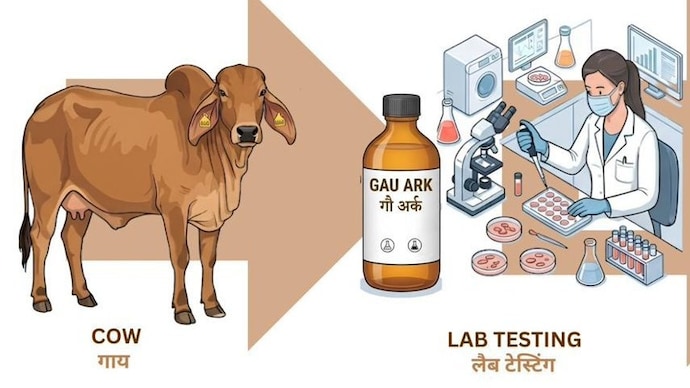
In a new study, researchers from the Indian Institute of Technology (IIT) Roorkee have reported promising laboratory findings involving Ayurvedic Cow Urine Distillate (Gau Mutra Ark). According to the research team, the natural preparation showed strong antiviral activity against the chikungunya virus under laboratory conditions. The scientists say the findings add to the growing scientific interest in studying traditional remedies using modern research methods.
WHAT DID THE IIT ROORKEE STUDY FIND?
The research was led by Professor Shailly Tomar and her team from the Department of Biosciences and Bioengineering at IIT Roorkee.
According to the institute, laboratory experiments showed that:
- Cow Urine Distillate (Gau Mutra Ark) reduced the chikungunya viral load by more than 90%
- An optimised formulation prepared using natural bioactive compounds achieved up to 99.85% reduction in viral load under laboratory conditions
- Researchers identified several bioactive compounds that may be responsible for the antiviral activity
- The study has been published in the peer-reviewed journal ACS Agricultural Science & Technology.
WHY IS THIS RESEARCH IMPORTANT?
Chikungunya is a viral disease spread through the bite of infected Aedes mosquitoes. It commonly causes high fever, severe joint pain, headache, muscle pain and fatigue. While most patients recover, joint pain can persist for weeks or even months in some cases.
Currently, there is no approved antiviral medicine that specifically targets the chikungunya virus. Treatment mainly focuses on relieving symptoms such as fever and pain.
Researchers believe identifying natural compounds with antiviral properties could help develop new medicines in the future.
HOW DOES AYURVEDA FIT INTO MODERN RESEARCH?
The IIT Roorkee team says the study demonstrates how traditional Ayurvedic knowledge can be examined using modern biotechnology and scientific methods.
Instead of relying only on traditional claims, the researchers analysed the chemical compounds present in Cow Urine Distillate and evaluated their effect on the virus in controlled laboratory experiments. Such research may help identify molecules that could eventually be developed into antiviral drugs.
CAN PEOPLE USE COW URINE TO TREAT CHIKUNGUNYA?
No. The findings do not mean that people should use cow urine as a treatment for chikungunya.
The study was conducted under laboratory conditions, not in patients. More research, including animal studies, clinical trials and safety testing, is required before any treatment can be recommended for human use.
Health experts continue to advise people with suspected chikungunya to seek medical care, stay hydrated, rest and follow their doctor's advice.
The IIT Roorkee researchers say their work represents an important step in understanding the antiviral potential of natural compounds derived from Ayurvedic preparations. While the early results are encouraging, scientists stress that much more research is needed before these findings can translate into safe and effective therapies for people.
If future studies confirm these results, the research could contribute to the development of new antiviral medicines inspired by traditional knowledge and supported by modern scientific evidence.
As India continues to face periodic outbreaks of mosquito-borne diseases such as chikungunya, scientists are searching for new ways to fight viral infections. While there is currently no specific antiviral drug for chikungunya, researchers are exploring both modern science and traditional medicine to identify potential therapies.
In a new study, researchers from the Indian Institute of Technology (IIT) Roorkee have reported promising laboratory findings involving Ayurvedic Cow Urine Distillate (Gau Mutra Ark). According to the research team, the natural preparation showed strong antiviral activity against the chikungunya virus under laboratory conditions. The scientists say the findings add to the growing scientific interest in studying traditional remedies using modern research methods.
WHAT DID THE IIT ROORKEE STUDY FIND?
The research was led by Professor Shailly Tomar and her team from the Department of Biosciences and Bioengineering at IIT Roorkee.
According to the institute, laboratory experiments showed that:
- Cow Urine Distillate (Gau Mutra Ark) reduced the chikungunya viral load by more than 90%
- An optimised formulation prepared using natural bioactive compounds achieved up to 99.85% reduction in viral load under laboratory conditions
- Researchers identified several bioactive compounds that may be responsible for the antiviral activity
- The study has been published in the peer-reviewed journal ACS Agricultural Science & Technology.
WHY IS THIS RESEARCH IMPORTANT?
Chikungunya is a viral disease spread through the bite of infected Aedes mosquitoes. It commonly causes high fever, severe joint pain, headache, muscle pain and fatigue. While most patients recover, joint pain can persist for weeks or even months in some cases.
Currently, there is no approved antiviral medicine that specifically targets the chikungunya virus. Treatment mainly focuses on relieving symptoms such as fever and pain.
Researchers believe identifying natural compounds with antiviral properties could help develop new medicines in the future.
HOW DOES AYURVEDA FIT INTO MODERN RESEARCH?
The IIT Roorkee team says the study demonstrates how traditional Ayurvedic knowledge can be examined using modern biotechnology and scientific methods.
Instead of relying only on traditional claims, the researchers analysed the chemical compounds present in Cow Urine Distillate and evaluated their effect on the virus in controlled laboratory experiments. Such research may help identify molecules that could eventually be developed into antiviral drugs.
CAN PEOPLE USE COW URINE TO TREAT CHIKUNGUNYA?
No. The findings do not mean that people should use cow urine as a treatment for chikungunya.
The study was conducted under laboratory conditions, not in patients. More research, including animal studies, clinical trials and safety testing, is required before any treatment can be recommended for human use.
Health experts continue to advise people with suspected chikungunya to seek medical care, stay hydrated, rest and follow their doctor's advice.
The IIT Roorkee researchers say their work represents an important step in understanding the antiviral potential of natural compounds derived from Ayurvedic preparations. While the early results are encouraging, scientists stress that much more research is needed before these findings can translate into safe and effective therapies for people.
If future studies confirm these results, the research could contribute to the development of new antiviral medicines inspired by traditional knowledge and supported by modern scientific evidence.

