Why COVID-19 keeps returning in small waves across India
Top virologists say India's recent COVID-19 upticks are localised endemic flare-ups, not a new wave. They say rapid viral evolution, waning immunity and regional factors keep the pattern irregular.
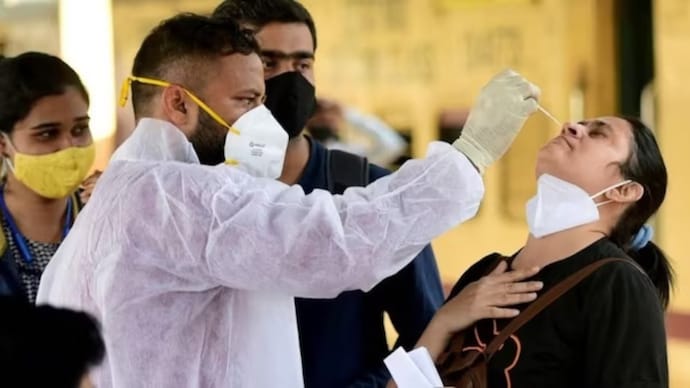
The short answer is no.
What India is witnessing is not the beginning of another major wave but the expected behaviour of a virus that has become endemic – one that continues to circulate, evolve and exploit pockets of susceptible people.
The important question, however, is why these increases keep appearing every few months instead of settling into a predictable seasonal cycle like influenza. The answer lies in how SARS-CoV-2. The virus behind COVID-19 continues to evolve.
WHY WAVES PERSIST
Unlike influenza, whose transmission in India broadly follows the monsoon and winter seasons, COVID-19 is still finding its rhythm.
As senior virologist Dr Gagandeep Kang explained, influenza viruses have long-established seasonal patterns, but SARS-CoV-2 is evolving much more rapidly.
"SARS-CoV-2 requires time between subvariants arising and spreading, but its evolution is somewhat faster than other RNA viruses, so patterns are less clear," said Dr Kang, director of global health for enterics, diagnostics, genomics & epidemiology at the Gates Foundation in the US.
That rapid turnover of various subvariants of Omicron – which has been the dominant SARS COV 2 strain since late 2021 – means the virus keeps generating versions that are slightly better at spreading or escaping existing immunity.
These are not dramatically different variants capable of causing severe disease on a large scale. Instead, they are efficient transmitters that trigger localised spikes before fading away.
"The low-level cyclical spikes are localised and seasonal and are driven by strains (Omicron subvariants) that spread very easily but cause only mild disease," Dr Kang said.
That is precisely what recent increases across India reflect. But these are geographically limited surges rather than one synchronised national wave.
Geography itself plays a role. Climate, population density, travel, local immunity levels and timing of variant introduction differ across regions, which is why one city may see a spike while another remains largely unaffected. As Dr Kang points out, "some differences based on geography" are to be expected.
She says this pattern is unlikely to change anytime soon. Instead, India should expect "small upticks with a few months between them," rather than long periods without COVID-19 followed by one large annual outbreak.
ENDEMIC, NOT GONE
Another reason these periodic increases continue is that immunity is dynamic rather than permanent.
Most Indians have now acquired immunity through vaccination, prior infection or both. But antibodies naturally decline over time, creating opportunities for reinfection. The crucial difference today is that immune memory remains intact, ensuring that for most people the virus causes only mild illness.
Senior virologist Dr Shahid Jameel, who is a fellow with Green Templeton College at Oxford University, says the recent increases are "isolated fluctuations due to local conditions" rather than evidence of anything unusual.
The virus continues to circulate because immunity against infection wanes, but previous exposure means immune memory prevents the infection from progressing beyond mild disease in most people.
These, he says, are "all hallmarks of endemicity" and are "not different from seasonal flu." That distinction often gets lost in public discussions. Endemic does not mean a virus disappears. It means transmission continues at manageable levels, interrupted by periodic increases that no longer overwhelm health systems or produce widespread severe disease.
The people who remain vulnerable are those with advanced age, weakened immunity or underlying health conditions. Experts underline that individuals with comorbidities are still at greater risk of progressing to serious illness and death, making continued surveillance and timely vaccination for vulnerable groups important.
At the same time, they stress that any sudden change in disease severity would warrant closer investigation.
Dr Jameel said concern would arise only if "a very different variant has started circulating", highlighting the importance of continued genomic surveillance to detect significant viral changes early.
According to immunologist Dr Dipyaman Ganguly, these periodic increases are exactly what scientists expect from an endemic virus. As SARS-CoV-2 evolves into newer variants with small antigenic changes (changes in the surface protein of a pathogen that makes it harder for the host's immune system to recognise it) they periodically trigger localised bursts of transmission.
"Periodic flares in transmission are expected," Dr Ganguly, professor of Biology at Ashoka University said, adding that while these variants may spread rapidly in affected areas, they are "not expected to result in significant illness" or widespread transmission that becomes a major public health concern.
That explains why the recent increases have generated relatively few hospitalisations despite fresh infections.
Over time, as viral evolution slows and population immunity becomes even more stable, clearer seasonal trends may eventually emerge. Until then, these short-lived upticks – like those recently seen in Andhra Pradesh, Kolkata and a handful of other regions – are likely to remain part of India's COVID-19 landscape rather than a signal that the pandemic has returned.
The short answer is no.
What India is witnessing is not the beginning of another major wave but the expected behaviour of a virus that has become endemic – one that continues to circulate, evolve and exploit pockets of susceptible people.
The important question, however, is why these increases keep appearing every few months instead of settling into a predictable seasonal cycle like influenza. The answer lies in how SARS-CoV-2. The virus behind COVID-19 continues to evolve.
WHY WAVES PERSIST
Unlike influenza, whose transmission in India broadly follows the monsoon and winter seasons, COVID-19 is still finding its rhythm.
As senior virologist Dr Gagandeep Kang explained, influenza viruses have long-established seasonal patterns, but SARS-CoV-2 is evolving much more rapidly.
"SARS-CoV-2 requires time between subvariants arising and spreading, but its evolution is somewhat faster than other RNA viruses, so patterns are less clear," said Dr Kang, director of global health for enterics, diagnostics, genomics & epidemiology at the Gates Foundation in the US.
That rapid turnover of various subvariants of Omicron – which has been the dominant SARS COV 2 strain since late 2021 – means the virus keeps generating versions that are slightly better at spreading or escaping existing immunity.
These are not dramatically different variants capable of causing severe disease on a large scale. Instead, they are efficient transmitters that trigger localised spikes before fading away.
"The low-level cyclical spikes are localised and seasonal and are driven by strains (Omicron subvariants) that spread very easily but cause only mild disease," Dr Kang said.
That is precisely what recent increases across India reflect. But these are geographically limited surges rather than one synchronised national wave.
Geography itself plays a role. Climate, population density, travel, local immunity levels and timing of variant introduction differ across regions, which is why one city may see a spike while another remains largely unaffected. As Dr Kang points out, "some differences based on geography" are to be expected.
She says this pattern is unlikely to change anytime soon. Instead, India should expect "small upticks with a few months between them," rather than long periods without COVID-19 followed by one large annual outbreak.
ENDEMIC, NOT GONE
Another reason these periodic increases continue is that immunity is dynamic rather than permanent.
Most Indians have now acquired immunity through vaccination, prior infection or both. But antibodies naturally decline over time, creating opportunities for reinfection. The crucial difference today is that immune memory remains intact, ensuring that for most people the virus causes only mild illness.
Senior virologist Dr Shahid Jameel, who is a fellow with Green Templeton College at Oxford University, says the recent increases are "isolated fluctuations due to local conditions" rather than evidence of anything unusual.
The virus continues to circulate because immunity against infection wanes, but previous exposure means immune memory prevents the infection from progressing beyond mild disease in most people.
These, he says, are "all hallmarks of endemicity" and are "not different from seasonal flu." That distinction often gets lost in public discussions. Endemic does not mean a virus disappears. It means transmission continues at manageable levels, interrupted by periodic increases that no longer overwhelm health systems or produce widespread severe disease.
The people who remain vulnerable are those with advanced age, weakened immunity or underlying health conditions. Experts underline that individuals with comorbidities are still at greater risk of progressing to serious illness and death, making continued surveillance and timely vaccination for vulnerable groups important.
At the same time, they stress that any sudden change in disease severity would warrant closer investigation.
Dr Jameel said concern would arise only if "a very different variant has started circulating", highlighting the importance of continued genomic surveillance to detect significant viral changes early.
According to immunologist Dr Dipyaman Ganguly, these periodic increases are exactly what scientists expect from an endemic virus. As SARS-CoV-2 evolves into newer variants with small antigenic changes (changes in the surface protein of a pathogen that makes it harder for the host's immune system to recognise it) they periodically trigger localised bursts of transmission.
"Periodic flares in transmission are expected," Dr Ganguly, professor of Biology at Ashoka University said, adding that while these variants may spread rapidly in affected areas, they are "not expected to result in significant illness" or widespread transmission that becomes a major public health concern.
That explains why the recent increases have generated relatively few hospitalisations despite fresh infections.
Over time, as viral evolution slows and population immunity becomes even more stable, clearer seasonal trends may eventually emerge. Until then, these short-lived upticks – like those recently seen in Andhra Pradesh, Kolkata and a handful of other regions – are likely to remain part of India's COVID-19 landscape rather than a signal that the pandemic has returned.
The short answer is no.
What India is witnessing is not the beginning of another major wave but the expected behaviour of a virus that has become endemic – one that continues to circulate, evolve and exploit pockets of susceptible people.
The important question, however, is why these increases keep appearing every few months instead of settling into a predictable seasonal cycle like influenza. The answer lies in how SARS-CoV-2. The virus behind COVID-19 continues to evolve.
WHY WAVES PERSIST
Unlike influenza, whose transmission in India broadly follows the monsoon and winter seasons, COVID-19 is still finding its rhythm.
As senior virologist Dr Gagandeep Kang explained, influenza viruses have long-established seasonal patterns, but SARS-CoV-2 is evolving much more rapidly.
"SARS-CoV-2 requires time between subvariants arising and spreading, but its evolution is somewhat faster than other RNA viruses, so patterns are less clear," said Dr Kang, director of global health for enterics, diagnostics, genomics & epidemiology at the Gates Foundation in the US.
That rapid turnover of various subvariants of Omicron – which has been the dominant SARS COV 2 strain since late 2021 – means the virus keeps generating versions that are slightly better at spreading or escaping existing immunity.
These are not dramatically different variants capable of causing severe disease on a large scale. Instead, they are efficient transmitters that trigger localised spikes before fading away.
"The low-level cyclical spikes are localised and seasonal and are driven by strains (Omicron subvariants) that spread very easily but cause only mild disease," Dr Kang said.
That is precisely what recent increases across India reflect. But these are geographically limited surges rather than one synchronised national wave.
Geography itself plays a role. Climate, population density, travel, local immunity levels and timing of variant introduction differ across regions, which is why one city may see a spike while another remains largely unaffected. As Dr Kang points out, "some differences based on geography" are to be expected.
She says this pattern is unlikely to change anytime soon. Instead, India should expect "small upticks with a few months between them," rather than long periods without COVID-19 followed by one large annual outbreak.
ENDEMIC, NOT GONE
Another reason these periodic increases continue is that immunity is dynamic rather than permanent.
Most Indians have now acquired immunity through vaccination, prior infection or both. But antibodies naturally decline over time, creating opportunities for reinfection. The crucial difference today is that immune memory remains intact, ensuring that for most people the virus causes only mild illness.
Senior virologist Dr Shahid Jameel, who is a fellow with Green Templeton College at Oxford University, says the recent increases are "isolated fluctuations due to local conditions" rather than evidence of anything unusual.
The virus continues to circulate because immunity against infection wanes, but previous exposure means immune memory prevents the infection from progressing beyond mild disease in most people.
These, he says, are "all hallmarks of endemicity" and are "not different from seasonal flu." That distinction often gets lost in public discussions. Endemic does not mean a virus disappears. It means transmission continues at manageable levels, interrupted by periodic increases that no longer overwhelm health systems or produce widespread severe disease.
The people who remain vulnerable are those with advanced age, weakened immunity or underlying health conditions. Experts underline that individuals with comorbidities are still at greater risk of progressing to serious illness and death, making continued surveillance and timely vaccination for vulnerable groups important.
At the same time, they stress that any sudden change in disease severity would warrant closer investigation.
Dr Jameel said concern would arise only if "a very different variant has started circulating", highlighting the importance of continued genomic surveillance to detect significant viral changes early.
According to immunologist Dr Dipyaman Ganguly, these periodic increases are exactly what scientists expect from an endemic virus. As SARS-CoV-2 evolves into newer variants with small antigenic changes (changes in the surface protein of a pathogen that makes it harder for the host's immune system to recognise it) they periodically trigger localised bursts of transmission.
"Periodic flares in transmission are expected," Dr Ganguly, professor of Biology at Ashoka University said, adding that while these variants may spread rapidly in affected areas, they are "not expected to result in significant illness" or widespread transmission that becomes a major public health concern.
That explains why the recent increases have generated relatively few hospitalisations despite fresh infections.
Over time, as viral evolution slows and population immunity becomes even more stable, clearer seasonal trends may eventually emerge. Until then, these short-lived upticks – like those recently seen in Andhra Pradesh, Kolkata and a handful of other regions – are likely to remain part of India's COVID-19 landscape rather than a signal that the pandemic has returned.

