New study busts the '5-second rule' myth. Then what's the right time?
Think picking up food within five seconds keeps it safe? Science says bacteria can stick almost instantly. Experts explain why rinsing fallen food may not protect you from harmful germs.
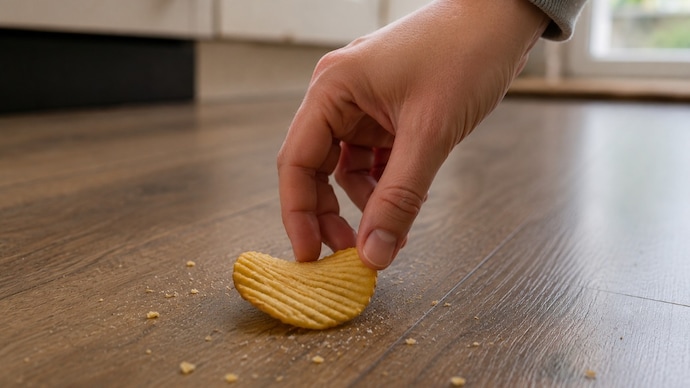
We've all done it at least once. A grape slips from your hand, a slice of cucumber lands on the kitchen floor, or a piece of toast falls just before breakfast. You quickly look around, pick it up and reassure yourself with the famous "five-second rule"—the idea that food is safe to eat if it hasn't been on the floor for more than a few seconds.
It sounds reasonable, and many people have followed this unwritten rule for years. After all, how much harm could happen in just a few seconds? Unfortunately, scientists say bacteria do not wait for a countdown. Research shows that germs can move from the floor to food almost immediately, making the amount of time the food spends on the ground far less important than most people think.
Experts say the real risks depend on several factors, including the type of food, the surface it lands on and how clean the floor actually is. Even a floor that looks spotless can carry bacteria left behind hours earlier. This means that your quick reflexes may not be enough to keep your snack germ-free.
THE FIVE-SECOND RULE DOESN'T HOLD UP
According to experts, several scientific studies have tested whether the five-second rule is true. The findings were consistent: bacteria can transfer to food almost instantly after it touches a contaminated surface.
In one study, researchers dropped different foods—including bread, buttered bread, watermelon and gummy bears—onto contaminated surfaces such as tile, stainless steel, wood and carpet. The results showed that bacteria moved to the food almost immediately.
WET FOODS PICK UP MORE BACTERIA
Not all foods are equally likely to collect germs.
Researchers found that foods with higher moisture content, such as watermelon or cucumber, picked up the highest amount of bacteria, especially when they landed on smooth surfaces like tile or stainless steel. Moisture allows bacteria to stick more easily, increasing the chances of contamination.
Dry foods, such as gummy bears or plain bread, generally picked up fewer bacteria, but they were not completely safe.
BACTERIA CAN SURVIVE ON SURFACES FOR HOURS
Another study found that bacteria can remain on kitchen surfaces long after contamination occurs.
Scientists observed that when cooked sausage was dropped onto contaminated surfaces, bacteria transferred even if the germs had been placed there hours earlier. In some cases, bacteria remained capable of contaminating food for up to 24 hours.
This means a kitchen counter or floor that appears clean may still contain harmful microorganisms left behind from raw meat, dirty shoes or pet paws.
IS RINSING DROPPED FOOD ENOUGH?
Many people simply rinse food under running water after dropping it. However, experts say this is not a reliable way to remove bacteria.
While rinsing may wash away visible dirt, it cannot guarantee that harmful germs have been removed. Once bacteria attach to food, especially soft fruits and vegetables, they may remain even after a quick rinse.
The risk may be even greater in homes with pets, where shoes, paws and outdoor dirt can introduce additional bacteria onto floors.
SHOULD YOU EAT FOOD THAT FALLS ON THE FLOOR?
For healthy adults, eating a dropped piece of food may not always result in illness. However, experts say it is impossible to know whether the food has picked up harmful bacteria.
The safest choice is to throw away food that has fallen onto the floor, particularly if it is moist or has landed on a hard surface. This advice is especially important for young children, older adults, pregnant women and people with weakened immune systems, who are more vulnerable to foodborne infections.
The famous five-second rule may offer comfort, but science tells a different story. Bacteria do not need five seconds to contaminate food—they can do it almost instantly. Rather than relying on a popular myth, experts recommend focusing on good kitchen hygiene, keeping floors and work surfaces clean, and avoiding eating food that has touched the ground. In the end, throwing away one piece of food is a much safer choice than risking a foodborne illness.
We've all done it at least once. A grape slips from your hand, a slice of cucumber lands on the kitchen floor, or a piece of toast falls just before breakfast. You quickly look around, pick it up and reassure yourself with the famous "five-second rule"—the idea that food is safe to eat if it hasn't been on the floor for more than a few seconds.
It sounds reasonable, and many people have followed this unwritten rule for years. After all, how much harm could happen in just a few seconds? Unfortunately, scientists say bacteria do not wait for a countdown. Research shows that germs can move from the floor to food almost immediately, making the amount of time the food spends on the ground far less important than most people think.
Experts say the real risks depend on several factors, including the type of food, the surface it lands on and how clean the floor actually is. Even a floor that looks spotless can carry bacteria left behind hours earlier. This means that your quick reflexes may not be enough to keep your snack germ-free.
THE FIVE-SECOND RULE DOESN'T HOLD UP
According to experts, several scientific studies have tested whether the five-second rule is true. The findings were consistent: bacteria can transfer to food almost instantly after it touches a contaminated surface.
In one study, researchers dropped different foods—including bread, buttered bread, watermelon and gummy bears—onto contaminated surfaces such as tile, stainless steel, wood and carpet. The results showed that bacteria moved to the food almost immediately.
WET FOODS PICK UP MORE BACTERIA
Not all foods are equally likely to collect germs.
Researchers found that foods with higher moisture content, such as watermelon or cucumber, picked up the highest amount of bacteria, especially when they landed on smooth surfaces like tile or stainless steel. Moisture allows bacteria to stick more easily, increasing the chances of contamination.
Dry foods, such as gummy bears or plain bread, generally picked up fewer bacteria, but they were not completely safe.
BACTERIA CAN SURVIVE ON SURFACES FOR HOURS
Another study found that bacteria can remain on kitchen surfaces long after contamination occurs.
Scientists observed that when cooked sausage was dropped onto contaminated surfaces, bacteria transferred even if the germs had been placed there hours earlier. In some cases, bacteria remained capable of contaminating food for up to 24 hours.
This means a kitchen counter or floor that appears clean may still contain harmful microorganisms left behind from raw meat, dirty shoes or pet paws.
IS RINSING DROPPED FOOD ENOUGH?
Many people simply rinse food under running water after dropping it. However, experts say this is not a reliable way to remove bacteria.
While rinsing may wash away visible dirt, it cannot guarantee that harmful germs have been removed. Once bacteria attach to food, especially soft fruits and vegetables, they may remain even after a quick rinse.
The risk may be even greater in homes with pets, where shoes, paws and outdoor dirt can introduce additional bacteria onto floors.
SHOULD YOU EAT FOOD THAT FALLS ON THE FLOOR?
For healthy adults, eating a dropped piece of food may not always result in illness. However, experts say it is impossible to know whether the food has picked up harmful bacteria.
The safest choice is to throw away food that has fallen onto the floor, particularly if it is moist or has landed on a hard surface. This advice is especially important for young children, older adults, pregnant women and people with weakened immune systems, who are more vulnerable to foodborne infections.
The famous five-second rule may offer comfort, but science tells a different story. Bacteria do not need five seconds to contaminate food—they can do it almost instantly. Rather than relying on a popular myth, experts recommend focusing on good kitchen hygiene, keeping floors and work surfaces clean, and avoiding eating food that has touched the ground. In the end, throwing away one piece of food is a much safer choice than risking a foodborne illness.

