Ebola cases cross 600, but India faces no immediate threat, says Soumya Swaminathan
Dr Soumya Swaminathan said the Ebola outbreak in the DRC is very worrying and needs aggressive contact tracing and testing. She said India faces no immediate threat, while vaccine development and international support remain crucial.
As the latest Ebola outbreak continues to spread in Africa, with more than 600 reported cases and over 100 deaths, public health experts are racing to contain the virus and develop new vaccines.
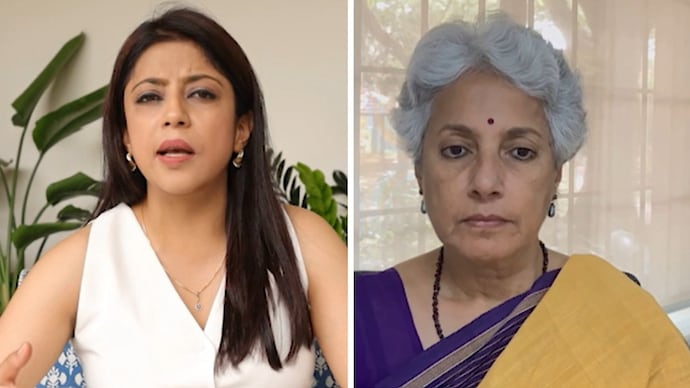
Speaking to India Today, Dr. Soumya Swaminathan, former Chief Scientist at the World Health Organisation (WHO), described the situation in the Democratic Republic of Congo (DRC) as "very worrying" and stressed the need for strong surveillance and public health measures.
"Without a vaccine and treatment, what is basically needed is very good contact tracing and testing," Dr. Swaminathan said.
She explained that health authorities need to identify everyone who has come into contact with an infected person, test them and, if necessary, place them under quarantine. Infected individuals must also be isolated and provided with supportive treatment.
However, she noted that the current strain has a lower fatality rate than the Zaire strain of Ebola, which caused some of the deadliest outbreaks in the past.
NO IMMEDIATE THREAT TO INDIA
Amid concerns about suspected cases outside Africa, Dr. Swaminathan said India does not face an immediate risk.
"For India, it's not an immediate threat, as the WHO has clarified," she said.
Unlike viruses such as Covid-19, Ebola does not spread through the air. The virus is mainly transmitted through direct contact with the bodily fluids of infected people.
She said the global priority should be helping countries such as the DRC and Uganda contain the outbreak quickly through support from the WHO and the Africa Centres for Disease Control and Prevention (Africa CDC).
VACCINE RACE UNDERWAY
Scientists around the world are now working to develop vaccines against the Bundibugyo strain of Ebola responsible for the current outbreak.
According to Dr. Swaminathan, at least three groups are developing candidate vaccines using different technologies.
One effort involves an mRNA vaccine being developed by Moderna. Another uses a recombinant vesicular stomatitis virus (VSV) platform being advanced by the International AIDS Vaccine Initiative. A third candidate is based on the ChAdOx platform developed by Oxford University researchers, the same technology used to create the Covishield Covid-19 vaccine in partnership with the Serum Institute of India.
WHO WEAKENED BY US WITHDRAWAL
Dr. Swaminathan also raised concerns about the impact of the United States' withdrawal from the WHO.
She said the move has reduced the organisation's financial strength and limited access to expertise from agencies such as the US Centers for Disease Control and Prevention (CDC) and the National Institutes of Health (NIH).
The situation has been particularly challenging for the DRC, where a large share of public health funding previously came through USAID.
"Preparedness of public health facilities in DRC is actually worse than what it could have been," she said.
As health authorities work to contain the outbreak, experts say rapid testing, contact tracing and international cooperation remain the most effective tools until a vaccine becomes available.
As the latest Ebola outbreak continues to spread in Africa, with more than 600 reported cases and over 100 deaths, public health experts are racing to contain the virus and develop new vaccines.
Speaking to India Today, Dr. Soumya Swaminathan, former Chief Scientist at the World Health Organisation (WHO), described the situation in the Democratic Republic of Congo (DRC) as "very worrying" and stressed the need for strong surveillance and public health measures.
"Without a vaccine and treatment, what is basically needed is very good contact tracing and testing," Dr. Swaminathan said.
She explained that health authorities need to identify everyone who has come into contact with an infected person, test them and, if necessary, place them under quarantine. Infected individuals must also be isolated and provided with supportive treatment.
However, she noted that the current strain has a lower fatality rate than the Zaire strain of Ebola, which caused some of the deadliest outbreaks in the past.
NO IMMEDIATE THREAT TO INDIA
Amid concerns about suspected cases outside Africa, Dr. Swaminathan said India does not face an immediate risk.
"For India, it's not an immediate threat, as the WHO has clarified," she said.
Unlike viruses such as Covid-19, Ebola does not spread through the air. The virus is mainly transmitted through direct contact with the bodily fluids of infected people.
She said the global priority should be helping countries such as the DRC and Uganda contain the outbreak quickly through support from the WHO and the Africa Centres for Disease Control and Prevention (Africa CDC).
VACCINE RACE UNDERWAY
Scientists around the world are now working to develop vaccines against the Bundibugyo strain of Ebola responsible for the current outbreak.
According to Dr. Swaminathan, at least three groups are developing candidate vaccines using different technologies.
One effort involves an mRNA vaccine being developed by Moderna. Another uses a recombinant vesicular stomatitis virus (VSV) platform being advanced by the International AIDS Vaccine Initiative. A third candidate is based on the ChAdOx platform developed by Oxford University researchers, the same technology used to create the Covishield Covid-19 vaccine in partnership with the Serum Institute of India.
WHO WEAKENED BY US WITHDRAWAL
Dr. Swaminathan also raised concerns about the impact of the United States' withdrawal from the WHO.
She said the move has reduced the organisation's financial strength and limited access to expertise from agencies such as the US Centers for Disease Control and Prevention (CDC) and the National Institutes of Health (NIH).
The situation has been particularly challenging for the DRC, where a large share of public health funding previously came through USAID.
"Preparedness of public health facilities in DRC is actually worse than what it could have been," she said.
As health authorities work to contain the outbreak, experts say rapid testing, contact tracing and international cooperation remain the most effective tools until a vaccine becomes available.

